
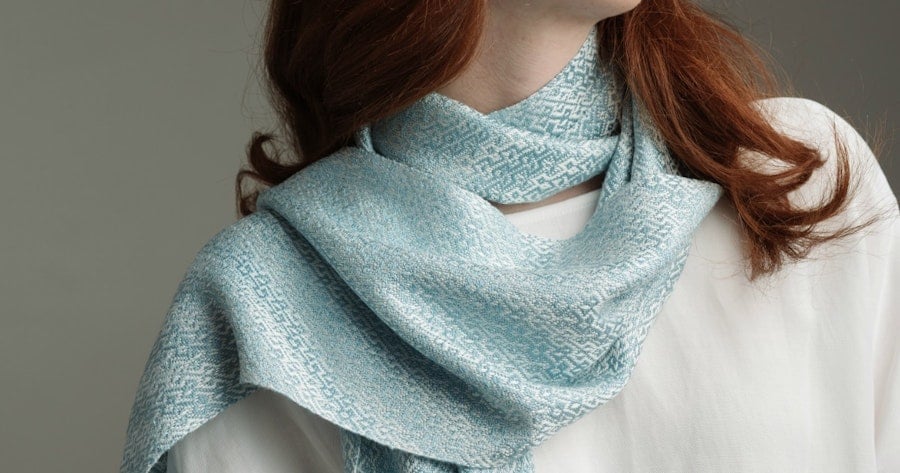
I was immediately smitten with Laura Fry’s Wall of Troy 16-shaft scarf in silk. Woven in robin’s egg blue, this scarf is the epitome of elegance.
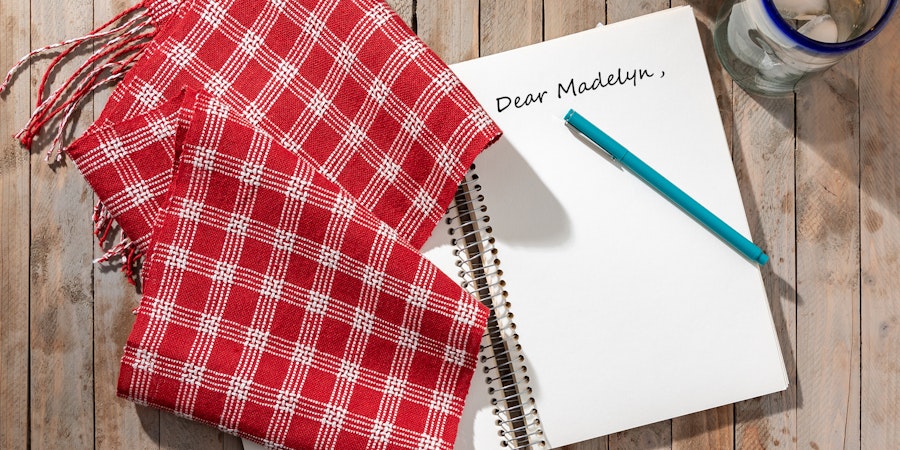
Yarn tracking is something that happens to some yarns when they are woven in plain weave—but why and how?
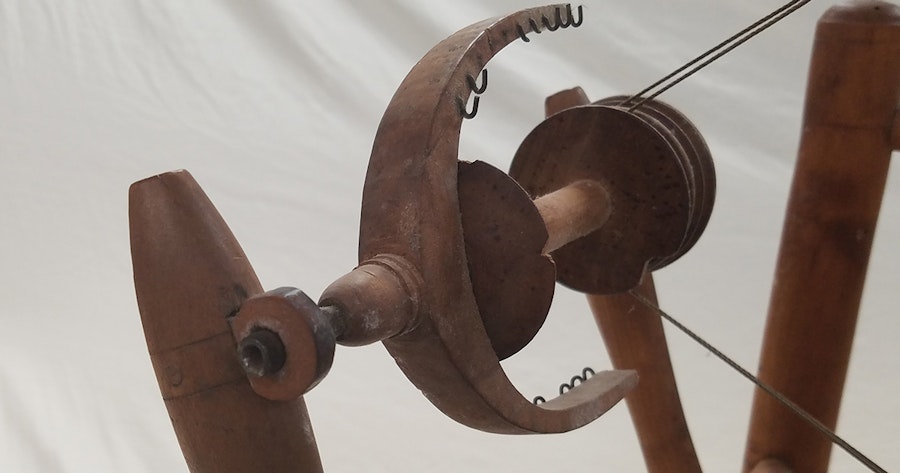
First of all, I apologize for bursting any romantic ideas about spinning wheels, but they are simply a means of twisting fiber into a usable thread.
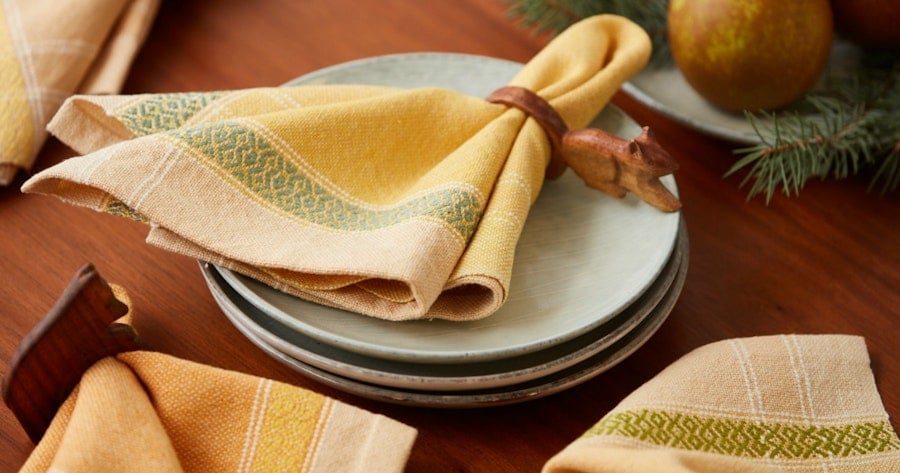
Every time I look at Elisabeth Hill’s Happy Napkins (or Hapkins as she calls them) from the November/December 2018 Handwoven, I can’t help but smile. The sunny yellow combined with a simple twill band makes for a sweet and sophisticated napkin.
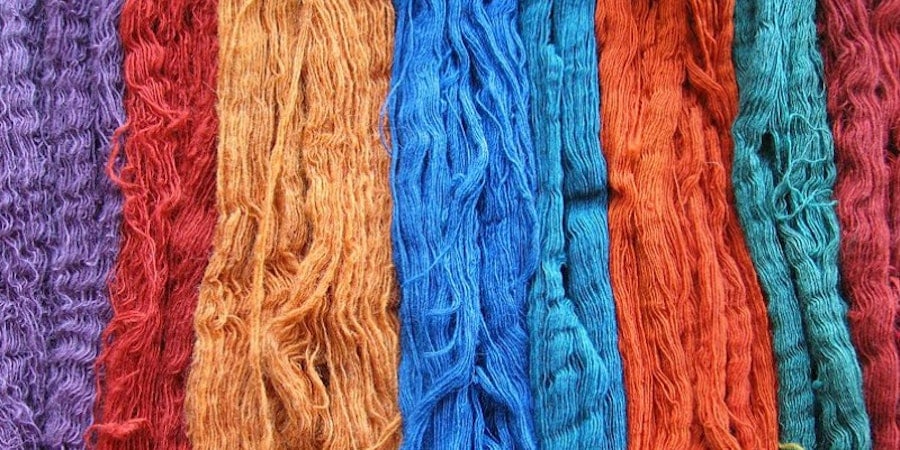
Caring for naturally dyed cloth can be intimidating, but if you know what you’re doing you can enjoy your pieces for a very long time.
Warping a loom with multiple ends per dent can be a challenge, especially if you warp front to back. Here's Madelyn with help on transferring the cross.
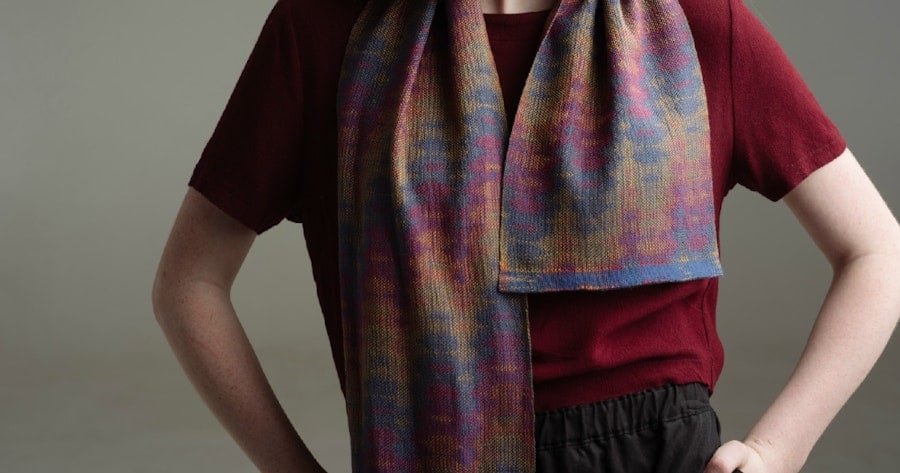
Every once in a while a project comes along that makes me wish I had 16 (or more!) shafts. Bonnie Inouye’s truly spectacular Jin Silk Scarf from Handwoven Loom Theory: Eight and Over Eight Scarf Collection immediately made me wish I had 16 shafts.
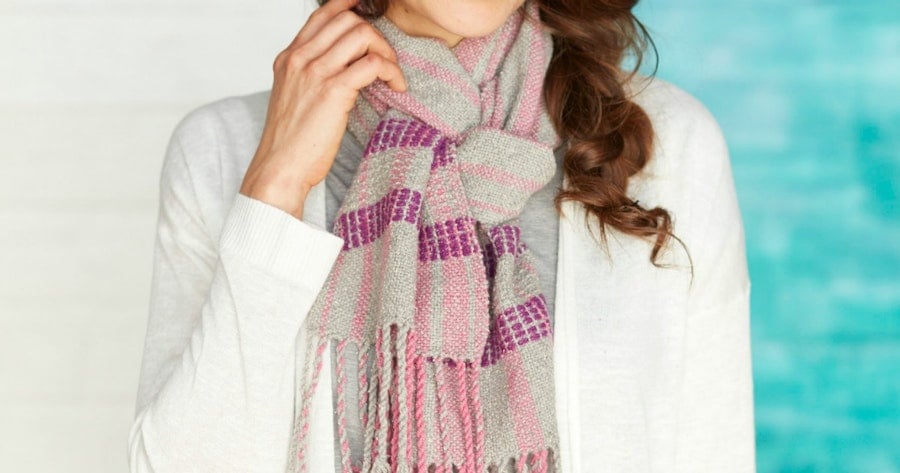
In her Wine and Roses Scarves from the November/December 2018 Handwoven, Jenny Sennott uses asymmetrical striping combined with a supplemental weft stripe and just a bit of lace to create a set of lovely scarves that you can’t help but ogle.
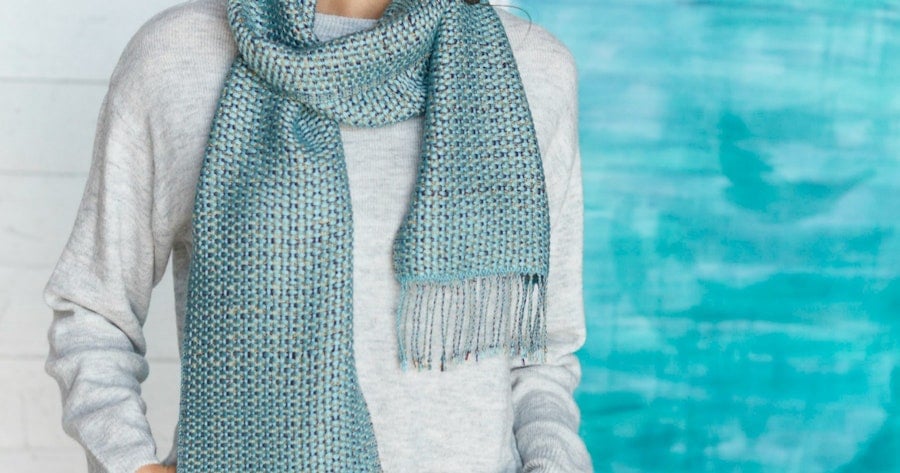
Sometimes you want a complicated scarf project, one that has treadling repeats that go on for days, uses specialty yarns, and is sure to impress anyone and everyone who looks at it.
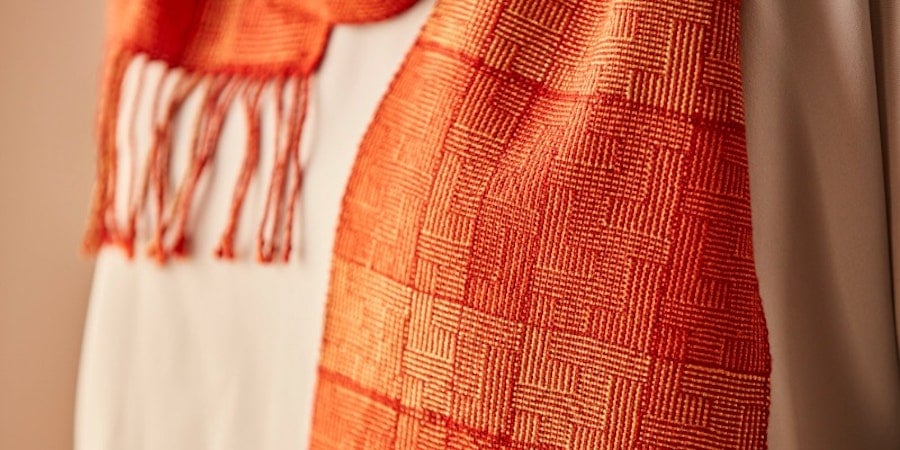
Nancy Rimsha started out as less than enthusiastic about shadow weave, but ended up falling for the structure thanks to her guild’s Weave Structures group. Learn more about how she learned to love shadow weave.