

When I first began work on the January/February 2019 issue of Handwoven on yarn blends, I couldn’t help but think about the vegetable lamb of Tartary.
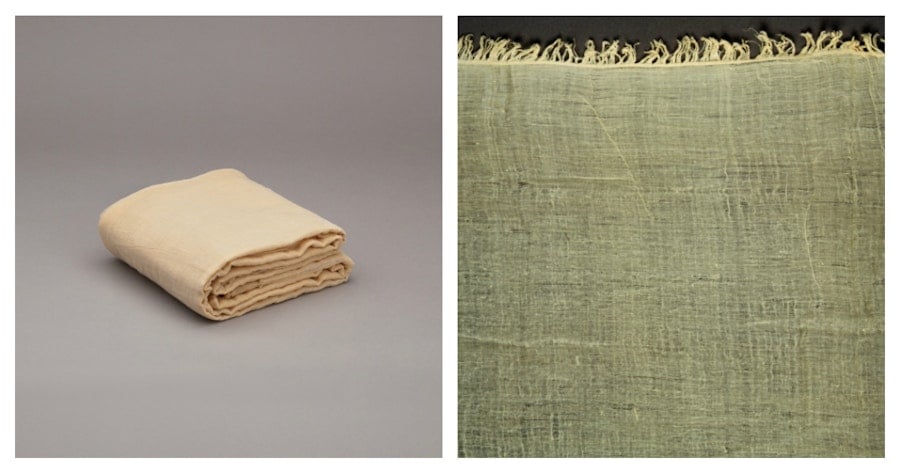
I have a set of linen sheets that are more than 20 years old. Aside from an inadvertent crayon stain, they look just as they did when I bought them, despite two decades of regular use.
I am a beginning weaver (actually, a beginning-again weaver) and need help with yarn substitutions. I am using an older pattern from Handwoven, November/December 1996, “Man’s Scarf in Silk and Cotton.” It calls for 12/2 silk at 2,790 yd/lb.
I grouped these three questions together because they all involve the same kind of reasoning and knowledge related to designing around yarn. The first important step to take is to download the Master Yarn Chart.
I believe weaving is on the upswing. It may be strictly anecdotal and I may be biased (imagine!), but in the past few years, I’ve noticed many new weaving books being published, a surge in membership in my own weaving guild, and more interesting weaving.
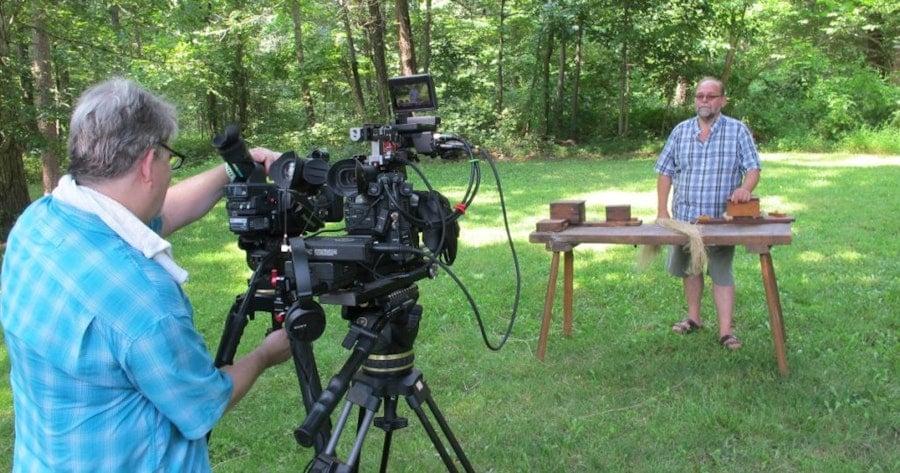
During this video shoot, I learned three very important things: Tom is a remarkable host who handles any setback in stride; pillowcases can work as lighting baffles; and flax and linen are really, really cool.
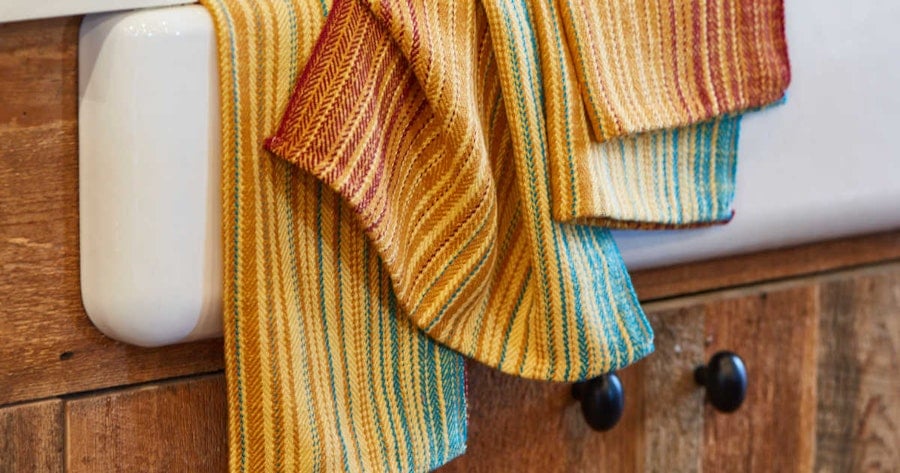
Am I the only one intimidated by “random” warping? I love the look of it, but I can’t seem to bring myself to let loose at the warping board. Enter Sarah Resnick’s Sunset Towels from the January/February 2019 issue of Handwoven.
Madelyn gives a clever trick for dealing with changing weft colors multiple times throughout a weaving.
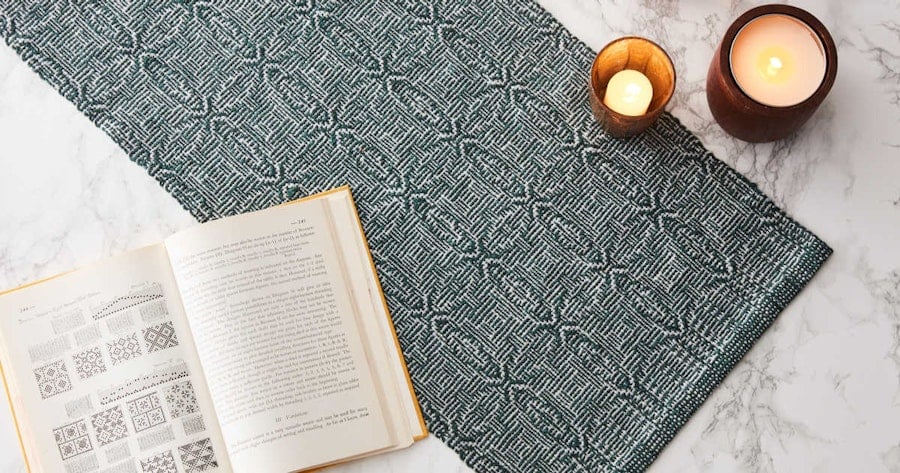
I recently moved into an adobe farmhouse built in 1930. Now that we’re finally unpacked, I’ve been working on decking my house out with antique furniture and table linens that match.
Imagine this: the perfect day of weaving, when everything that could go right does go right.