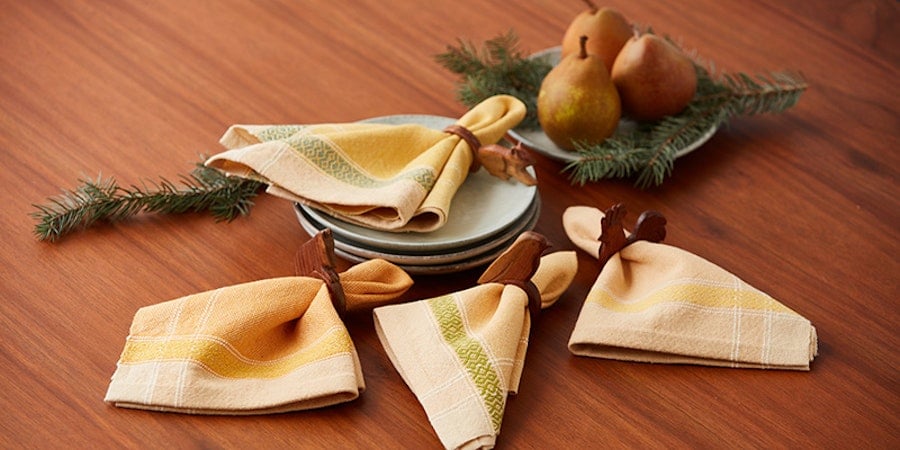
This is the third of a five-part series by Elisabeth Hill describing her process of designing a handwoven napkin project for Handwoven. The napkins are finished now and she is reflecting on the tools she used.
For those of you out there who are ready to make the step from weaving patterns to adjusting them to fit your own needs, but are worried about the math, shrinkage, or other issues we have got the web seminar for you!
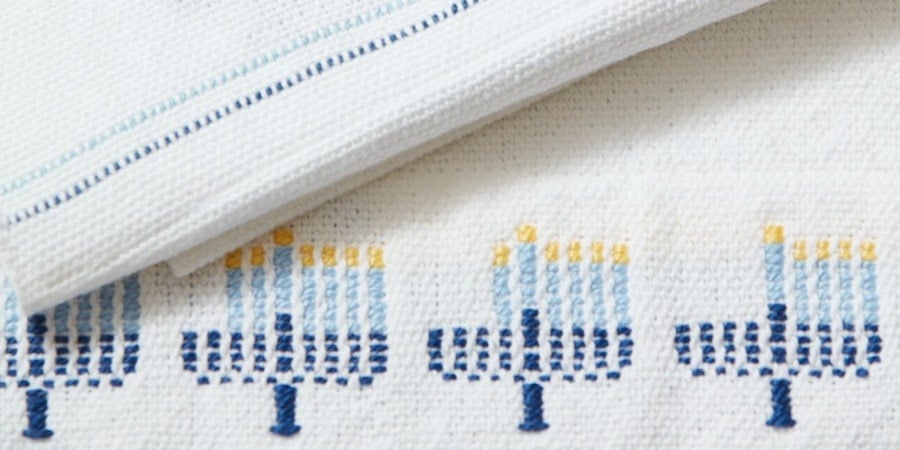
The plain-weave Chanuka Placemats use an 8-shaft point threading to facilitate the inlay process. You can set the table with plain old placemats, but these really set the stage for the 8 nights of Chanuka.

After my son was born (and even for a while before then), I found myself in a weaving rut. Then I fell in love with a special yarn and knew it would be the basis for my next project.

Last year a parliament of owls stopped by some trees near the office. Weavers and birds have a lot in common. Don’t believe me? Please allow me to elucidate.
I am new to this grand weaving adventure! However, I can not find any videos or good instructions about warping my sectional beam. Help!
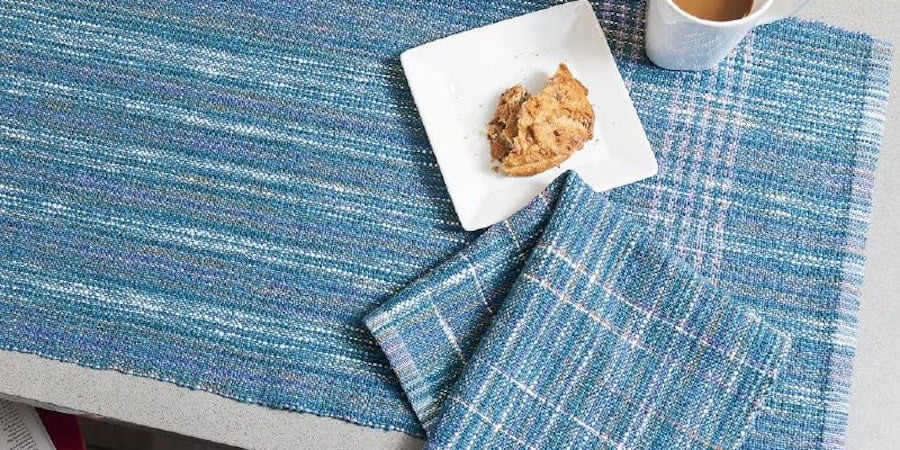
A rigid-heddle pattern for napkins and a matching runner. It all adds up to a great weekend weaving project.
Generally, there are three basic methods of warping: from the front, from the back, and sectional. The labels "from the front" and "from the back" are determined by the threading direction.
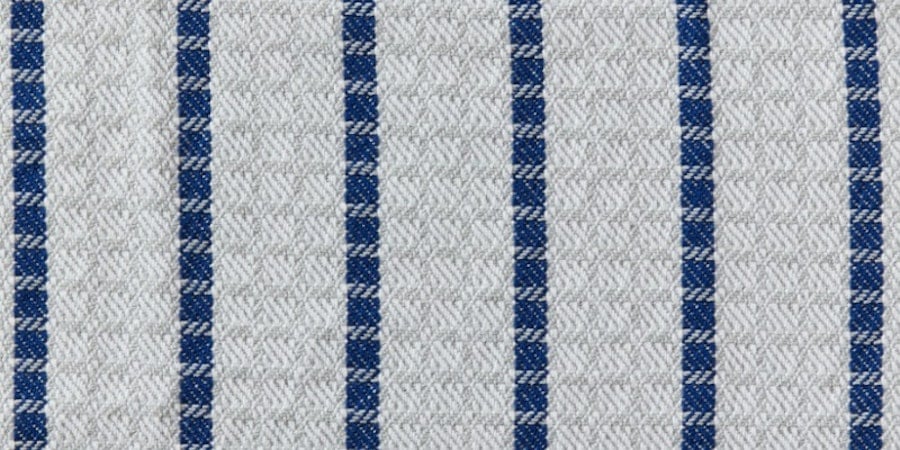
Weaving inspiration can come from anywhere as Connie Westbrook shows in her Pool-Inspired Towels that she based on the tiles in the pool where she swims. The 8-shaft turned twill pattern mimics the lanes in a public pool and also the tiling around the edg