
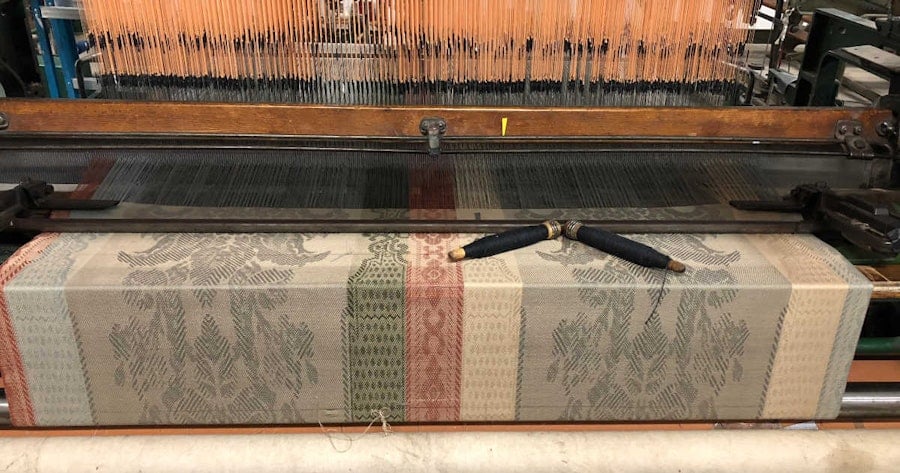
Rabbit Goody has spent her career weaving historically accurate textiles. Here are her musings on the history of American handweaving.
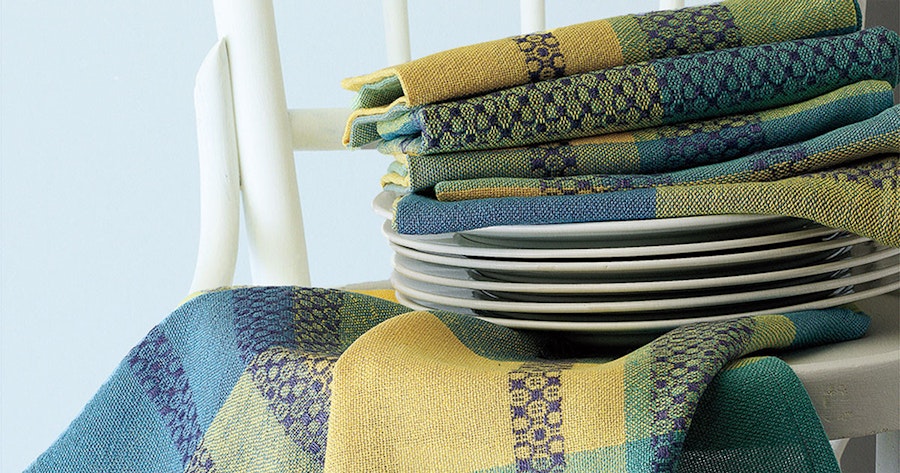
It isn’t that easy to have looms in two places unless you are willing to create two weaving studios.
I wove a scarf with rayon chenille warp and a silk/cotton weft. Now I have a chenille fringe that is raveling away. What would be the best way to avoid a "bare" fringe for this scarf?
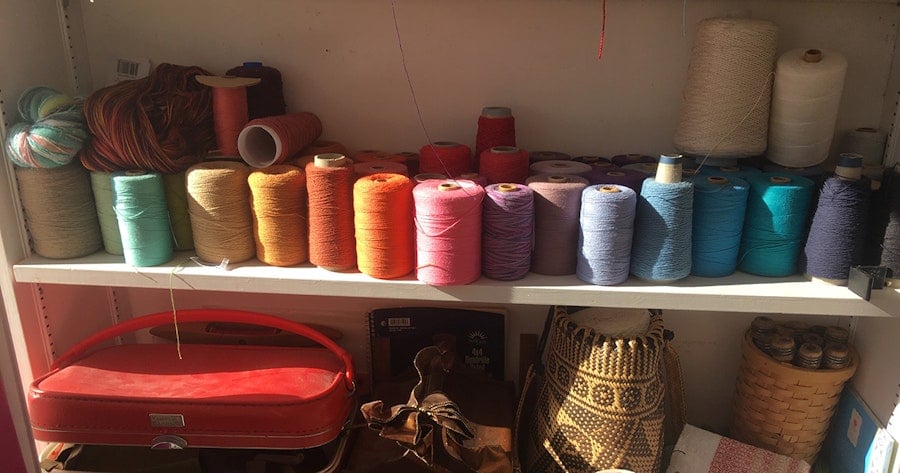
The basic premise of what is known as the KonMari method is to embrace what gives you joy and eliminate what doesn’t. This is rather easy when we’re talking about most yarns.
Should hemming, fringe twisting, etc. for woven pieces be done before or after wet-finishing them?
I am a beginning weaver (actually, a beginning-again weaver) and need help with yarn substitutions. I am using an older pattern from Handwoven, November/December 1996, “Man’s Scarf in Silk and Cotton.” It calls for 12/2 silk at 2,790 yd/lb.
I grouped these three questions together because they all involve the same kind of reasoning and knowledge related to designing around yarn. The first important step to take is to download the Master Yarn Chart.
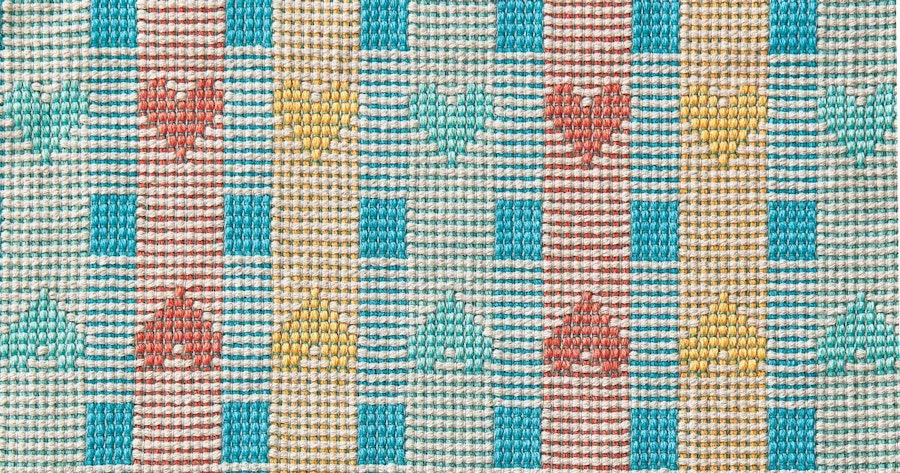
After having a baby, I developed strong opinions about baby blankets. They should be beautiful, yes, but they should also be durable and washable. Baby blankets need to stand up to use, abuse, and many, many trips through the washer. Deanna Deeds’s Swee
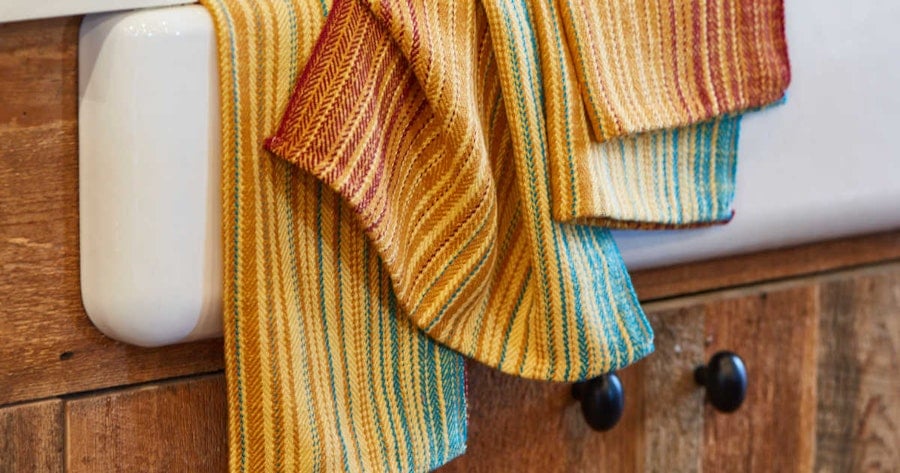
Am I the only one intimidated by “random” warping? I love the look of it, but I can’t seem to bring myself to let loose at the warping board. Enter Sarah Resnick’s Sunset Towels from the January/February 2019 issue of Handwoven.
You might not realize it, but the Shakers of old gave us a lot to be thankful for. Do you own a flat-bottomed broom? Those were first patented by a Shaker. Do you enjoy buying packages of seeds every spring? Shakers invented those, too.