
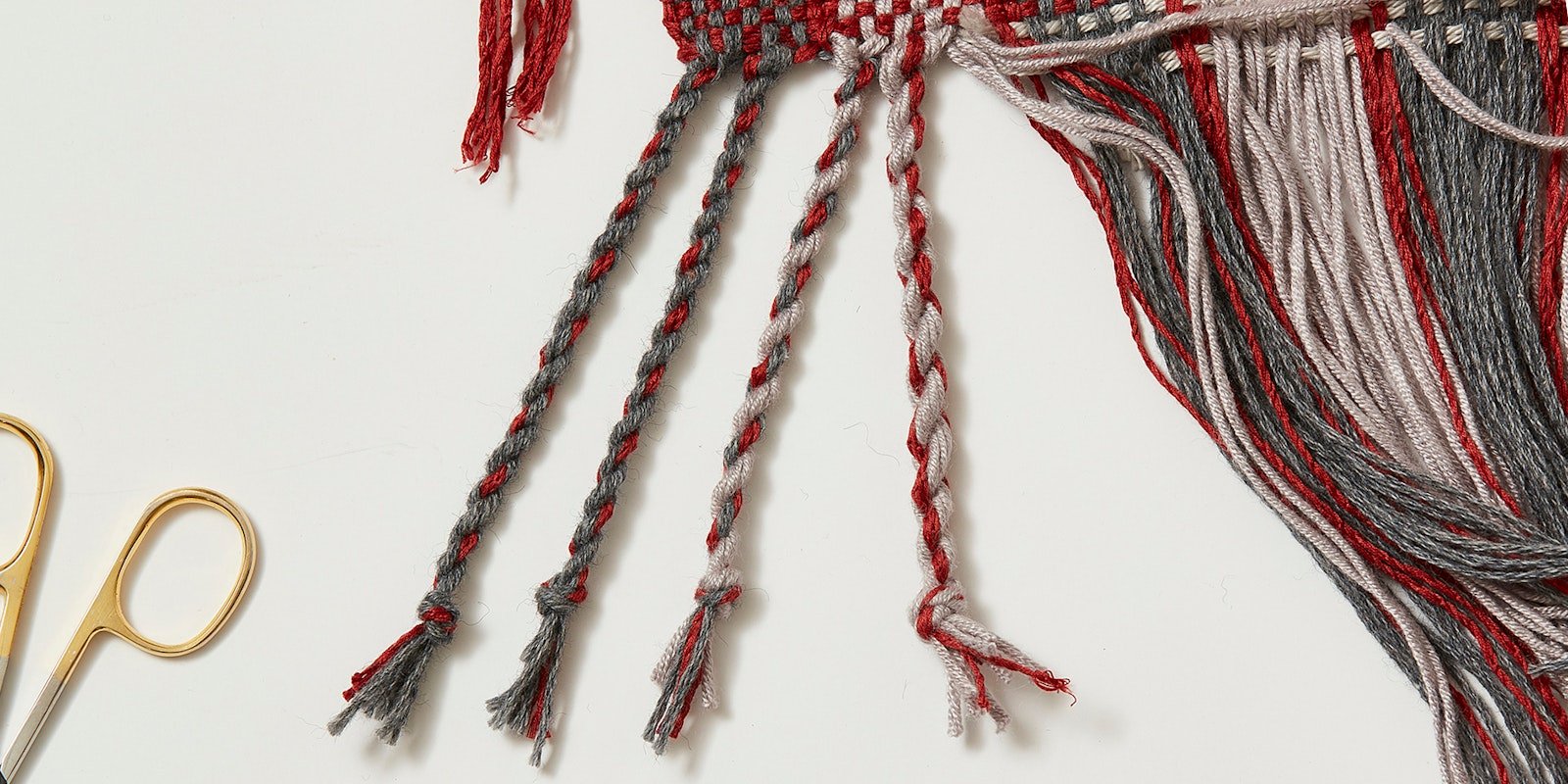
If you’re planning on twisting fringe to finish your next scarf, we have an important number you should keep in mind: 30 percent. What’s that?
Twisted fringe can have a lot of take-up, so add an extra 30% to the length of fringe you want (for example, for 6” fringe, allow 8” of unwoven warp).
From Tips from the Fringe—and the Hemmed Edge
In other words, don’t just guess at how much unwoven warp is enough. Decide on your finished fringe length, and then plan your project to allow for that finished length plus 30 percent more at both ends.
If you’re not sure how long your fringe should be, consider the scarves in your wardrobe or in stores. What appeals to you? Keep in mind that fringe lengths can vary depending on factors including fiber (wool fringes are typically shorter and silk fringes longer) and intended use.
As a weaver, of course, sampling is your friend. Put on an even longer warp, weave a sample with a substantial amount of unwoven warp on each end, twist some fringes, and see what you think. As you twist, you can experiment with the number of ends in each bundle, or the number of twists in each fringe. You can try out beads, or add yarn to bulk up fringes or to introduce color. When you find just the right combination, write everything down so you don’t forget the details.
Need a fringe-twisting refresher? You’ll find a good one here.
More Tips for Fringing (and Hemming)
That 30 percent tip comes from a wonderful resource that’s all about planning ahead for finishing. Here are some of the other topics it covers:
Fringing vs. hemming: When to lash on and when to tie on.
Making nice fringes: Planning ahead for hemstitching, making consistent twists, and when to wet-finish.
Making nice hems: Avoiding pattern interruptions, reducing bulk, conquering ruffles, and closing selvedge gaps.
Machine hemming: How to sew without hem ears or thread blobs.
Go take a look and see what you can put to use as you plan and weave your next project!