
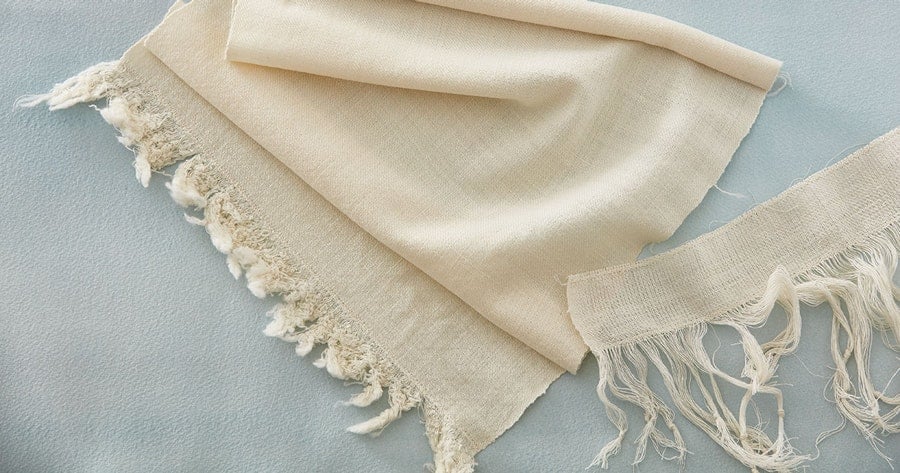
Sarah Wroot’s working title for her Spin Off Winter 2019 article started as “The Cassimere Project” but became “The Cassimere Insanity.”

My approach to weaving a perfect scarf is often a lot like my approach to cooking. I make a list of the best qualities of my ingredients—either food or yarn. Next, I think about how to prepare them to highlight rather than hide these attributes.
I have just wound a warp that took way too long to wind and I'm wondering if there is a better way.

Laura Fry’s Silk Wall of Troy 8-shaft scarf from Handwoven Loom Theory: Eight and Over Eight Scarf Collection is the perfect project for when you want to relax at the loom and still produce something spectacular.
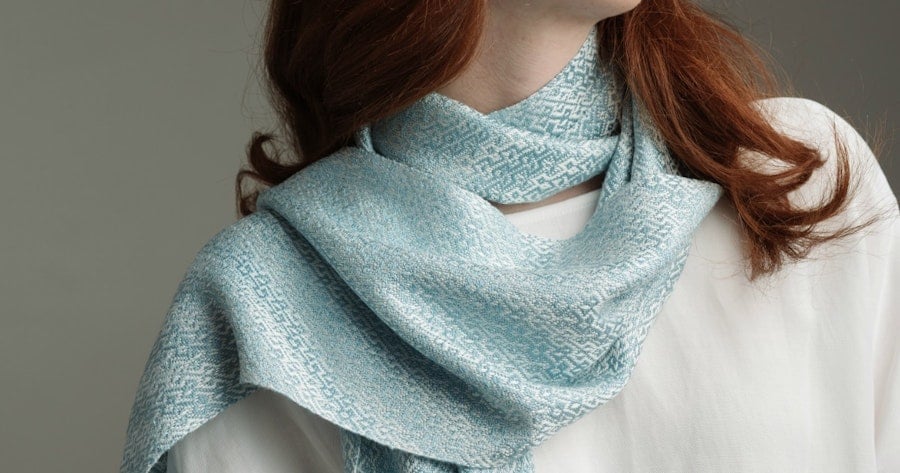
I was immediately smitten with Laura Fry’s Wall of Troy 16-shaft scarf in silk. Woven in robin’s egg blue, this scarf is the epitome of elegance.
I am weaving a silk scarf in huck lace and noticed that about four inches back I had made a serious treadling error. What can I do?
I had no idea how difficult woven rep was going to be—the threads are twisting between the reed and the heddles as I wind on. What else can I do?
There are two typical methods for handling floating selvedges. One is to wind and beam the floating selvedge with the rest of the warp...
Winding the warp with spacers between the warp layers is a vital step in warping a loom. What material works best as a spacer? Cardboard? Paper? Sticks?
The method you are referring to for tying the warp onto the apron rod is usually called "lashing." Madelyn gives instructions on just how this is done.