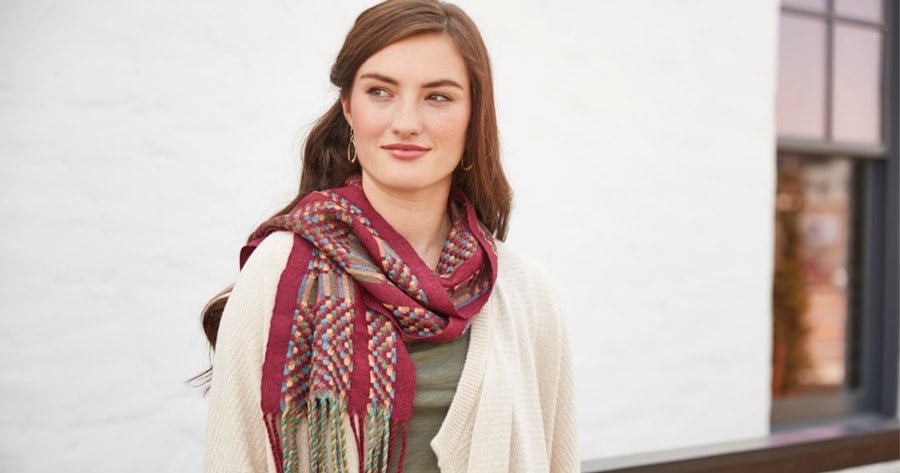
Deflected doubleweave is a delightful, versatile structure. You can use it to weave up circles, flowers, and even bubbles. When she wanted to weave a scarf inspired by the beautiful mosaics she saw in Spain, Anu Bhatia turned to deflected doubleweave.
Here is a dilemma: I have inherited several cones of two different yarns and would like to make a table runner, but I'm not confident in how to approach it.

I hope you have warped your Team Colors Scarf and are happily weaving along. Here are some weaving tips from designer/weaver Elisabeth Hill that you may find useful for this weave-along project or your next one.
I am weaving a small table runner using 3/2 pearl cotton for warp and weft (red and green in the warp, white in the weft). I used a draft (#479, page 129) from Carol Strickler's A Weaver's Book of 8-Shaft Patterns, which I've modified a little.
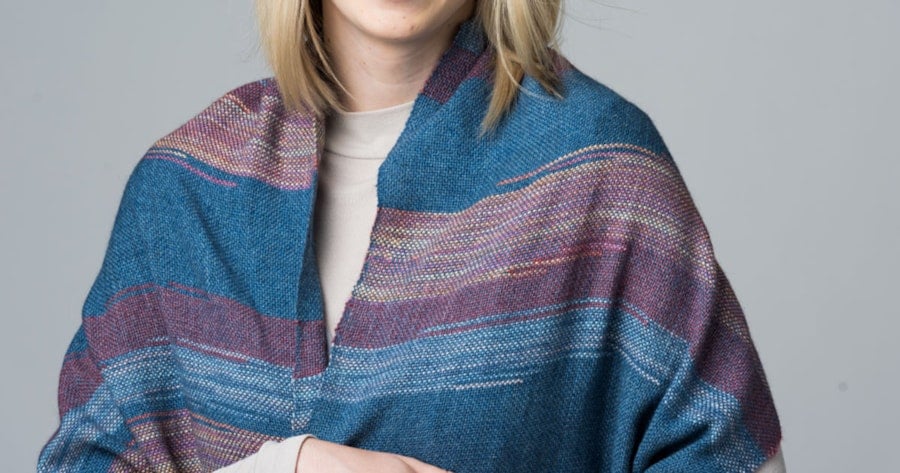
When Judith Shangold told me she wanted to weave a shawl using the hatching technique, I was intrigued—and a little worried. Hatching is a traditional tapestry technique, and when I think tapestry, I don’t think of fine shawls with great drape.
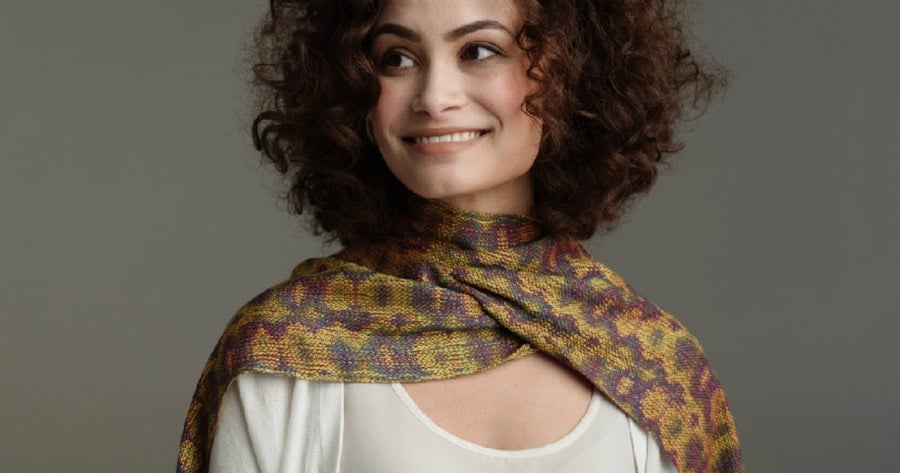
Looking for a project that is sure to impress on just 8-shafts and 10 treadles? Look no further than Bonnie Inouye’s spectacular Jin Silk Scarf.
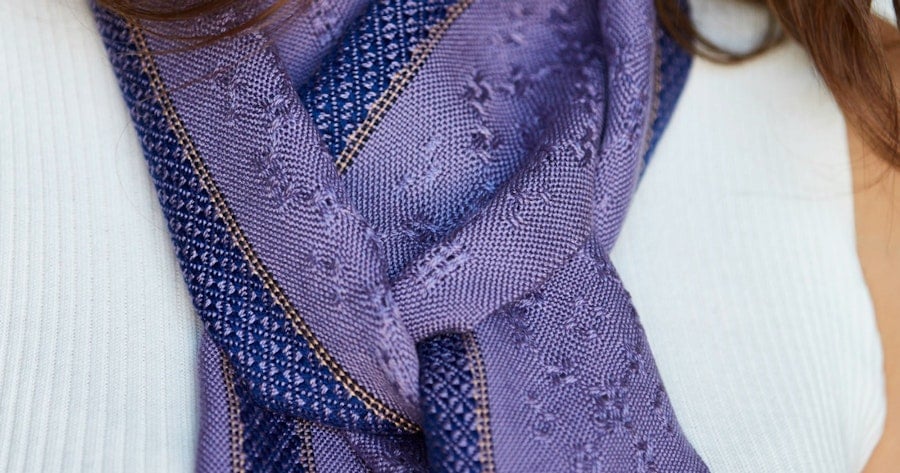
There are very few times in my life I’ve wished I had a loom with more than 8 shafts. One of those times was when I first saw Nancy Dunlap’s astoundingly beautiful Majestic Royal Scarf from the November/December 2018 Handwoven.
I'm having a warp tension problem. After weaving a while, the edge warp threads are very tight and the center very loose, but all were even when I started.