
SPONSORED CONTENT
Yarn Barn of Kansas owner Susan Bateman and her colleague Melissa Parsons teach weaving and help weavers every day in person and by phone. Customers often report back about how their projects turn out, and they call to reorder yarns they’ve purchased in the past.
In the last few years, many yarn suppliers and manufacturers have changed ownership or closed, making it difficult for Yarn Barn to keep the shelves stocked with the supplies that weavers count on. Shipping and possible import duties made it more expensive and unpredictable to keep yarns in stock.
Tencel Yarn Troubles
Tencel weaving yarns had developed their own set of problems. Lustrous, smooth, and drapey like silk, Tencel is a favorite yarn for handweavers. It takes dye vividly and costs less than silk. Made in a closed-loop process and OEKO-TEX certified, Tencel is a vegan and eco-friendly yarn.
“Tencel is dense, but very supple, so you get this great swing to the fabric,” says Melissa. “It also reflects light amazingly well, creating an elegant sheen. Together, these qualities are great for fabrics in motion—shawls and scarves that sway and shimmer as you walk.”
But many weavers found themselves wrestling with Tencel warps that unexpectedly broke or even shredded in the middle of a project. Availability of the colors they wanted was uncertain, and it could be difficult to tell which yarns would fail. “We would only recommend Tencel yarn as weft,” Susan says.
Yarn Barn decided to explore sources closer to home. (Much closer, as it turned out.)
 Yarn Barn of Kansas staff member Magnus Primm shelves cones of Big and Little Dipper. His twill scarf features Little Dipper in the warp and weft.
Building a Better Tencel Yarn
Fresh from their experience developing Ad Astra, a custom-dyed 4/2 organic unmercerized cotton produced in the United States, the team at Yarn Barn decided to launch another ambitious project. They auditioned undyed Tencel yarns in search of a mill that could create the strongest yarn, one that they were confident would hold up as warp. With the mill that produced the strongest Tencel yarn they found, Yarn Barn developed 5/2 and 8/2 sizes; keeping with the star theme, they called the sister yarns Big Dipper and Little Dipper.
Having identified a strong and silky base, Susan needed to build a palette that would offer weavers a broad, versatile set of colors. To create the 35 colors of Little Dipper (36 of Big Dipper), Susan reached out to a longtime partner: Brown Sheep Company. Yarn Barn was an early customer of Brown Sheep’s first yarns and has carried the company’s products ever since. Brown Sheep offered several things important to Susan: a wide range of colors, a track record for maintaining their color options, and a commitment to sustainable American manufacturing. Especially for Tencel, which is manufactured through a process with high environmental standards, it was important that the new yarns be produced with the same care for the environment.
“Both Kansas and Nebraska sit above the Ogallala Aquifer,” Susan points out. This natural underground reservoir of water, which dates from the Ice Age, is now strained by irrigation demands. Very little rain falls in northwest Nebraska, and Brown Sheep has worked to conserve the scarce water supply. More than 15 years ago, the company developed a system for cleaning and reusing the water used in their dye process, reducing the amount of water that they use to make their yarn.
 Dyed in Brown Sheep Company’s Nebraska mill, the Dippers can be reordered in convenient quantities and stocked ready for customers.
Into the Dyepot
The dyes used for cellulose (plant-based) fibers such as Tencel are different from the acid dyes used for wool, alpaca, and other protein fibers. Most of Brown Sheep’s yarns are composed of wool, but they offer a few wool/cotton blends. The dye chemistry for the cotton blends would work for the new Dipper yarns, and the two companies dyed samples of the Tencel.
Where the cotton blend yarns develop more muted tints, the lustrous Tencel takes dye deeply and vividly. There were some surprises in the dyepot: some shades came out much darker on the Tencel, while others looked brighter because of the fiber’s shine. From Brown Sheep’s existing colorways, Yarn Barn selected the color range for the Dippers.
Making a custom yarn can require committing to very large orders. For a weaver to buy a few cones of a color, a store might be required to order dozens. To manufacture it, “we might have to order hundreds of pounds at a time,” says Susan—a big commitment, especially when you need to maintain a full range of colors. In contrast with a larger dye house with a hefty minimum for reordering, “Brown Sheep has dye kettles in a range of sizes,” Susan says, so Yarn Barn can order quantities that match what Yarn Barn needs and has room to store. Several of the colors are in their second batch, and they’ve proven consistent from one batch to the next.
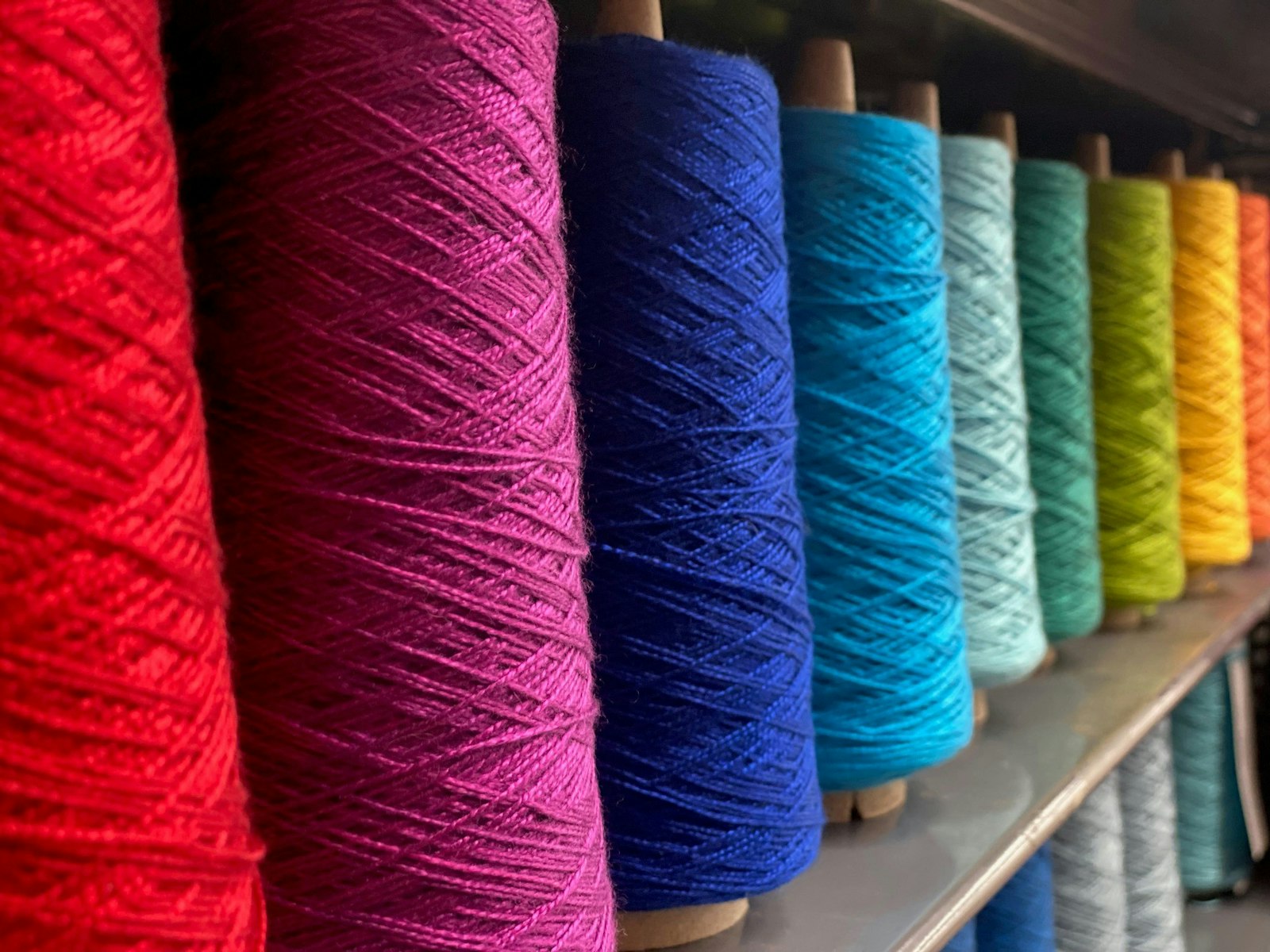
 Like silk, Tencel can look deep and rich or bright and vibrant when dyed. Designed for strength, the Dippers shine in both warp and weft.
Stars on the Loom: Weaving the Tencel Yarn
The proof of a yarn is in the weaving, and Susan and Melissa have been delighted with the new yarn: its hand, drape, and luster produce the silky fabric they were dreaming of, and the yarn holds up well in weaving and finishing.
“I’ve woven two projects in Big Dipper and one in Little Dipper, and they are just a pleasure to weave,” says Melissa. “I ended up threading and beaming my Little Dipper warp three times, but I didn’t have a single frayed warp end, much less a broken one. I’m hearing the same thing from customers, who have called to say how much they love the yarn and how happy they are with its strength.”
SPONSORED CONTENT