
Have you noticed that some projects in Handwoven specify a number of ends, while others also include the phrase “doubled ends” or “working ends”? Let’s talk about the distinctions between types of ends—and how they affect the way you dress your loom.
Types of Warp Ends
Single ends: Unless otherwise noted, the number of ends specified in a project’s warp length (or in its first step) refers to single ends. A project that calls for “180 ends 3 yd long” needs 180 single strands, each of which is (you guessed it!) 3 yards long. When you’re threading the loom, each single end will travel through its own heddle. Most Handwoven projects use single ends, although some single-end warps may call for doubled floating selvedges.
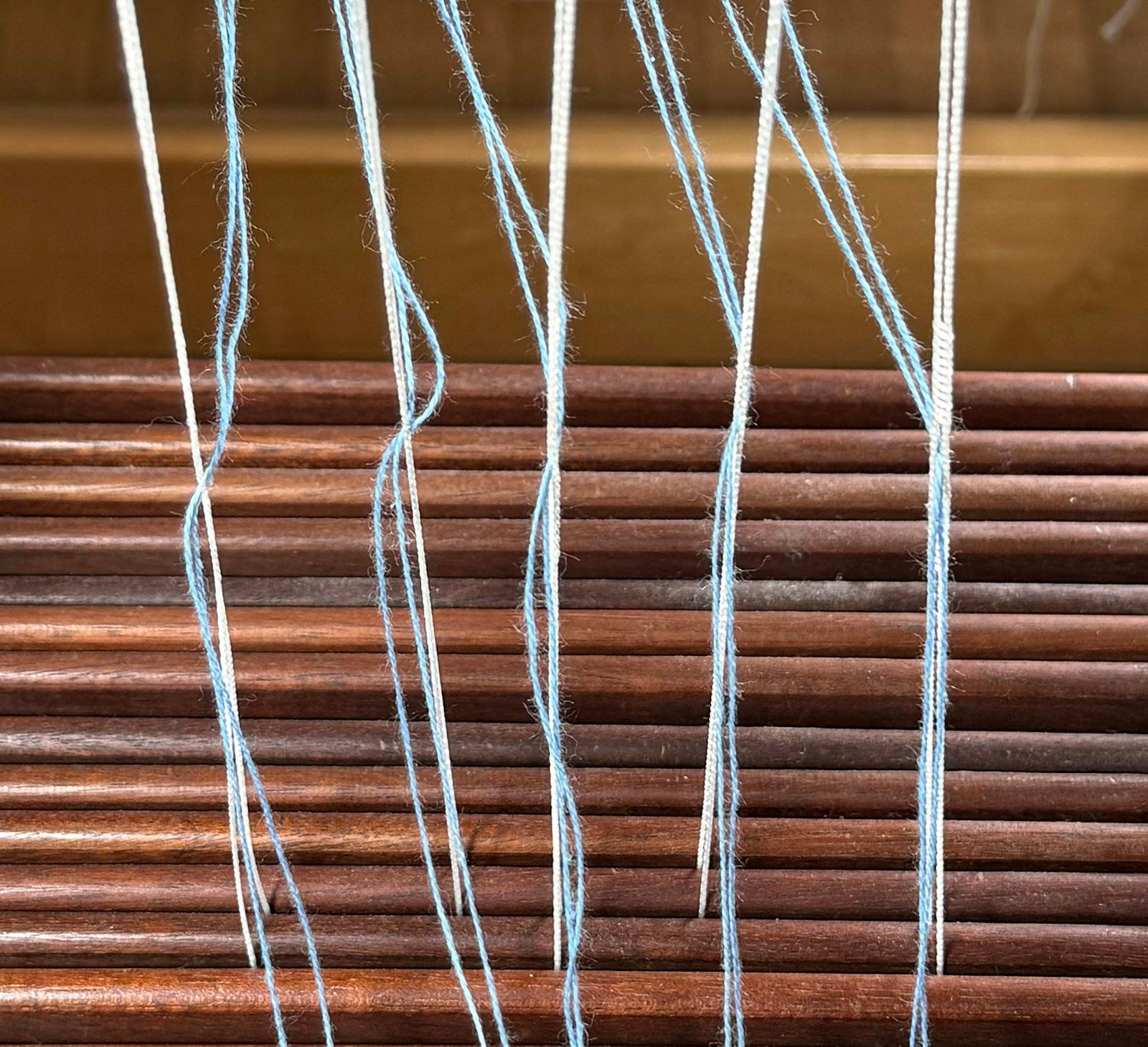
Doubled ends: When a project refers to “doubled ends,” all of the ends in the warp are two strands held together, and the pair functions as one through the heddles and reed. If the warp length and step 1 say to use “123 doubled ends (246 threads total),” you’re meant to hold two strands together and treat them as a single end, threading them through the same heddle and the same reed dent.
Working ends: When a project refers to “working ends,” the warp will be made up of a mix of ends that may include single, double, triple, or even quadruple strands held together. Each working end, regardless of how many threads it contains, will function as one end through the heddles and reed.
Why Use Doubled or Working Ends
Click any image to enlarge.
Here are some reasons a project may call for (or you may wish to use) doubled or working ends.
To produce the appropriate yarn size. A warp designed to use 5/2 cotton—2,100 yards per pound (ypp)—can also be woven using doubled ends of 10/2 cotton (4,200 ypp). When threading, you’ll put the pairs of doubled ends through the same heddle so they behave together as a single larger thread. If you have some finer weights hanging around your yarn stash, this kind of substitution is a good way to put them to use.
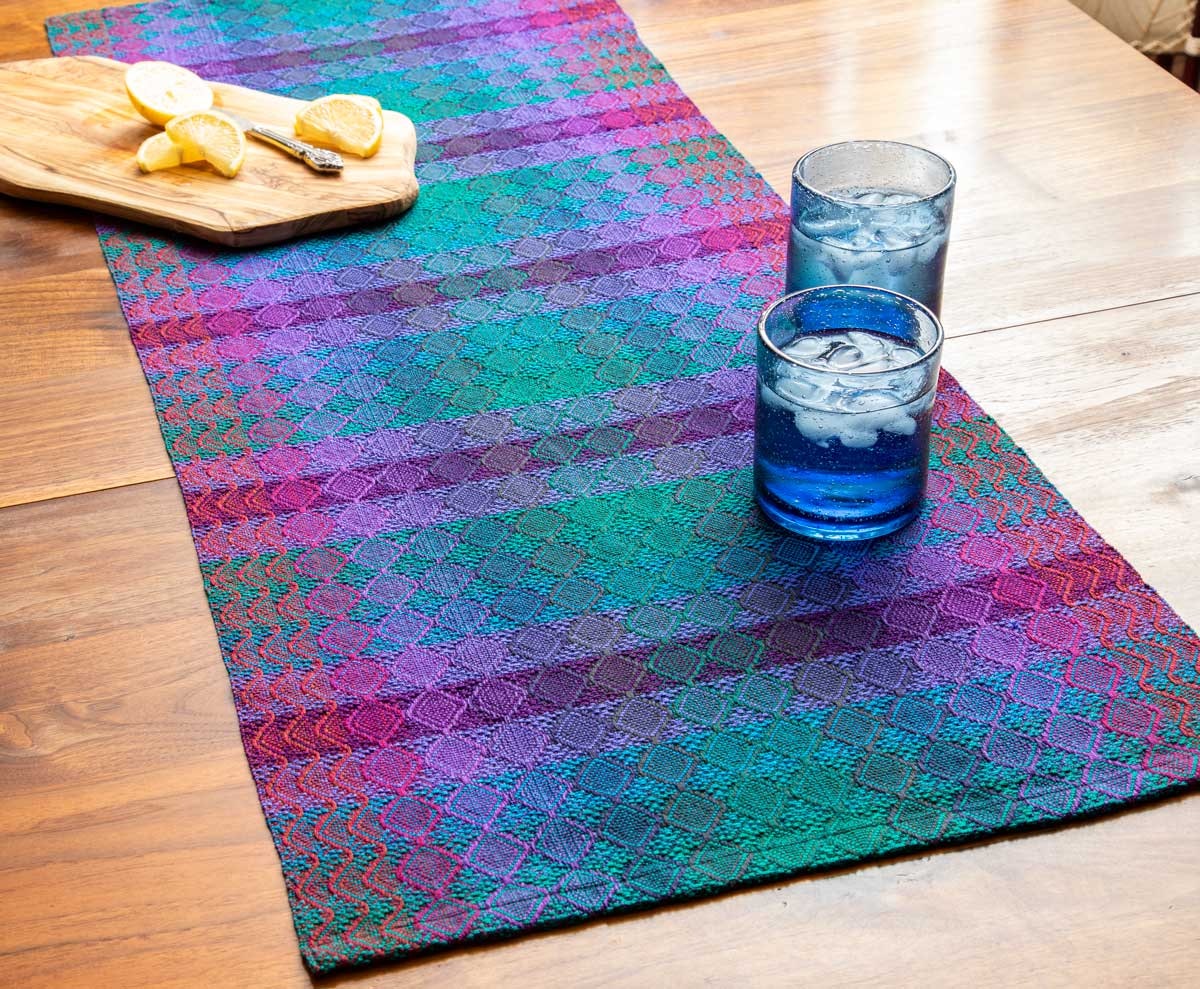
To produce gradual color blending. Using doubled ends of a thinner yarn allows you to gradually shift color across the warp by changing one end at a time in each pair. Even though that pair of ends may be of different colors, you’ll put both threads through the same heddle so they behave as a single larger thread. Sheila O’Hara does a masterful job with this style of color blending in her designs—see her Gemstone Table Runner above.
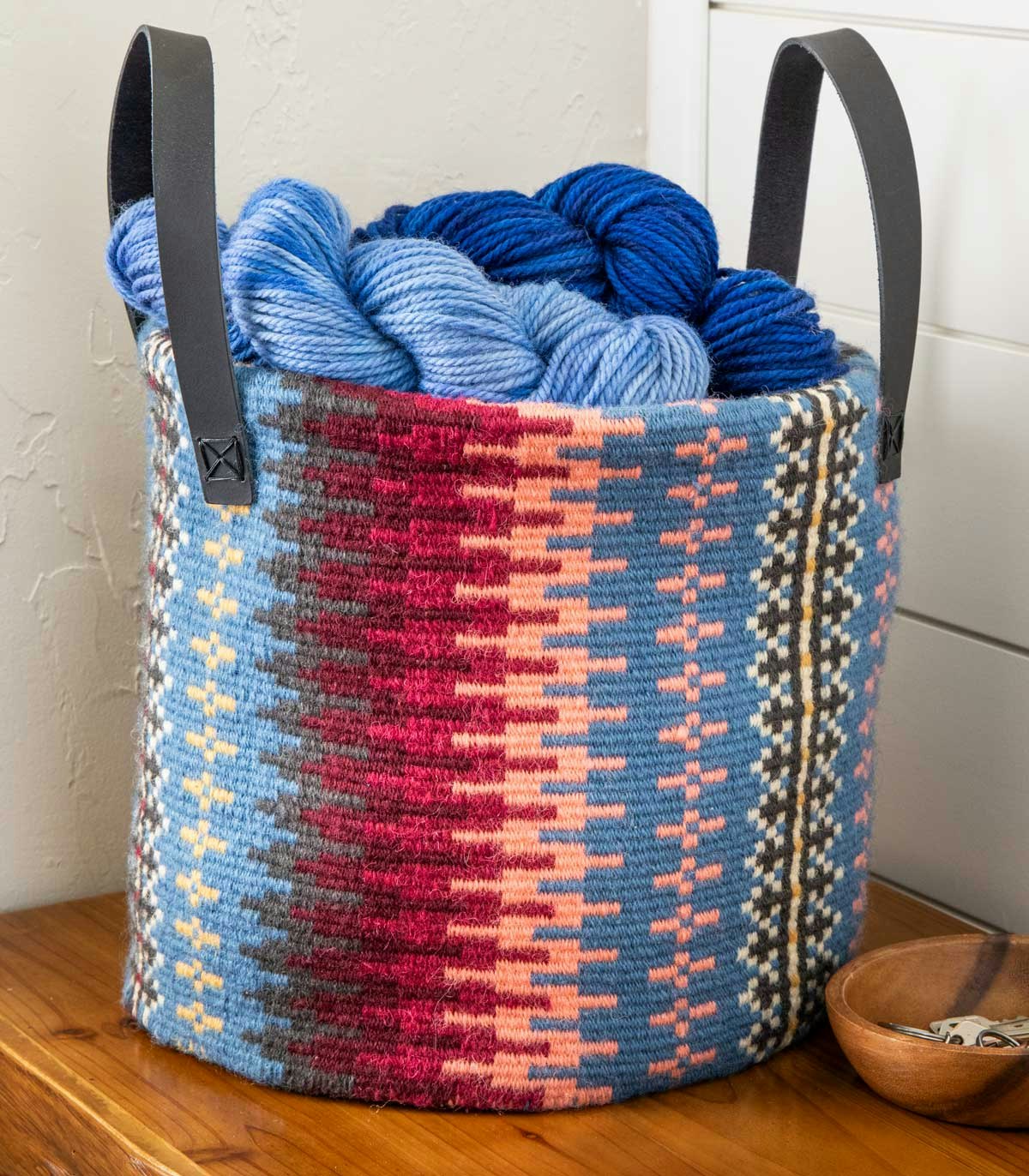
To produce a stronger warp. For some structures or end uses (such as krokbragd, or when weaving rugs), doubled ends will help you weave a stronger or stiffer piece. Annette Swan Schipf’s Zigzag Basket, woven in krokbragd and shown above, uses doubled ends for sides that stand up on their own.
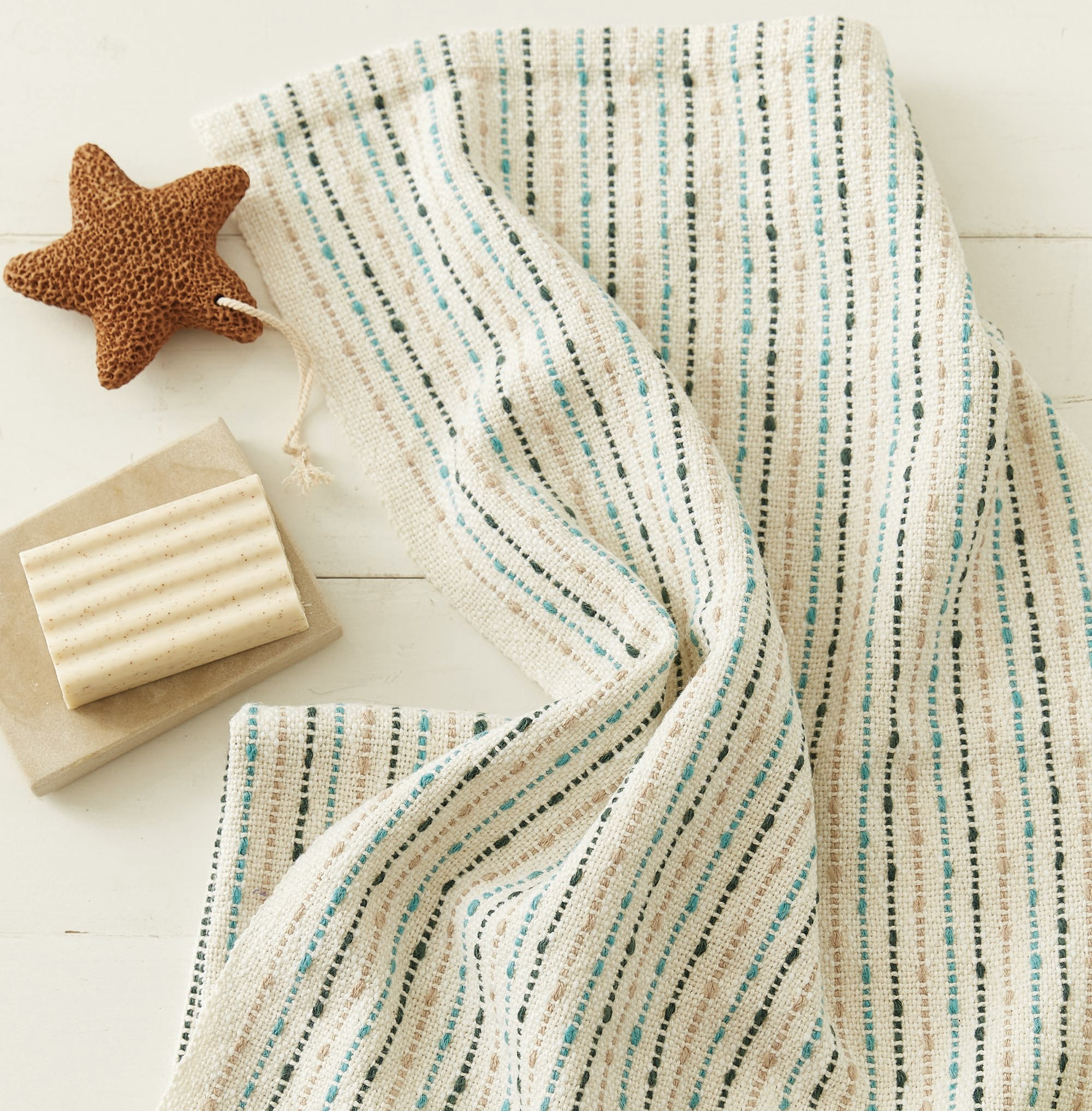
To create texture or for mixed warps. You might combine some single ends with some doubled ends of the same or different yarns to weave textural or ribbed results, as Jenny Sennot does in her A Day at the Beach Towels from May/June 2018, page 56 (see above).
Ends in the Reed
Projects using single ends may be sleyed in a variety of ways, depending on the reed you’re using and the sett you’re trying to achieve. If you’re using a 10-dent reed and you want a sett of 20, you’ll sley 2 ends per dent. To get the same sett of 20 in an 8-dent reed, you’ll sley 3-2-3-2.
What happens with doubled or working ends in the reed? Remember that those are treated through both the heddles and the reed as a single end. If you’re using a 10-dent reed and aiming for a sett of 20, you’ll sley 2 pairs of doubled ends or 2 groups of working ends per dent; for the 8-dent reed, you’ll sley the pairs of doubled ends or the groups of working ends at 3-2-3-2.
One final note about language: Using doubled ends in a warp (for any of the reasons noted above) is not the same as doubling ends in the reed (to change the sett of a project).