
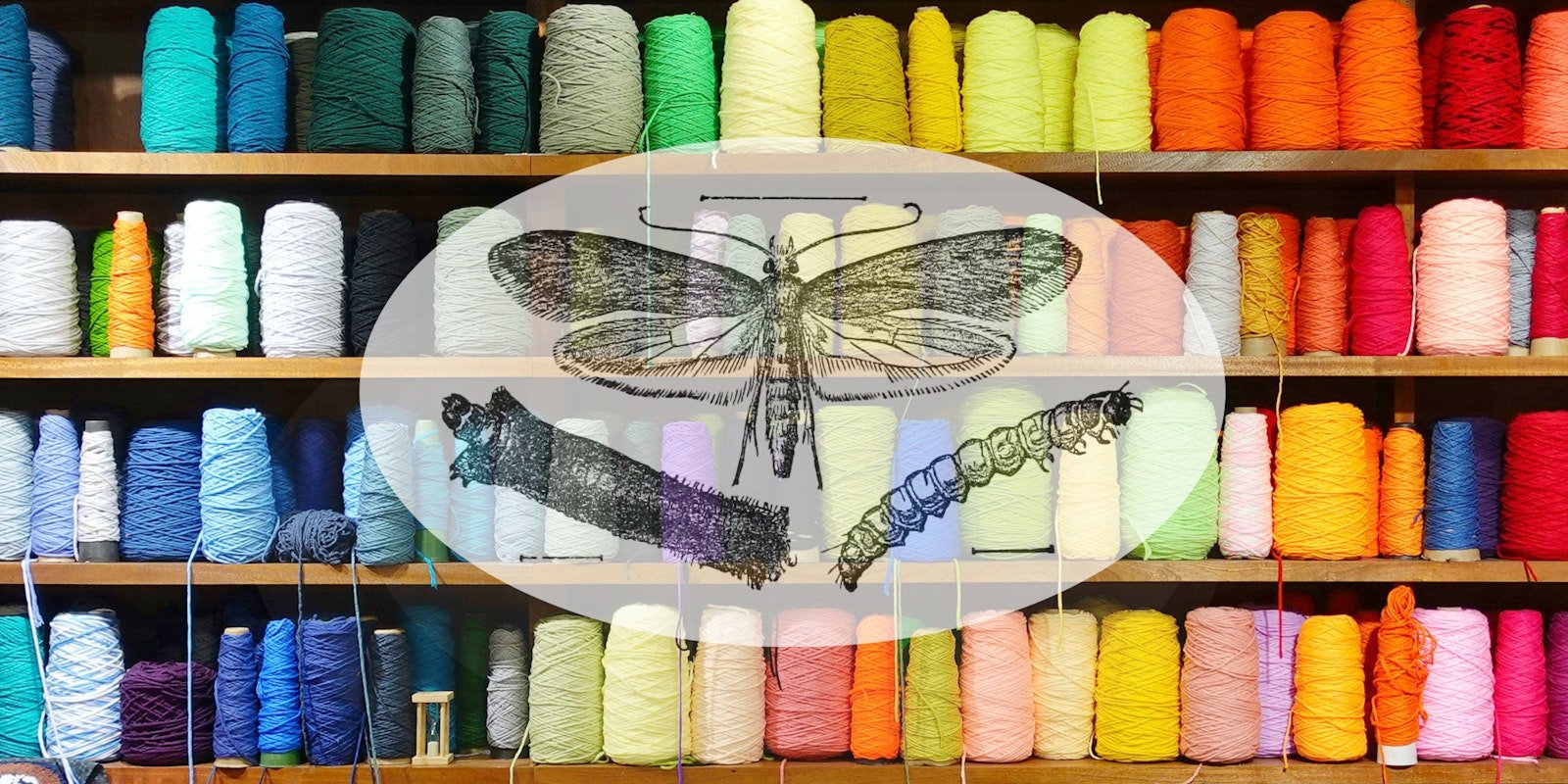
Tom Knisely wrote about some of his adventures with moths (and mice, and even a snake!) in the Spring 2026 issue of Handwoven.
In the piece he writes, “Over the years, I’ve thrown away too many cones of thread and bags of spinning fibers because of invasions by those pests. The mere sight of moths flying around the studio makes for a very sad day indeed.”
If you’re faced with moths in your weaving space, here’s what to do about them.
About the Moths
What they are: Two types of moths are typically found hanging around textiles: common clothes moths (Tineola bisselliella), and their cousins the casemaking clothes moth (Tinea pellionella). These moths don’t themselves feast on your yarn—it’s their larvae that cause the damage you see.
Detection
Pheromone traps: Male moths are attracted to these traps, which are available in hardware stores and online. Following the instructions provided, place traps in your fiber storage area and investigate further for eggs and larvae if you catch any moths. Because traps are species-specific, if you’re not sure what types of moths are active, use both kinds of traps.
Cleaning
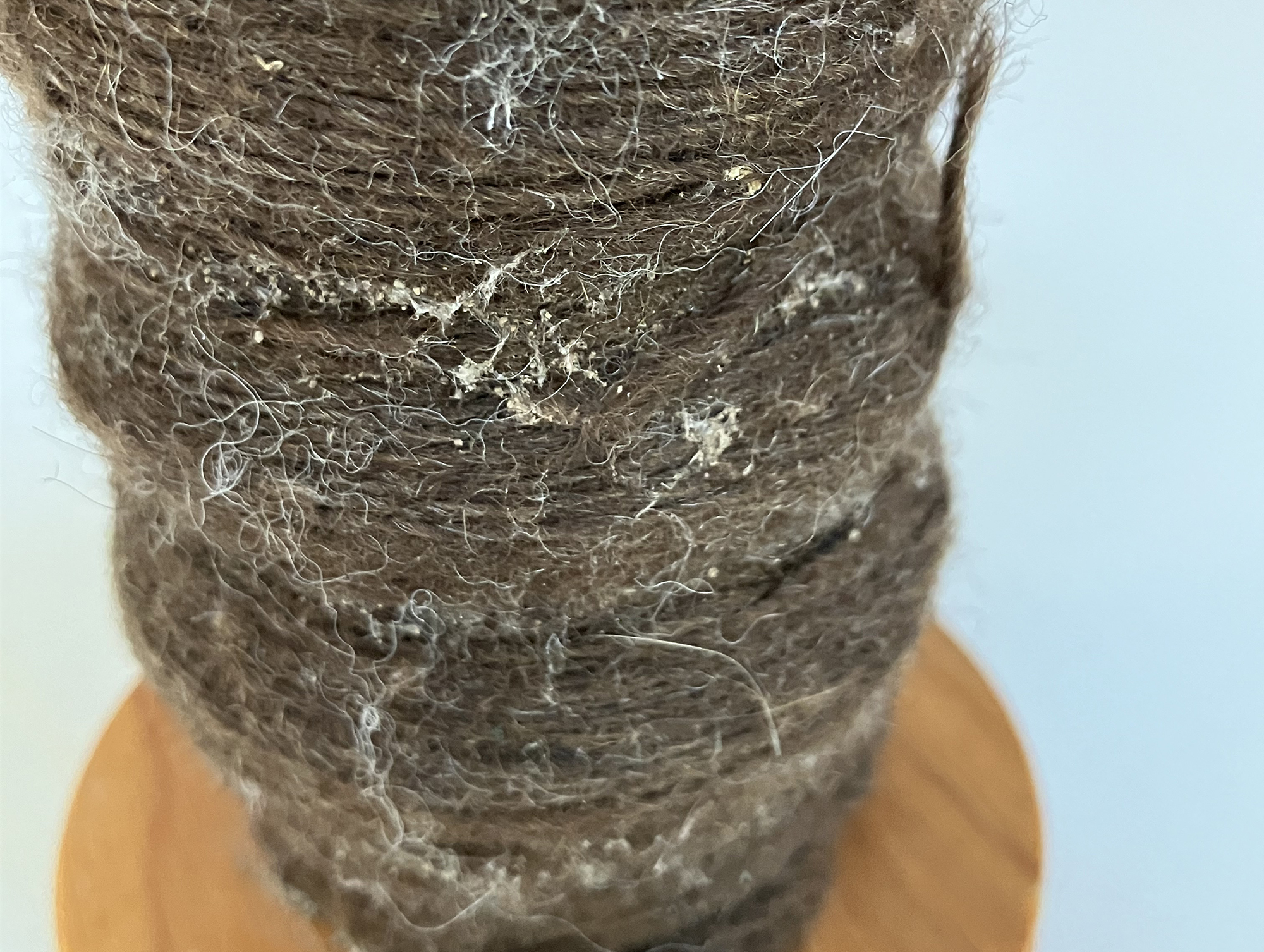
Damage detected: Moths and larvae have been busy around the yarn shown here, as you can see by the white webbing they’ve left behind (photo by Tom Knisely). If you see anything similar in your stash, clear off your shelves and clean them, vacuum the area, and inspect any affected yarn. If the damage is major, don’t delay—throw it away! If it’s minor, consider the following treatments to kill the pests.
Treatments
Cold: Freezing for several days will kill moth larvae, but eggs can survive those low temperatures. Cycling yarn in (for 30 days) and out (for two weeks) of the freezer will give eggs a chance to hatch before you apply another dose of cold to kill the next batch of larvae.
Heat: Heating yarn or fiber to 120°F for 30 minutes or more will also kill larvae. Rapid temperature changes are more effective than more gradual changes, so a car dashboard on a hot, sunny day may work better than an unventilated attic.
Asphyxiation: Placing suspect yarn in a plastic bag along with a piece of dry ice will kill larvae. Learn more about this approach—scroll down for the details.
Moving On
Airtight containers: After removing all suspect yarn, store your clean yarn and fiber in sealed containers to avoid reinfestation. Make sure your fiber is fully dry before storage.
Stay vigilant: Look closely at your yarn regularly, and use pheromone traps as an early-warning device. If you catch a moth, you’ll need to repeat the cleaning and treatment steps.
Read the rest of Tom’s article in the Spring 2026 issue of Handwoven.