
Contents
Need to weave lots of towels for upcoming weddings/birthdays/housewarmings/towel exchanges? You can choose a draft and put a long warp on the loom, but if you know you’ll be bored weaving the same thing over and over, you might consider using a blended draft instead.
Not sure what a blended draft is? It’s a seamless mixture of two drafts into one threading, tie-up, and treadling. You can weave pieces in one or the other structure on the same warp—you can even combine the structures in the same piece. Every item you weave can be different!
Most often, you’ll see a blend of two 4-shaft drafts into a 6- or 8-shaft draft. Former Handwoven editor Susan E. Horton’s idea described here was to blend three drafts (two overshot designs plus either spot Bronson or huck lace), which would allow her to weave a wide variety of different towels on her 24-shaft loom (spoiler alert—she didn’t need all of those shafts).
Here’s how she did it.—Handwoven editors
How the Project Began
 Diane Pigg’s Hoosier Huck Towels (in the May/June 2020 issue), a beautiful blend of Bertha Gray Hayes’s “Hoosier Tallyho” and huck lace, inspired Susan to create her own blended draft. Photo by Matt Graves
“I want to weave 13 towels for the summer, and to avoid boredom, I’m going to try a blended draft, but of three rather than two drafts...” Read more.
Try it yourself: Madelyn van der Hoogt explains how to turn a draft in the May/June 2020 issue (page 18).
Deciding on Drafts
 Susan used resources from her library to pick overshot and lace patterns.
“Choosing three drafts took most of a day. It’s not as straightforward as you would think...” Read more.
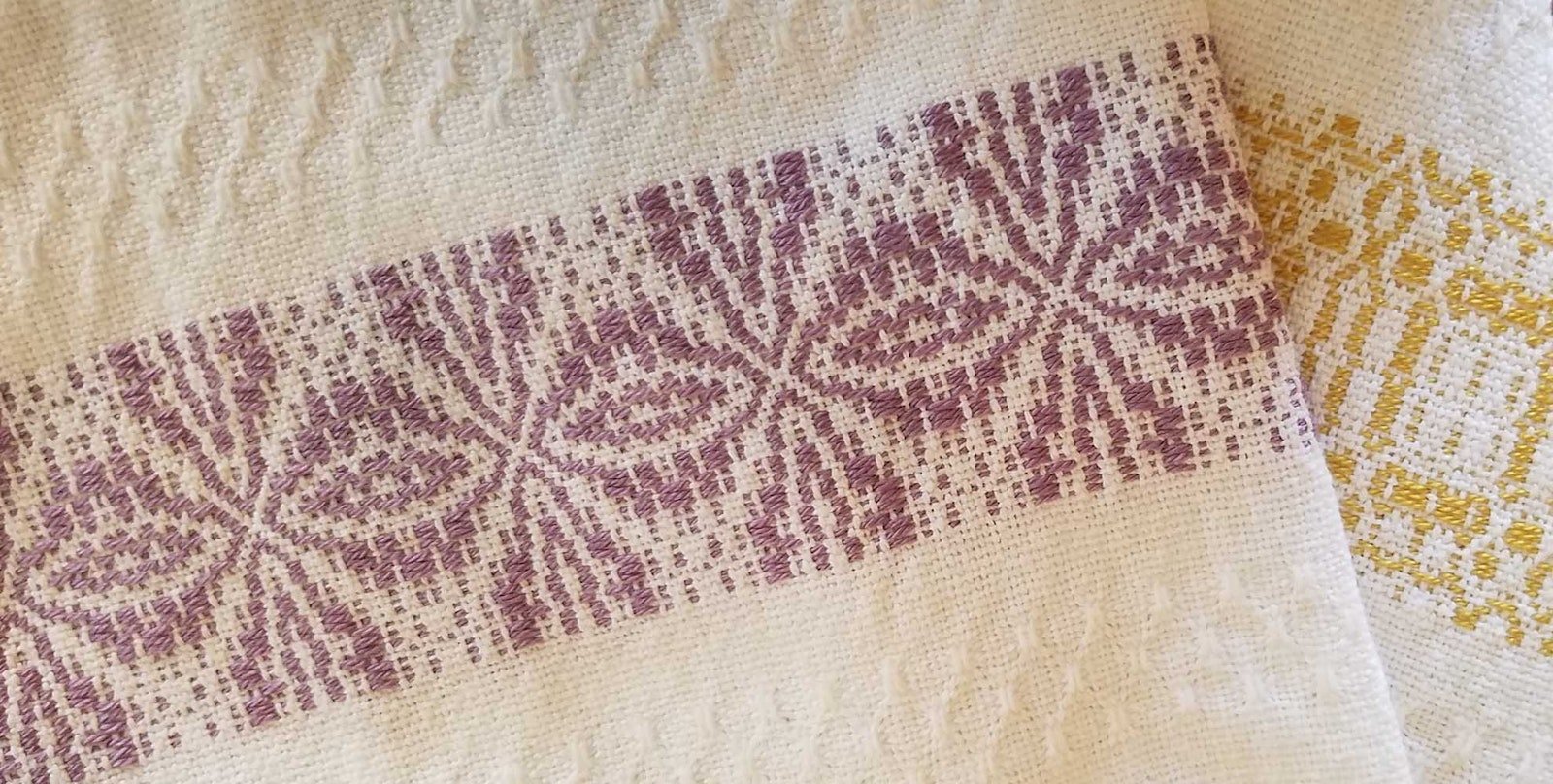
Meet the Sweet Orange Huck Towels
 “Sweet and Lovely” by Bertha Gray Hayes had the small designs Susan was looking for in an overshot draft. She blended it with “Orange Peel” by Mary Meigs Atwater and a huck lace.
“Here are the three original 4-shaft drafts pre-blending, and the final 16-shaft draft with full threading and tie-up. The treadling shows examples of the three 4-shaft components.” Download the free WIFs.
Sampling—But for What?
 Susan wove three samples, which turned out to be for sett.
“I thought I was sampling for color. Based on an earlier huck sampler and some overshot and plain-weave napkins, I was sure 20 epi would be the correct sett...” Read more.
Calculating Warp Amounts
 After she was happy with sett, Susan moved on to figuring out how many warp ends she’d need. Adobe Stock photo
“With my sampling complete, it was time to calculate the warp width and length for my Sweet Orange Huck Towels...” Read more.
Weaving and Cutting Off
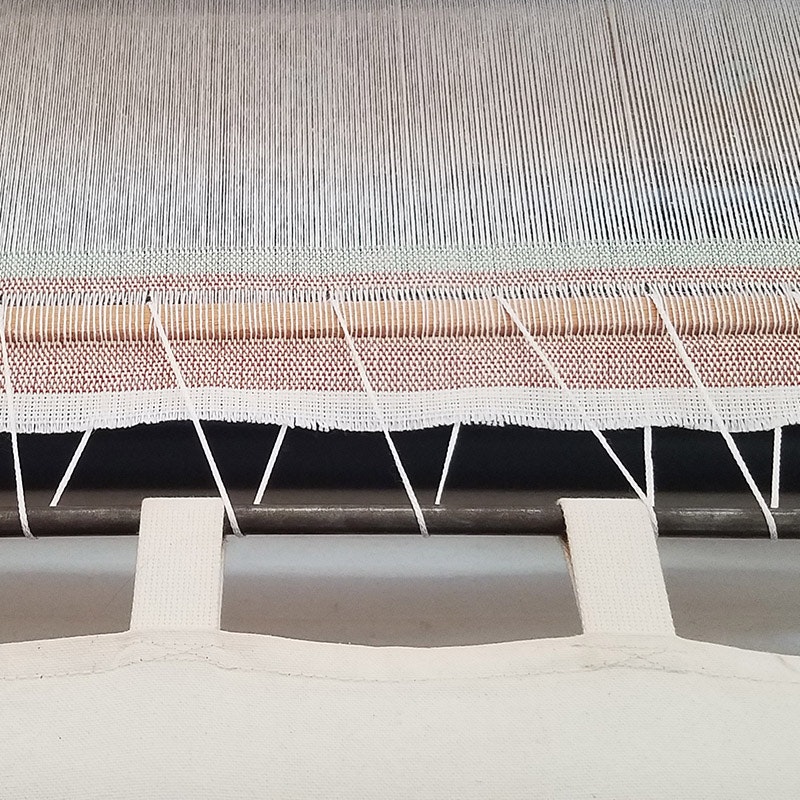
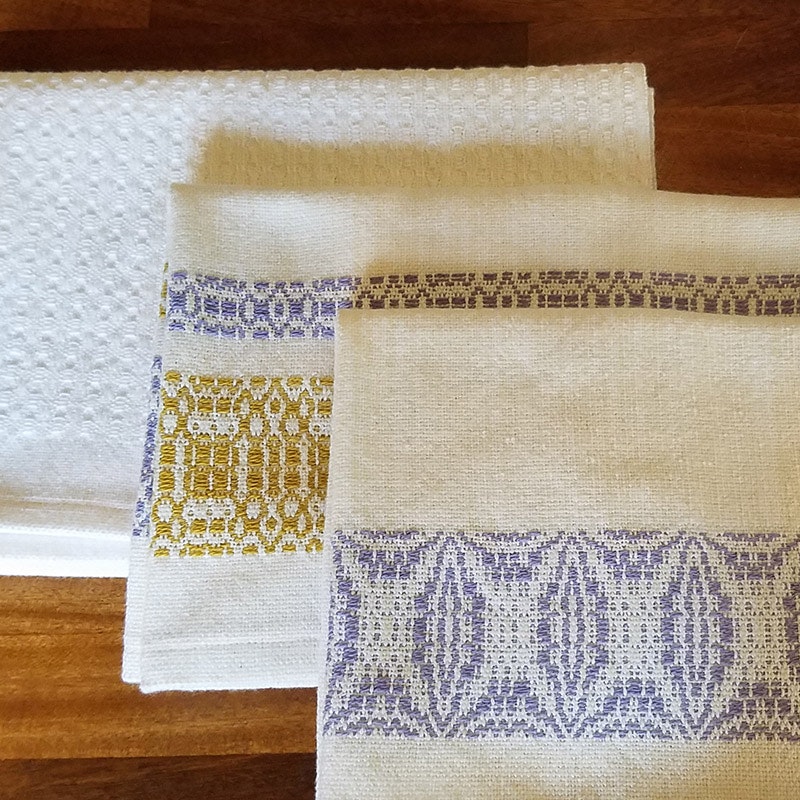
Click to enlarge.
“In the interest of time, instead of weaving to the end of my warp and finishing all 15 towels, I decided to cut off after #8. To create less loom waste and avoid having to re-tie, tension, and spread the warp again, I wove a stick into my warp...” Read more.
Patient or Persevering?
 Susan wove a variety of towels, including the versions you see here, with the rest of the warp.
“All my weaving life, I’ve heard people say that weavers are either patient by nature or they learned patience through weaving. In my opinion, it may be neither...” Read more.