
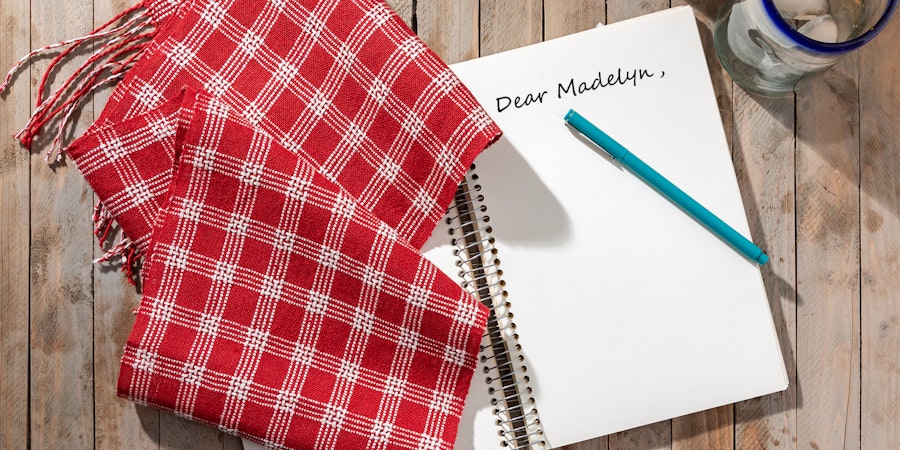
The word “gamp” comes from a slang term for “umbrella.” In weaving a gamp is a fun and interesting way to study weave structures, or color interaction, or both!
Broken warp threads at the edges aren't usually a problem for me. When they do occur, I understand that the breakage is probably due to draw-in.
Weaving master Madelyn answers a question about a master yarn chart sett and warping a loom in this helpful weaving article.
The types of cotton yarn most often used in weaving are 10/2 pearl cotton and 8/2 unmercerized cotton. What's the difference between pearl and unmercerized?
Is there a reason for warping an overshot rug front to back, rather than back-to-front warping? How do you decide how to warp a loom for a given project?
When learning how to weave, many weavers struggle with calculating take-up. Learn to predict your final weaving dimensions based on materials and structure.
Need to learn how to warp a loom with a very short warp, maybe for a precious yarn? Here's how to make sure you get even tension when warping back-to-front.
What do you do if you need to substitute yarn that requires a different sett? How do you modify weaving drafts to get the same final project size?
When you are experiencing more than the occasional broken warp thread, first look at where the warp threads are breaking. Usually, you can then use strategies to prevent or minimize breakage.
I carefully wound a 13-yd warp of 8/2 natural cotton and took it off the warping board and then realized that I forgot to tie the cross. What should I do?


