
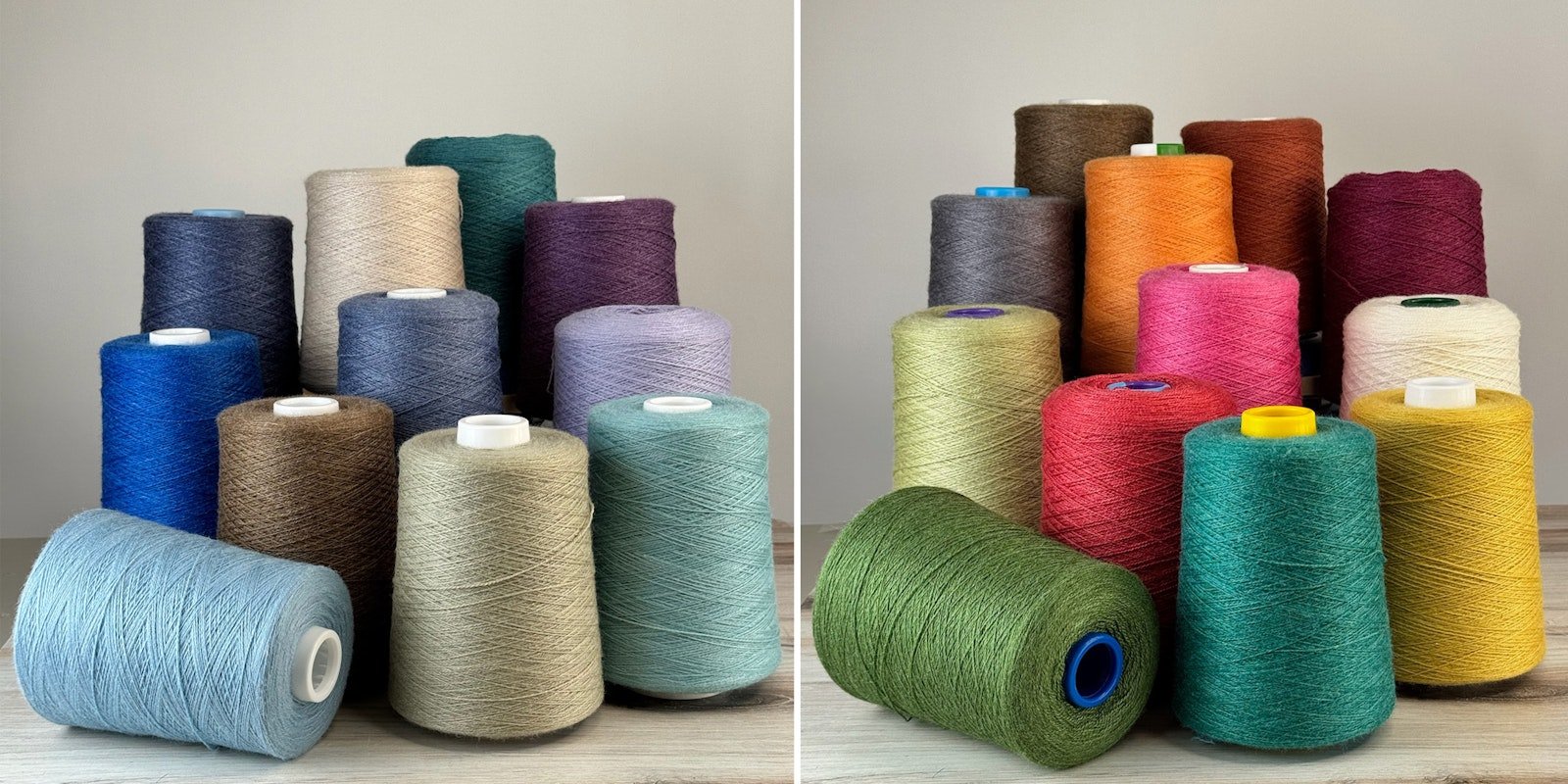
Zephira is a new yarn created by Revolution Fibers to fill the gap left by the loss of Jaggerspun and their dearly beloved Zephyr. We asked Denise Bolger Kovnat to put both Zephyr and Zephira on her loom and report back with what she learned. Here’s what she had to say.—Handwoven editors
Many weavers were deeply sorry to hear about the closing of Jaggerspun—the source of wonderful yarns including their Superfine Merino, Maine Line worsted wool, and, perhaps saddest of all, their Zephyr wool/silk blend.
Well, I’m here to bring you good tidings! I believe that we now have a replacement for Zephyr: It’s a brand new yarn called Zephira, from Revolution Fibers. For this Yarn Lab, I put the two yarns to the test, weaving up nine samples in deflected doubleweave. One set of three uses Zephyr, and two additional sets of three use Zephira in the same patterns—but in different colors, to better show how it weaves up.
I designed the samples using a name draft to honor my grandfather, George Relyea. (I outline how I did that on my blog, by the way.)
The Samples
The new yarn—Zephira: 18/2; 5,040 yd/lb; 50% wool/50% silk
Colors tested: Real Red, Lady Slipper, Violet, Elderberry
Weavers familiar with Zephyr will notice Zephira has a similar silky luster on the cone. The yarn feels light and soft, with just enough stretch to make warping a breeze. Once wet-finished, Zephira fabrics are soft enough to wear against the skin, lightweight, and wonderfully warm, and they have an excellent hand. I’d recommend using Zephira for weaving scarves, shawls, and lightweight fabrics for garments.
The original yarn—Zephyr: 18/2; 5,040 yd/lb; 50% wool/50% silk
Colors tested: Garnet, Coral
This beloved yarn has a silky luster on the cone. Off the cone it feels just as it’s named—like a gentle breeze—as you wind your warp and dress your loom. The yarn’s slight elasticity makes it ideal for warping. Woven up, it has a heavenly hand. Zephyr is particularly suited for weaving scarves, shawls, and lightweight (but warm) fabrics for garments.
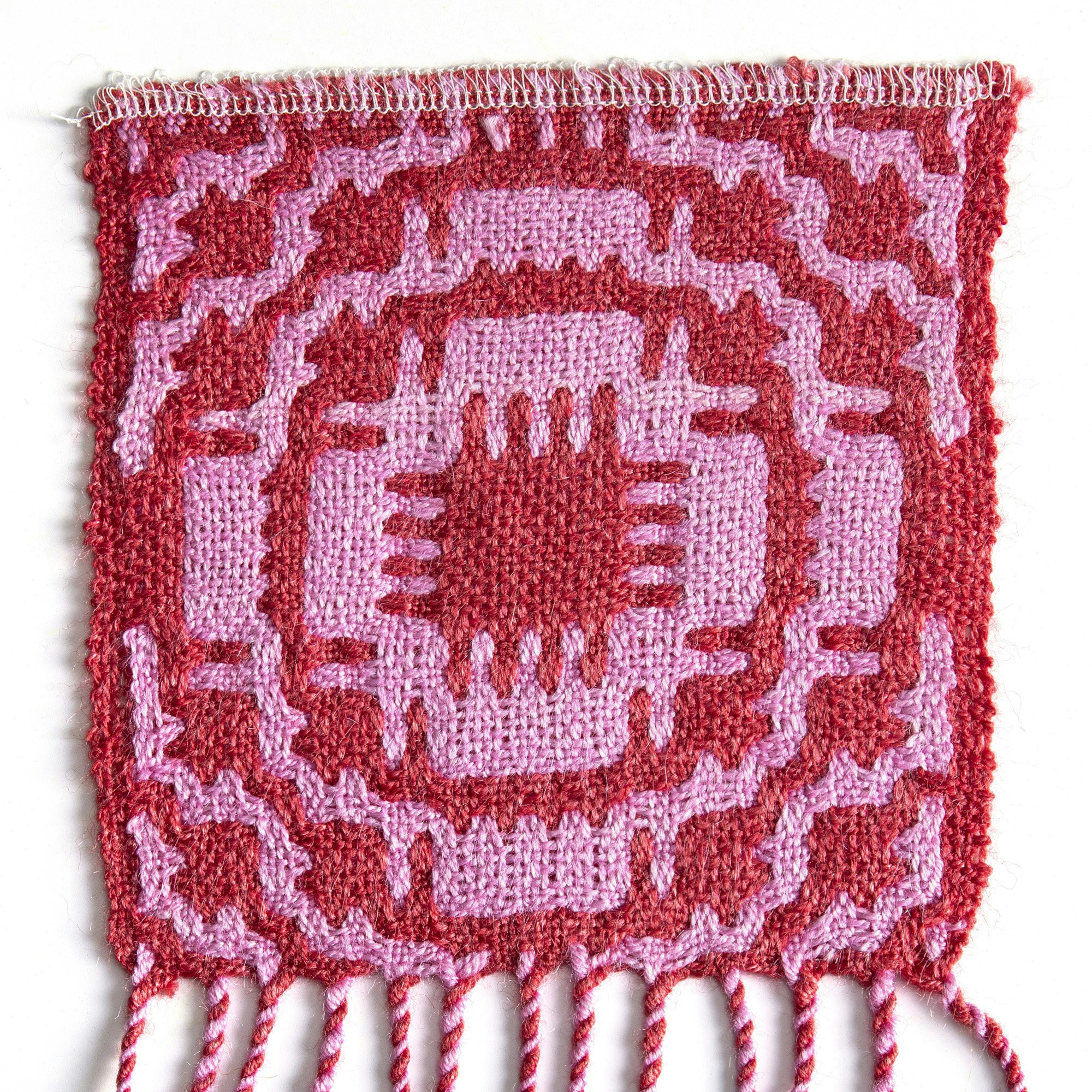
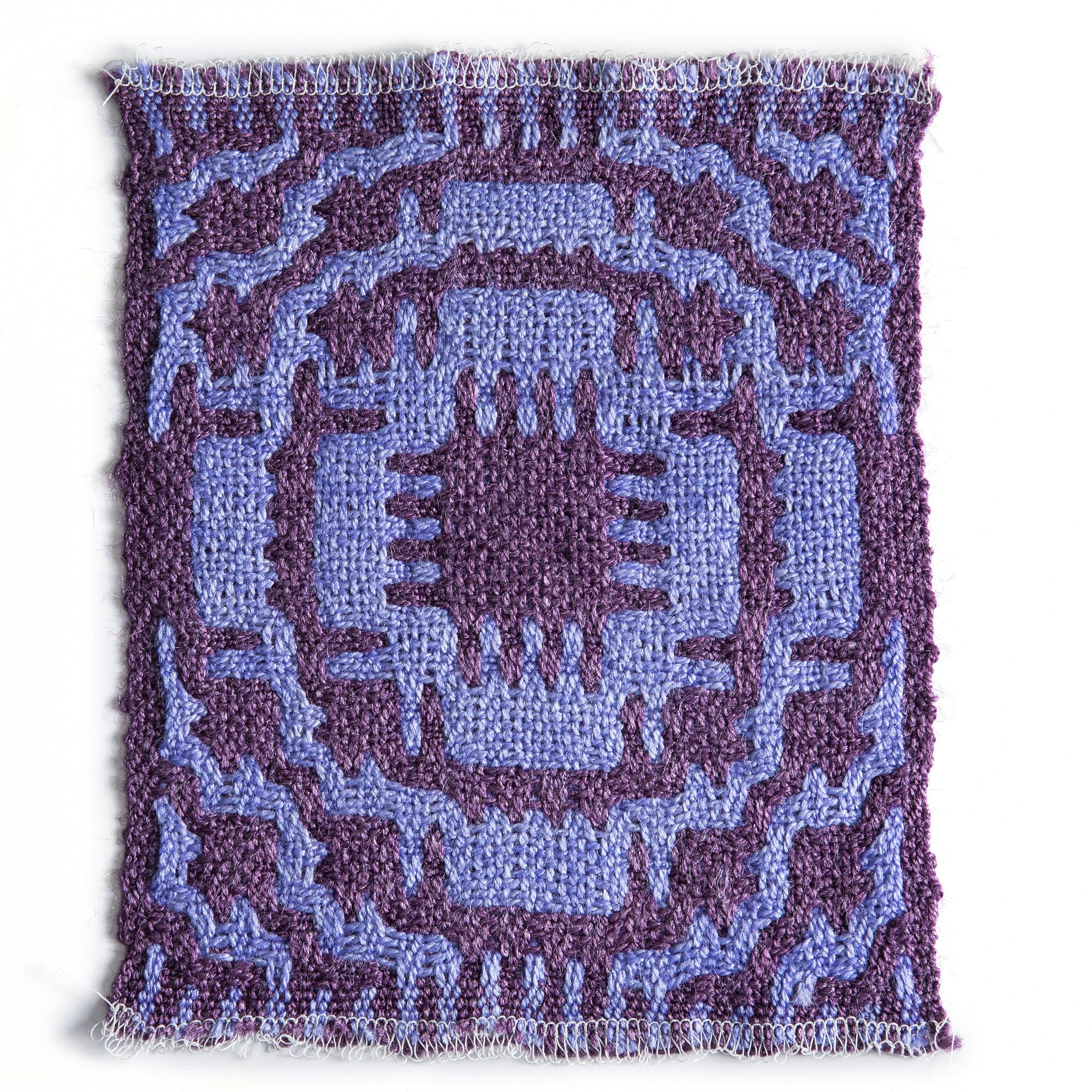
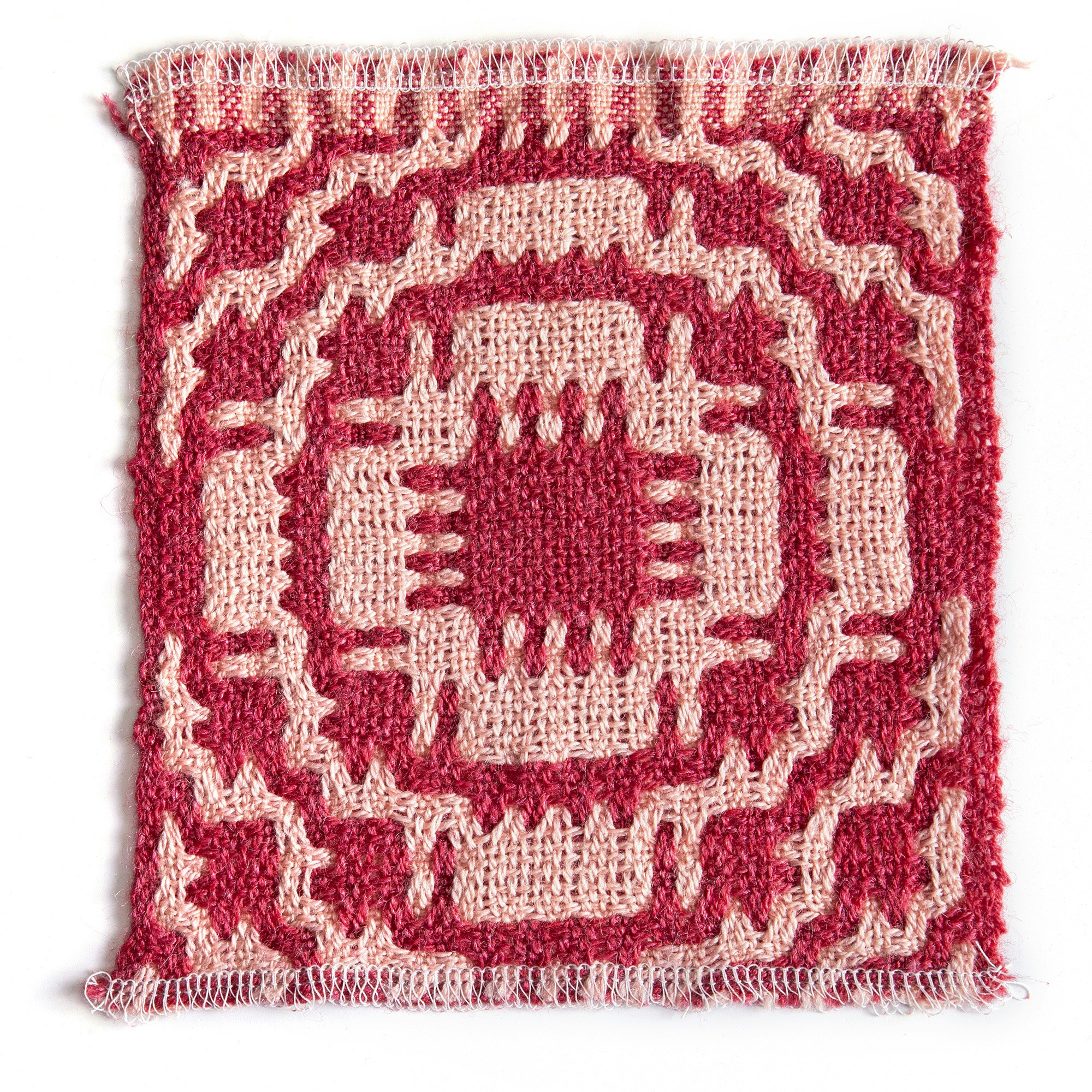
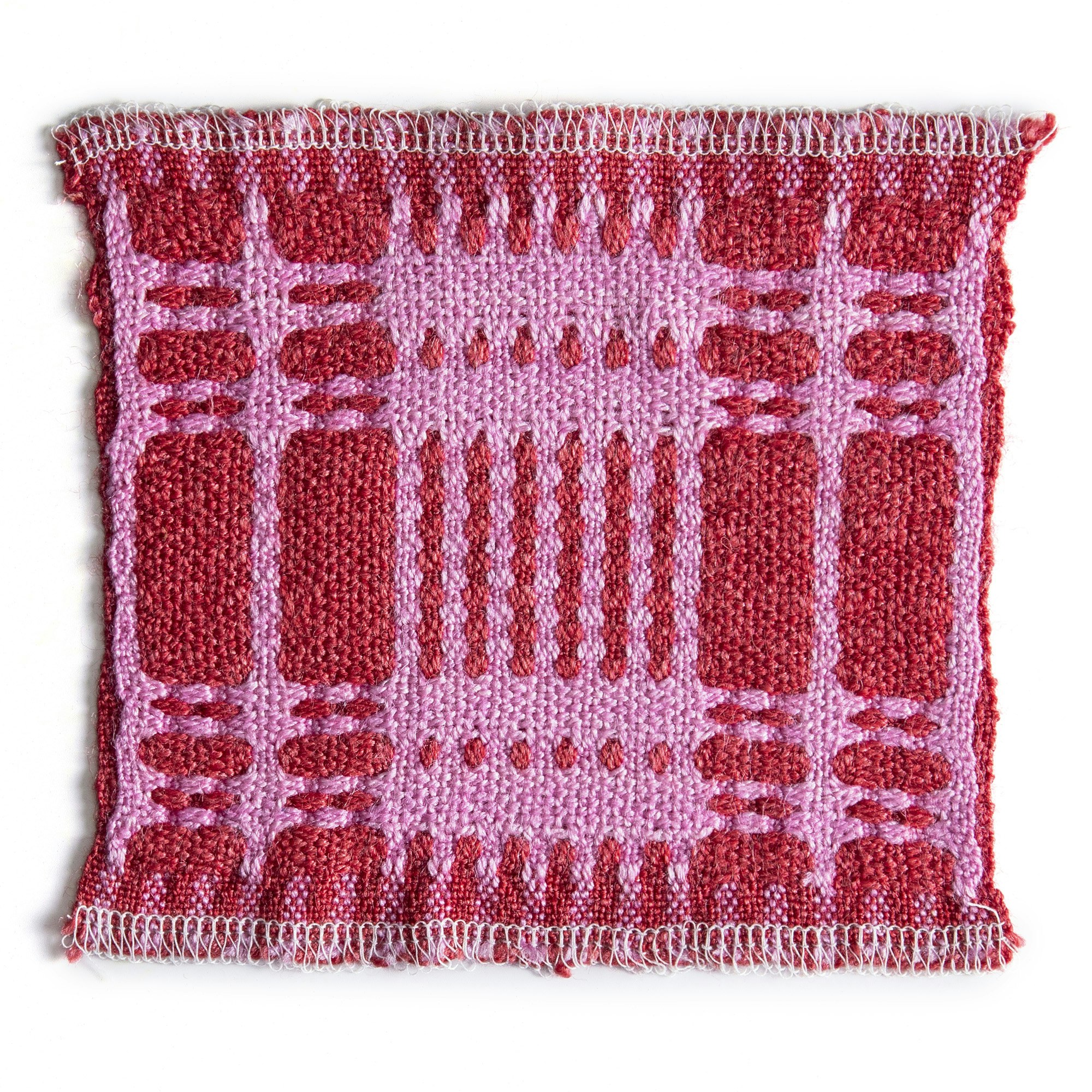
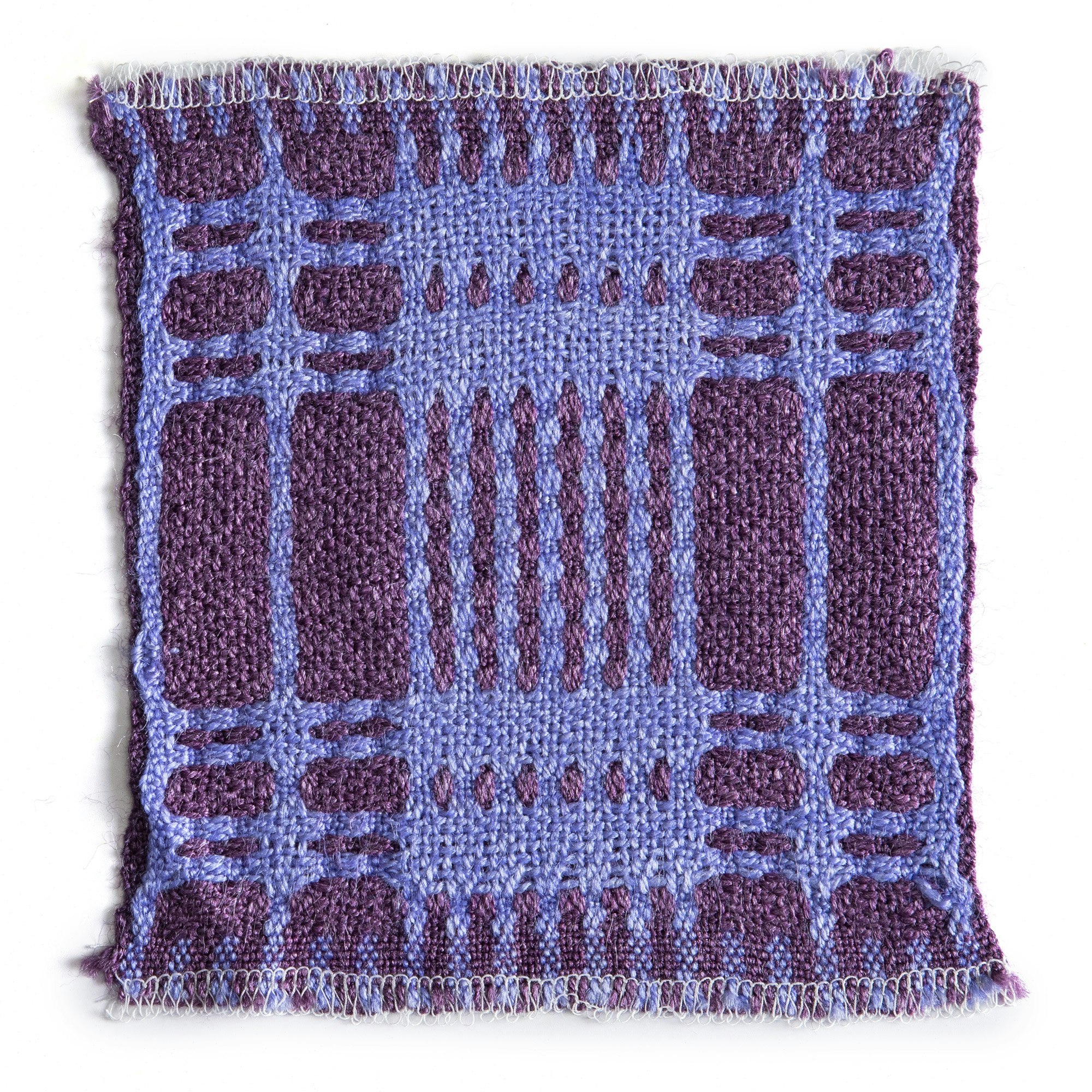
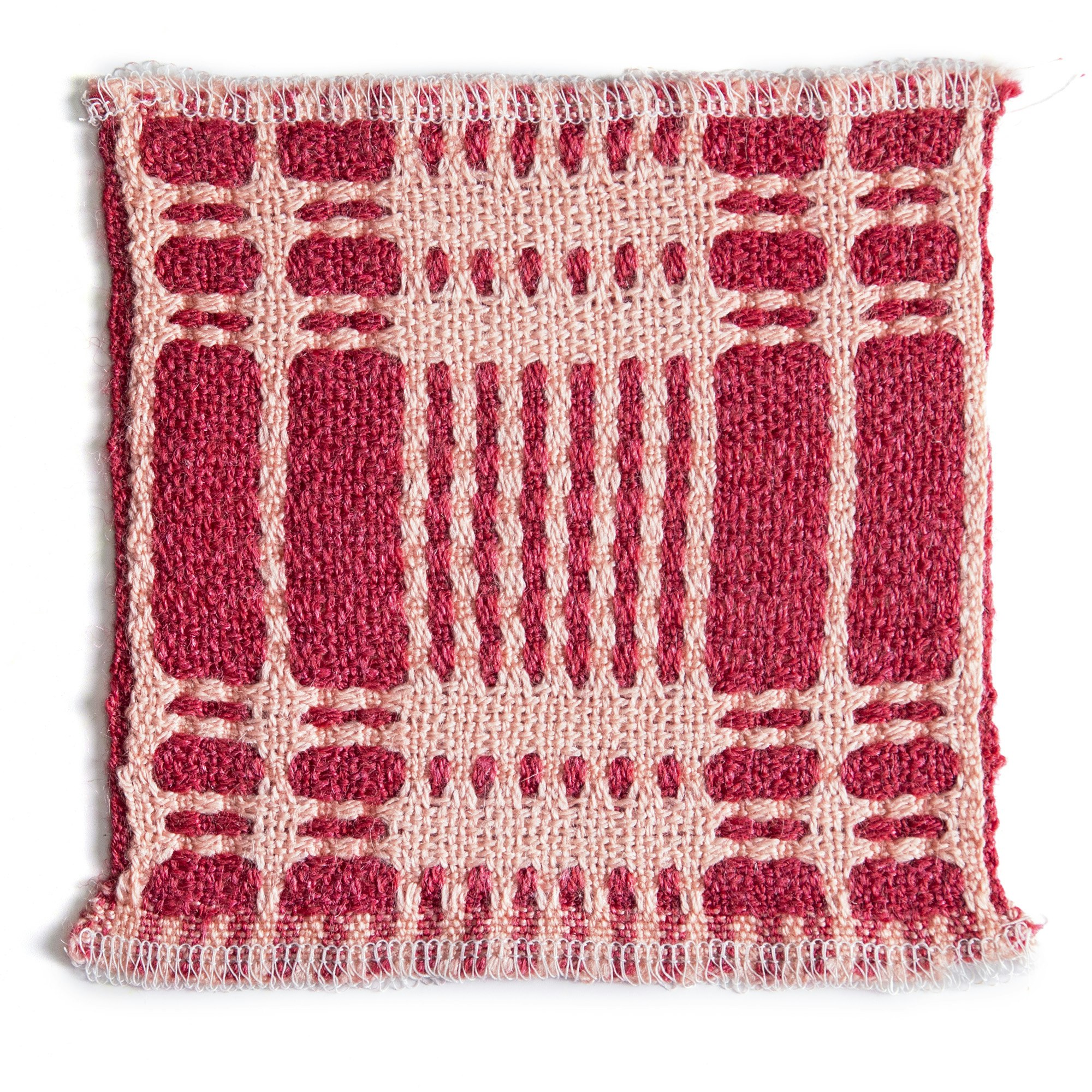
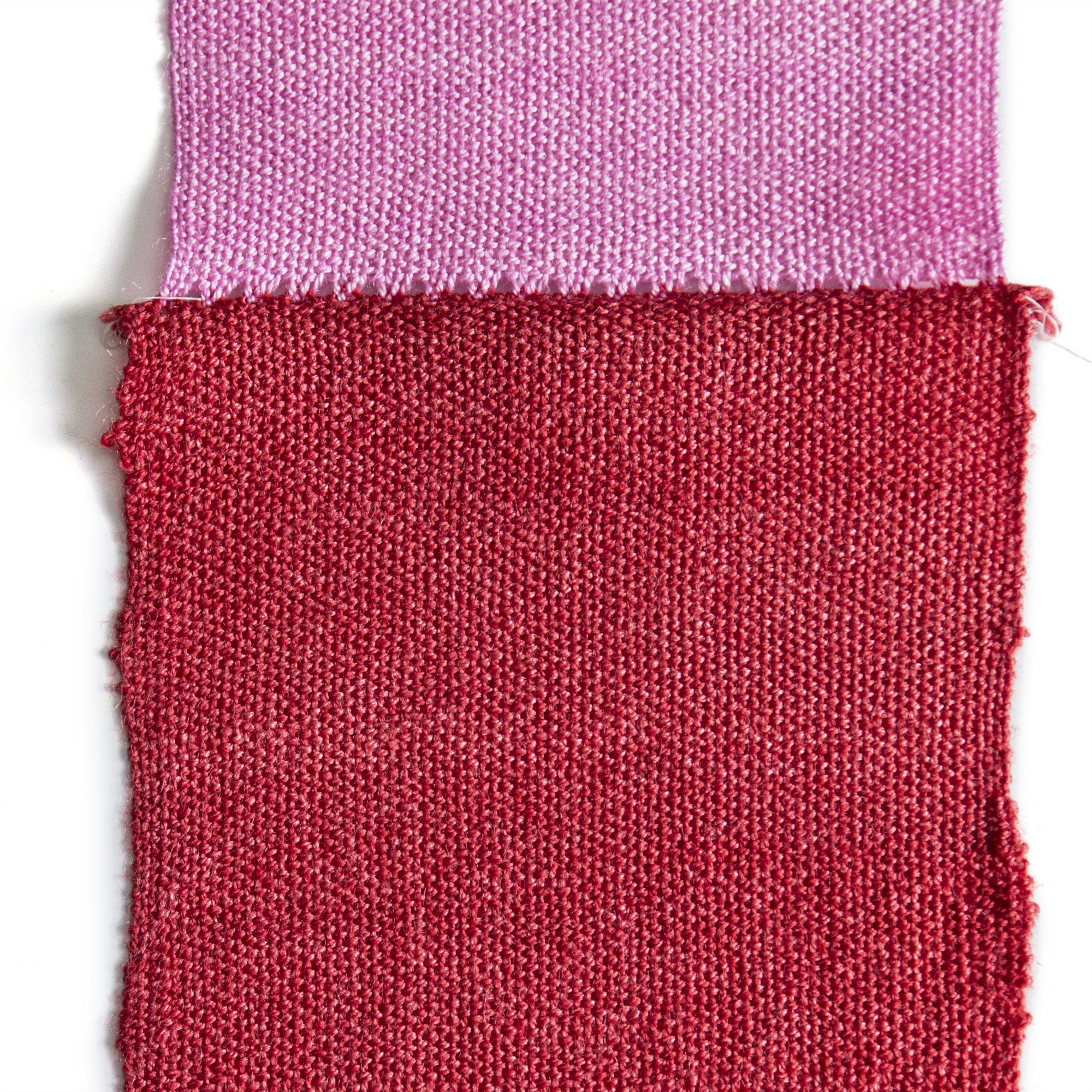
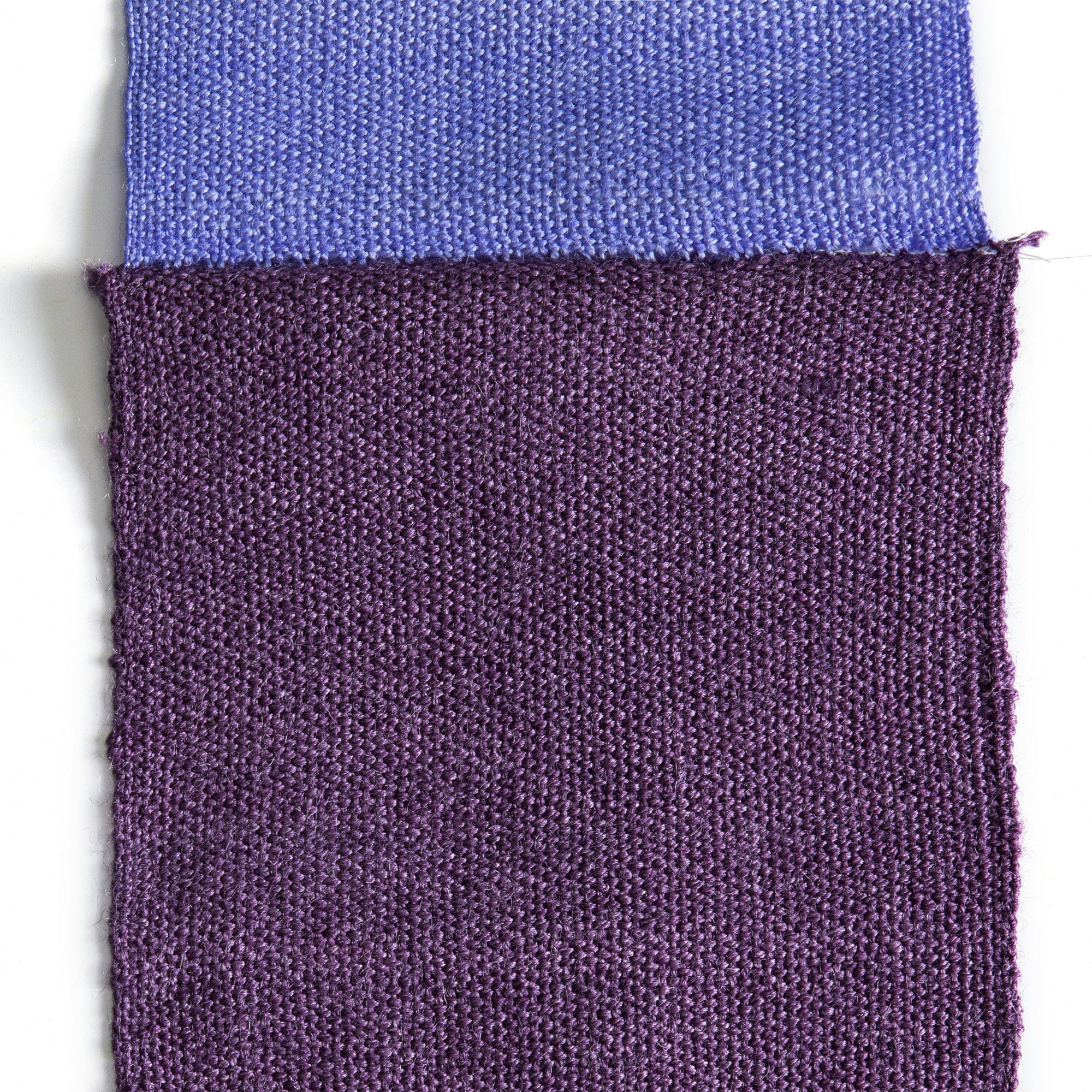
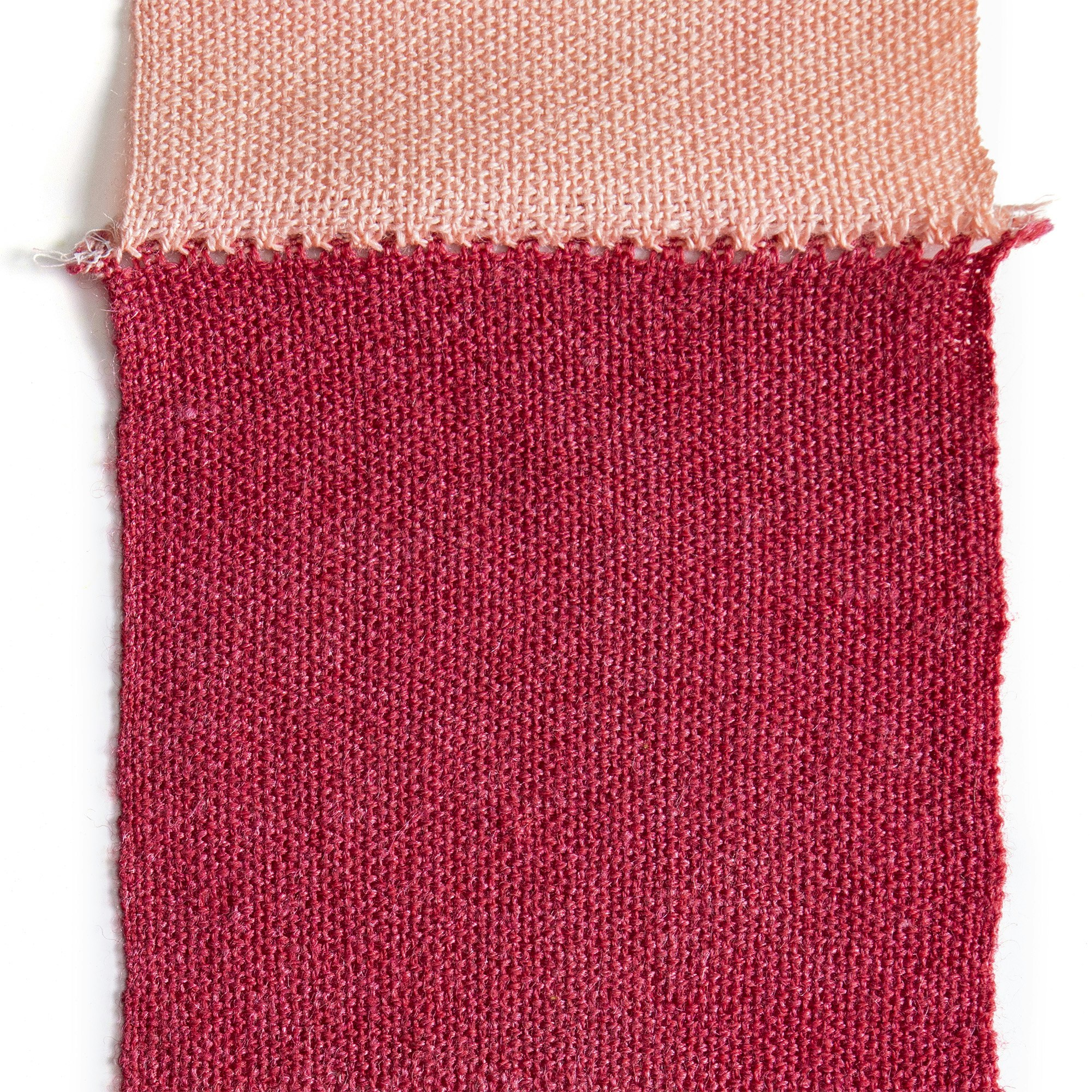
Click on a picture to learn more, and use the arrow keys to scroll. Photos by Matt Graves
Other Details
I wove all three sample sets on the same deflected-doubleweave threading: the first is tromp as writ, the second uses a different tie-up and treadling, and the third creates two separate plain-weave panels (as Janney Simpson does so well in her deflected-doubleweave work).
The plain-weave sett for this grist of yarn is 24 epi, and deflected doubleweave is often woven at around 150 percent of the plain-weave sett (which would make it 36 epi). For these samples I chose to use the plain-weave sett to allow room for the yarns to full slightly and deflect into softer, more rounded shapes on wet-finishing.
When weaving the deflected-doubleweave samples, I adjusted my beat to balance the motifs. For the plain-weave samples, I had trouble beating such an open sett to achieve a balanced weave on the loom, but I found that it all worked out in the washing.
All the samples were wet-finished in warm tap water using Wegman’s dishwashing liquid (any dish soap that is gentle on your skin will work for wool and silk). I rinsed all the samples, wrung them out (in my view, these yarns are meant for use and should stand up to this kind of treatment), laid them flat on a coun-ter to air-dry, and then pressed them with a warm iron.
Final Thoughts
While the disappearance of Zephyr is a real loss for the weaving community, Revolution Fibers has created an excellent replacement with Zephira. It has so many of the qualities we’ve enjoyed with Zephyr: the softness of wool combined with the glimmer of silk; a flexible and forgiving quality that makes winding a warp and dressing a loom easier than with many other popular yarns; and, finally, a lovely woven hand (as always, depending on the weaver’s careful choice of sett and beat).
My samples showed only minor differences between Zephyr and Zephira. After wet-finishing, the deflected-doubleweave samples in Zephira had 5% shrinkage in width, while the Zephyr samples showed negligible shrinkage, and my ppi for the plain-weave layers was slightly different. For this new yarn, I suggest that weavers choose structures such as plain weave and twill. Lace weaves would also be an excellent choice, but I recommend sampling to test setts, as well as wet-finishing the samples before beginning a project.
My message to weavers: Go forth and experiment further with this new yarn, and explore what you can achieve when working with high-quality materials.
You can read all the details about each sample, including setts, shrinkage, and notes in the Winter 2025 issue of Handwoven.