
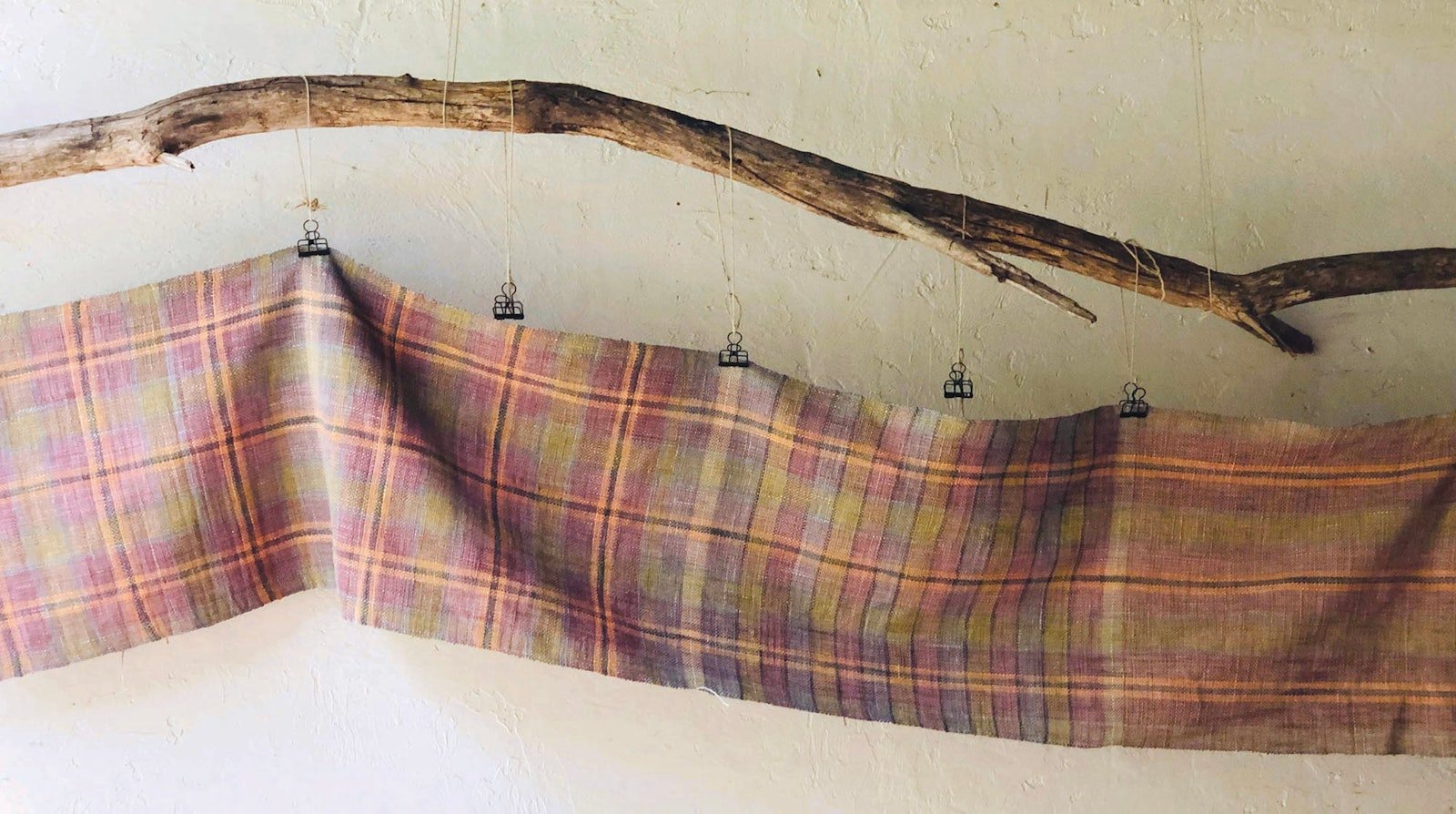
I don’t like to dye. Normally I would live with that, just as I live with the fact that I don’t like to bungee-jump...except that sometimes I would really love to be able to create the precise color of yarn I want. You know the one: It resides exactly between two colors that are commercially available. However, I have a couple of major factors working against me in the pursuit of the elusive “in-between” colors.
One, I don’t have access to water or a heat source in my barn studio. This makes the kitchen my only dye studio option, which means I worry about: switching my dyepot with my pasta pot; having to clear away my work to cook meals; and filling my normally soup-and-bread-smelling kitchen with an aroma that my son claims is a cross between Jergens lotion (active ingredient lanolin) and poop. That’s a pretty accurate description of the smell of simmering fleece, I think.
Two, I don’t think I have enough life left to become a dyer with the skill required to get the exact shade I want in whatever fiber I choose. Most of my dyeing experience has yielded colors that I am happy to use, but very few that I actually set out to achieve.
Meet Bengala Mud Dyes
So you can imagine my (skeptical) delight when I read about Bengala mud dyes. They are natural mineral dyes that require no heat, can be used for protein or vegetable fibers, are nontoxic, and are sold in sample packs perfect for the reluctant dyer. Too good to be true, right?
I decided to see for myself. I searched for mud dyes online and found Loop of the Loom, a website and storefront shop (with locations in Manhattan and Brooklyn) that sells Bengala mud dyes and hosts SAORI weaving and dyeing classes. I read through their very good FAQ pages on mud dyes, and purchased nine colors as well as a small bottle of the recommended prefix.
The dye manufacturer, Kosyokunobi, provides a detailed fact sheet on the composition of the prefixer and the dyes, as well as info about the Global Organic Textile Standard certification of fabrics dyed using its products, that I recommend reading if you have questions.
My Dyeing Adventure
I began by making twelve 250-yard skeins of natural cotton slub.
The instructions that came with the dyes were simple. Soak the yarn in water and prefixer for 20 minutes, then mix the dye with the appropriate (and surprisingly small) amount of water for each skein. Work the mixture through the skein by massaging until the dye is exhausted or the desired color is achieved.
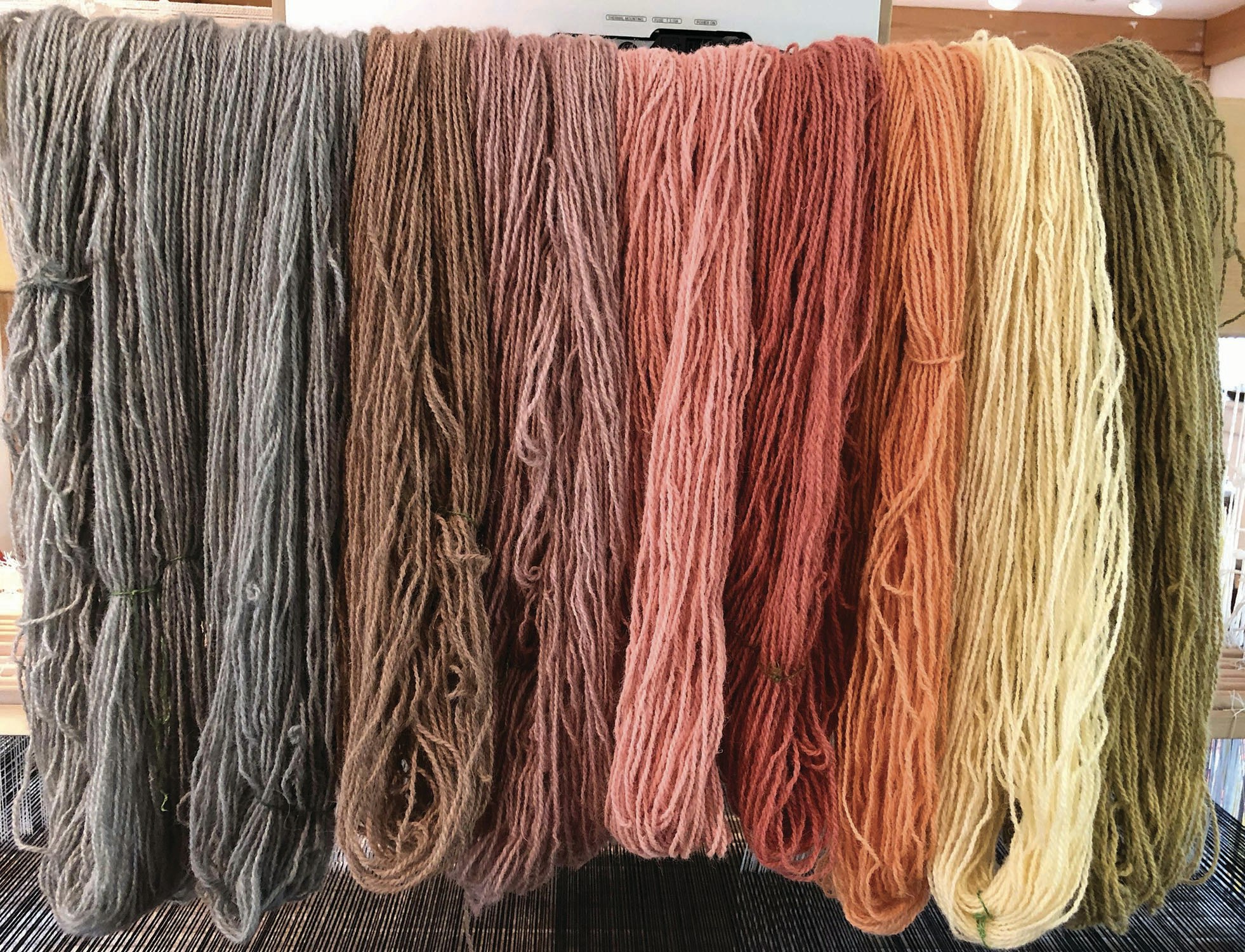
I used two 4-cup glass measuring cups from previous dyeing sessions, submerging a skein in one cup, and using the other cup to mix up the next color as the first one soaked. Skeining the yarn probably took longer than the whole dyeing process. I added an extra squirt or two of dye to get a deeper color for a couple of the skeins, and I used three of the dye mixtures a second time to get lighter shades, but for the rest of the skeins, I got the color I wanted—and expected—on the first go.
 The skeins are hung out to dry.
I squeezed out the excess water and hung the skeins on a drying rack on my patio. The skeins must dry completely before being rinsed and washed. This brought up a question for me about the “hypoallergenic natural latex” that is listed as a component of the dyes. I wanted to weave some lunch napkins with the yarn, and the combination of the latex element and the instruction to let the yarn dry completely before rinsing made me a little wary. Would the dyes give the yarn a plasticky coating similar to latex paint? I pressed on and let the skeins dry.
Time to Weave
I then had to decide whether I wanted to wind balls and dress my loom immediately, or wash the skeins, dry them, and then dress. In the end, I pretty much dressed my loom directly from the dyepot. I got a slightly sticky residue on my fingers and on my heddle during the winding and weaving, but the dyeing went so quickly and the colors were so lovely that a little residue seemed like a small price to pay.
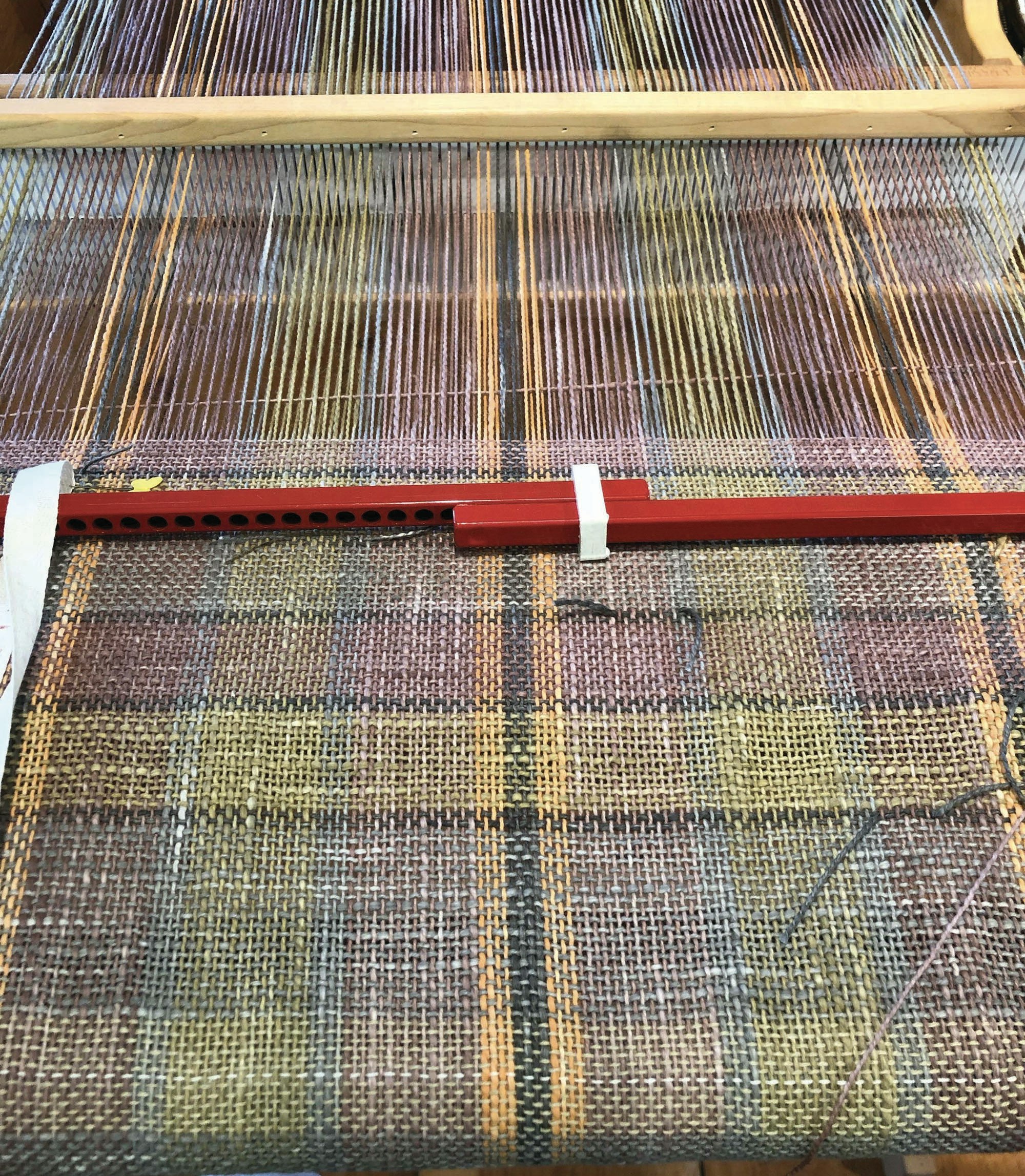
Click any image to view.
I finished weaving the napkins—and only then did it occur to me that weaving using newly dyed yarn before testing for colorfastness might not be so clever. Did I mention that I don’t like to dye?
Sigh! I decided that if my napkins emerged from the gentle cycle in their predyed state it would simply confirm that dyeing is not for me, and I threw them into the washer. I was gobsmacked when I opened the washer door to see that the colors remained their lovely, muted selves, and the fabric was soft and absorbent—there was no plasticky feeling whatsoever. I promptly wove another set in a different colorway.
From the aesthetically appealing nature of the packaging, to the ease of use, to their eco-sensitive approach, to the final result, my experience with Bengala mud dyes and Loop of the Loom has turned me from a “Never Say Dye” weaver into an enthusiast.
 The finished napkins.
Dye and weave your own set of Elisabeth Hill’s Mud Cloth Napkins, as seen in the Spring 2020 issue of Easy Weaving with Little Looms.