
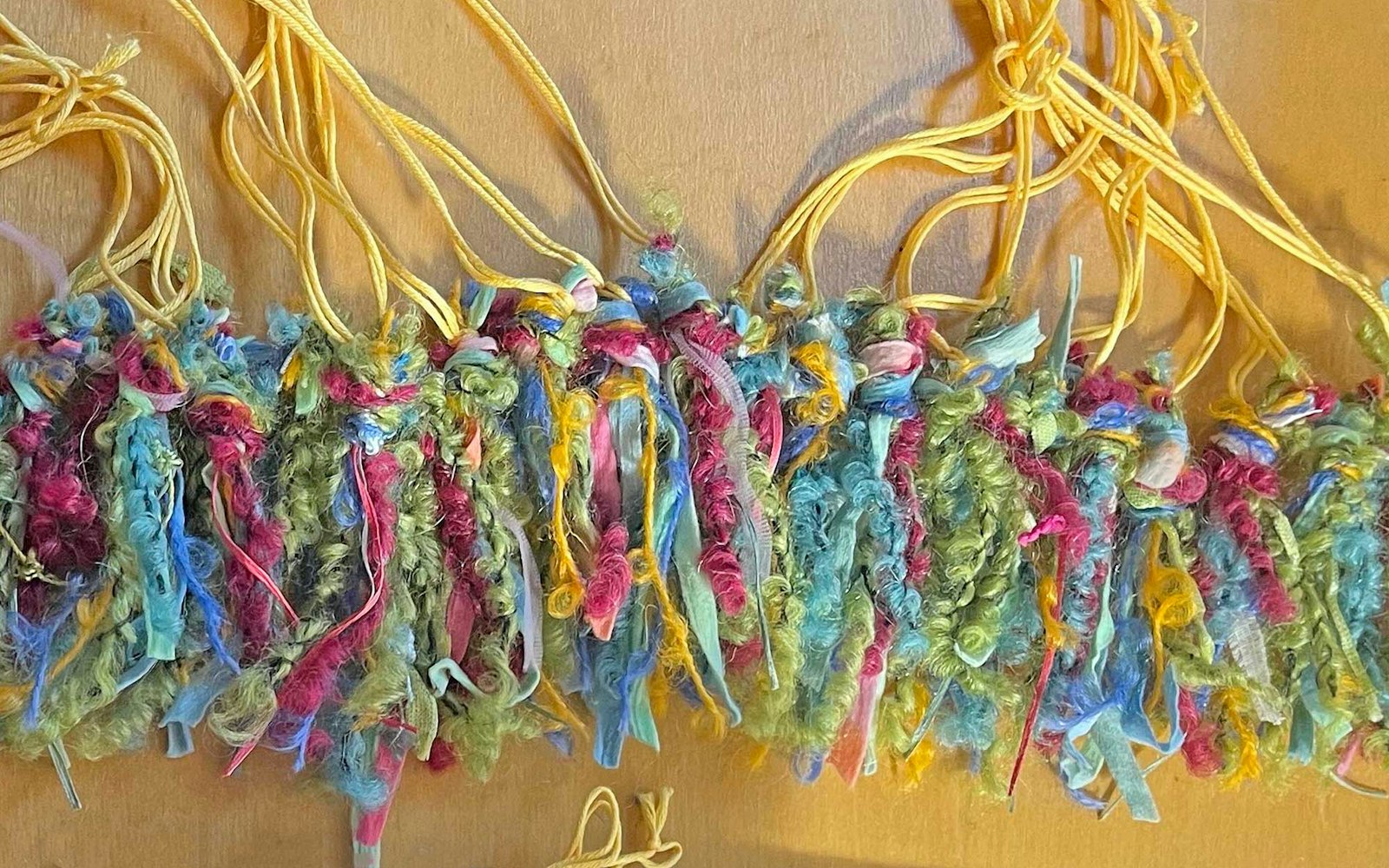
What do you do with your thrums? When we learned about Barbara’s work, we were delighted to have the opportunity to share it. We hope it inspires you!—Handwoven editors
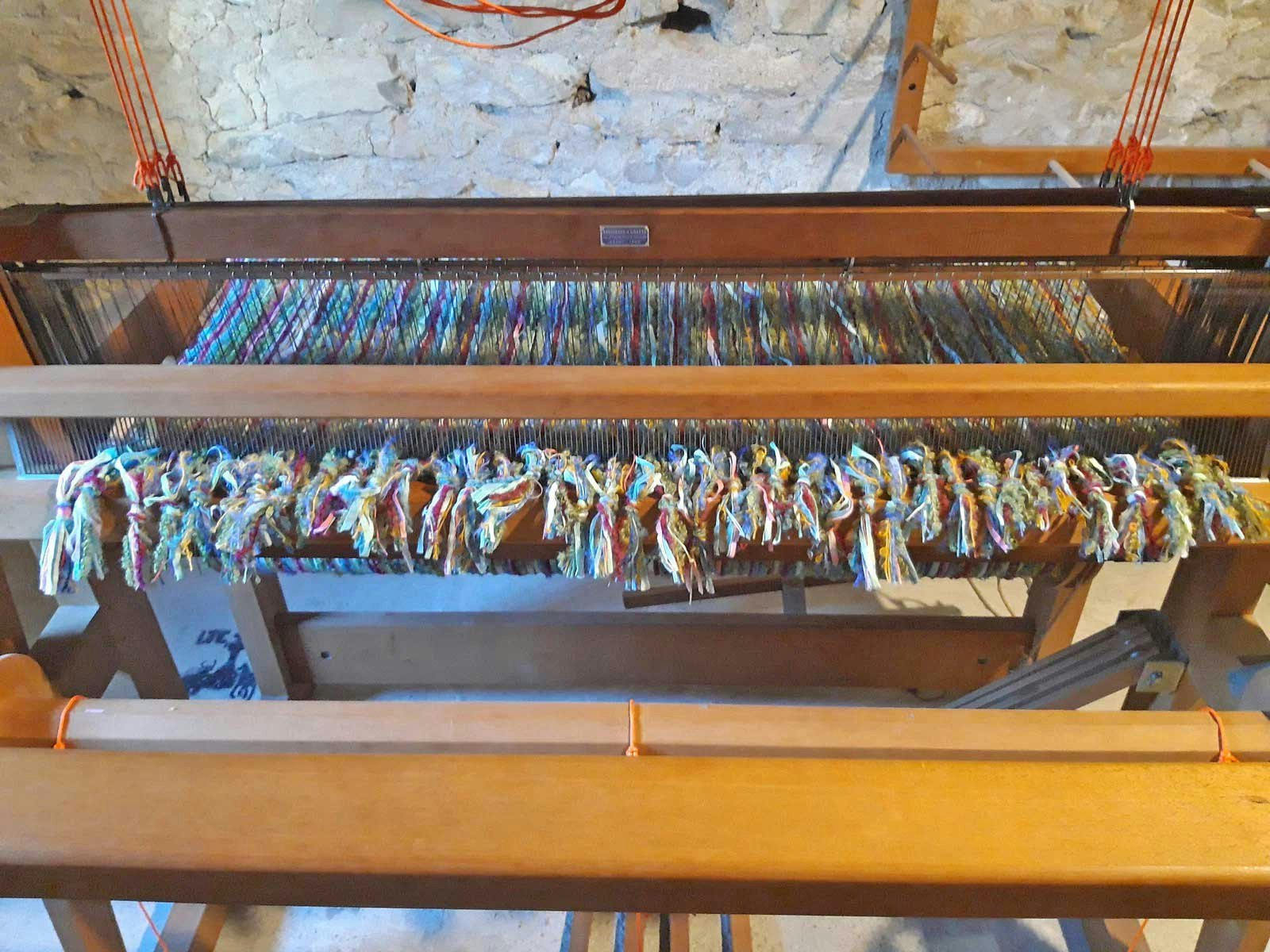
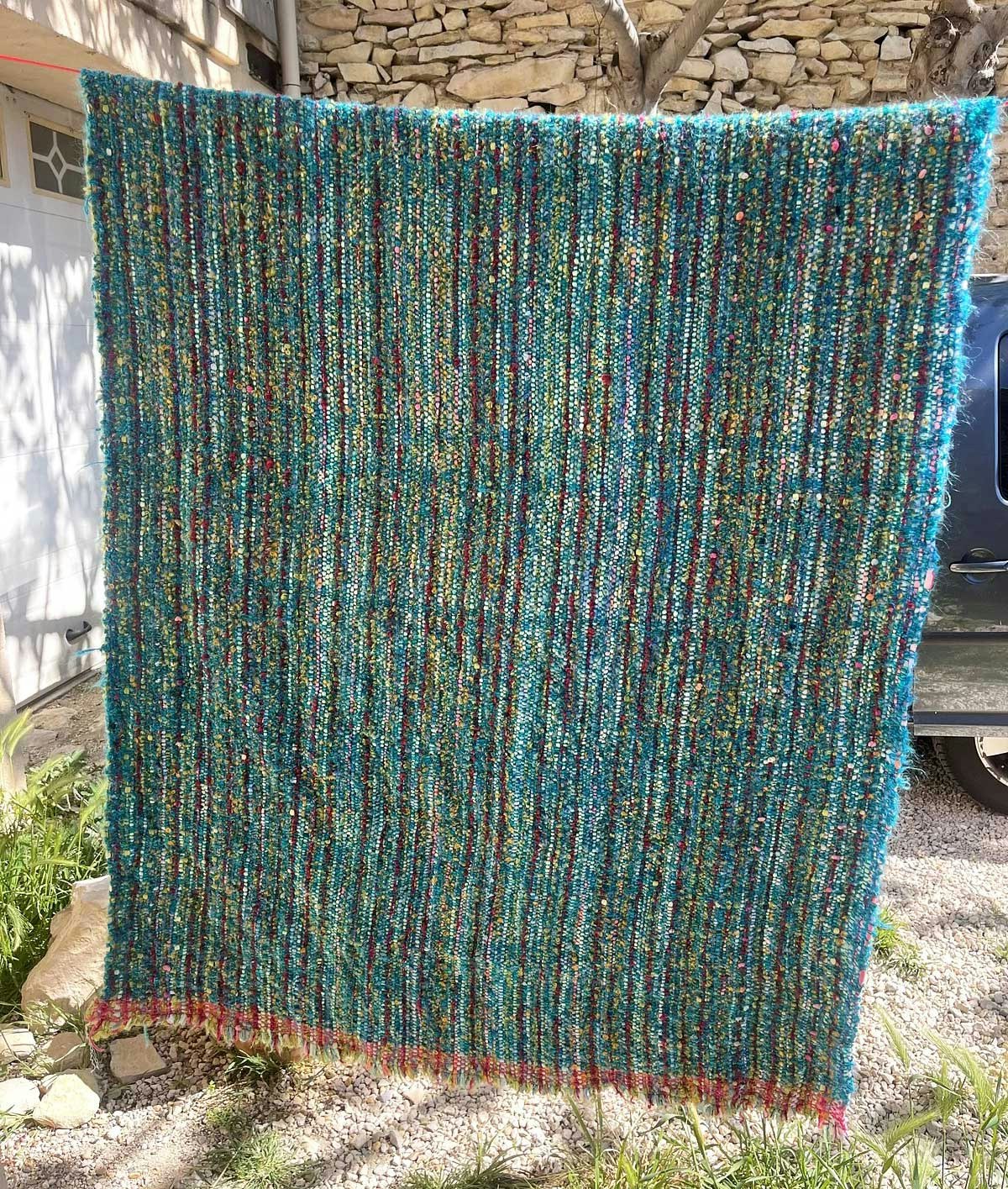
I wanted to make a Chanel-inspired jacket. Because I’m a weaver, rather than searching out commercial fabric for my sewing project, I began by putting a plain weave warp on my loom.
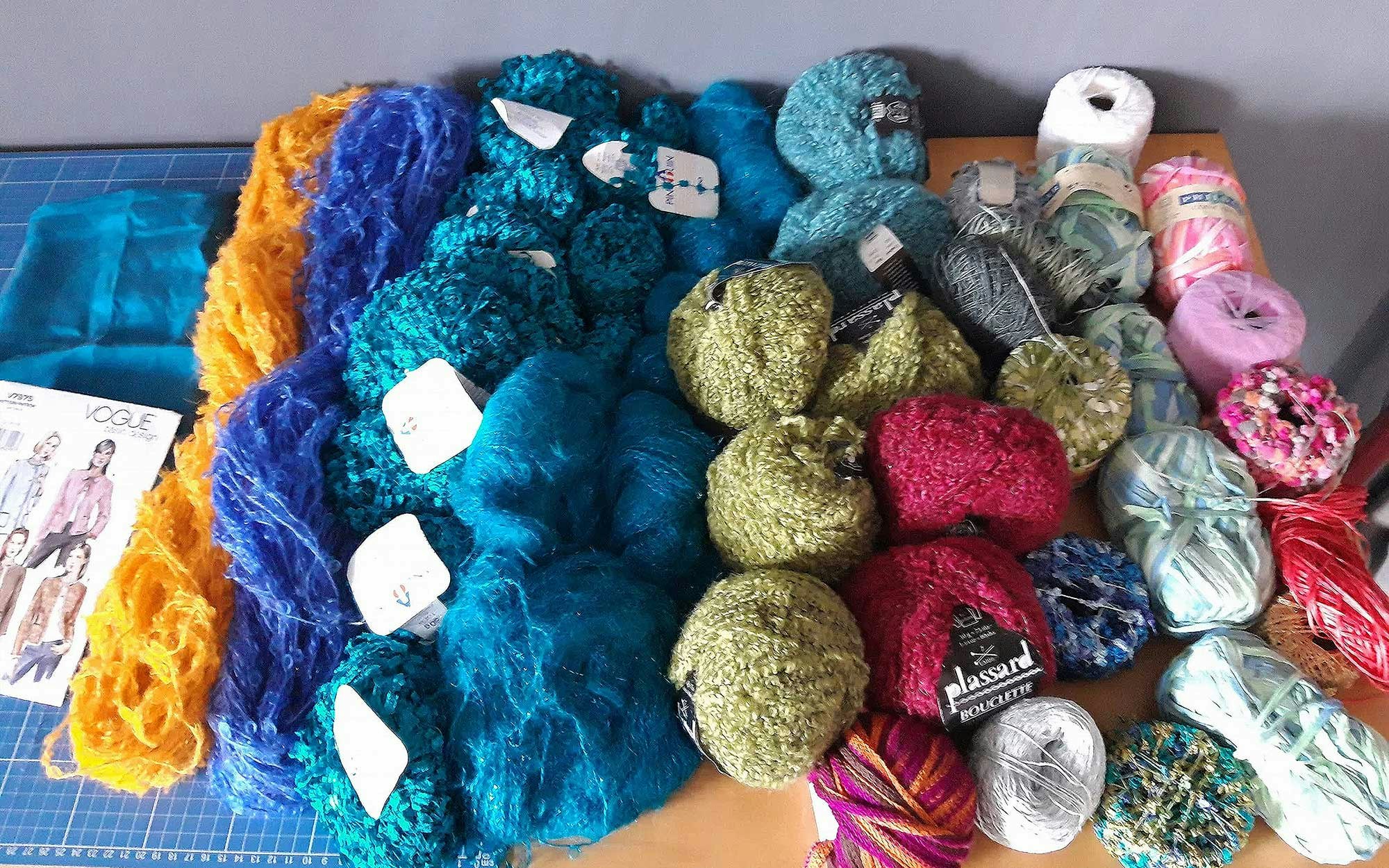
Some of the many warp yarns came from my stash, and I purchased others at Leboncoin (an online marketplace in France that’s similar to eBay). The weft alternated two turquoise yarns—a mohair that has a little sparkle, and a viscose whisker yarn.
Click any image to enlarge.
Creating Trim
While I ended up with enough fabric for my jacket, it was not enough to also make bias-cut trim for the piece. I had the idea to make fringe using the loom waste from this warp. I couldn't find a tutorial, so I went to my sewing room and just fiddled around with the loom waste until I was happy with the results.
I ended up gathering the scrap bundles (which were 2–2¾" (5–7 cm) long without the knot) along with a length of bias binding sized to go around a pocket. The yellow yarn you see in the photos below was what I‘d used to tie the warp to the front beam. Now it served to keep bundles organized.
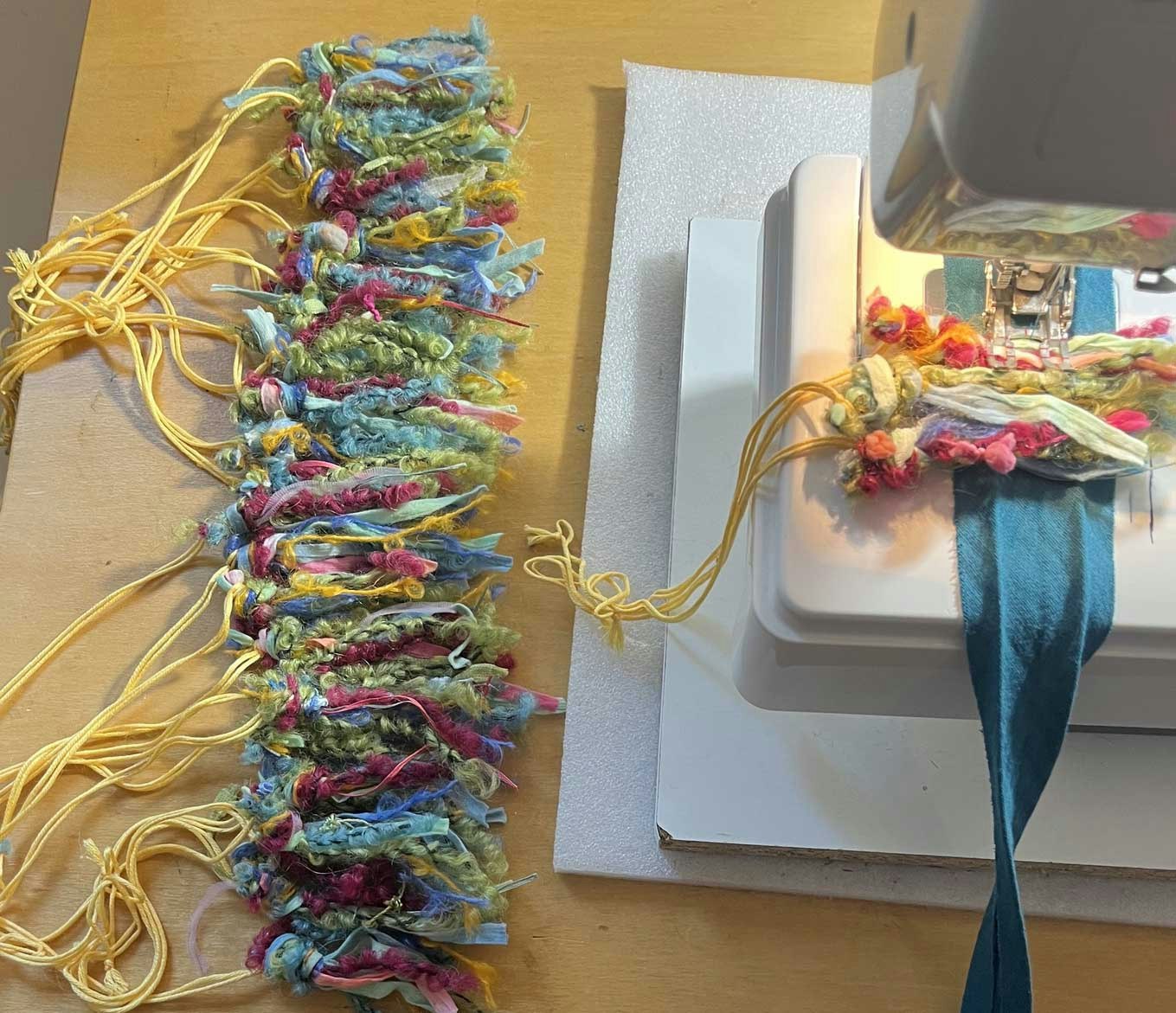
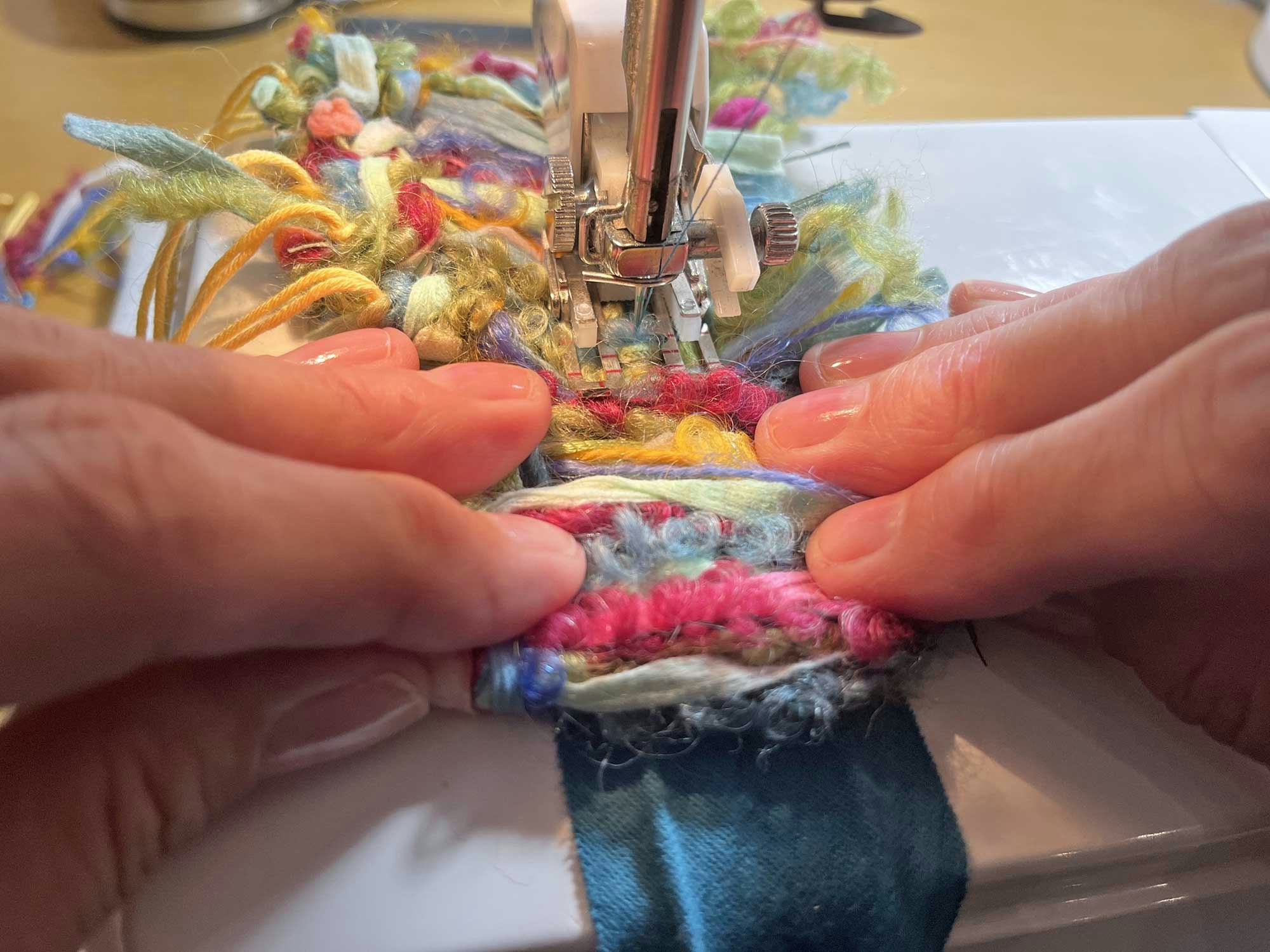
Click any image to enlarge.
I laid the bundles on the table next to me in the order I wanted to use them, and lined them up three at a time on top of the unfolded bias tape, ready to sew. I left about 1.2" (3 cm) at the start and end of the bias tape free of bundles for later seaming.
Holding them at both sides and using a 2 mm straight stitch and a walking foot, I stitched down the middle of the bundles and bias tape, being careful not to catch loops of the bouclé yarn on the presser foot.
After stitching, I cut off all the knots and yellow cords. Then I folded the fringe to one side and the bias tape to the other, covered it all with a silk organza press cloth, and steamed it while using my hands to gently flatten the trim.
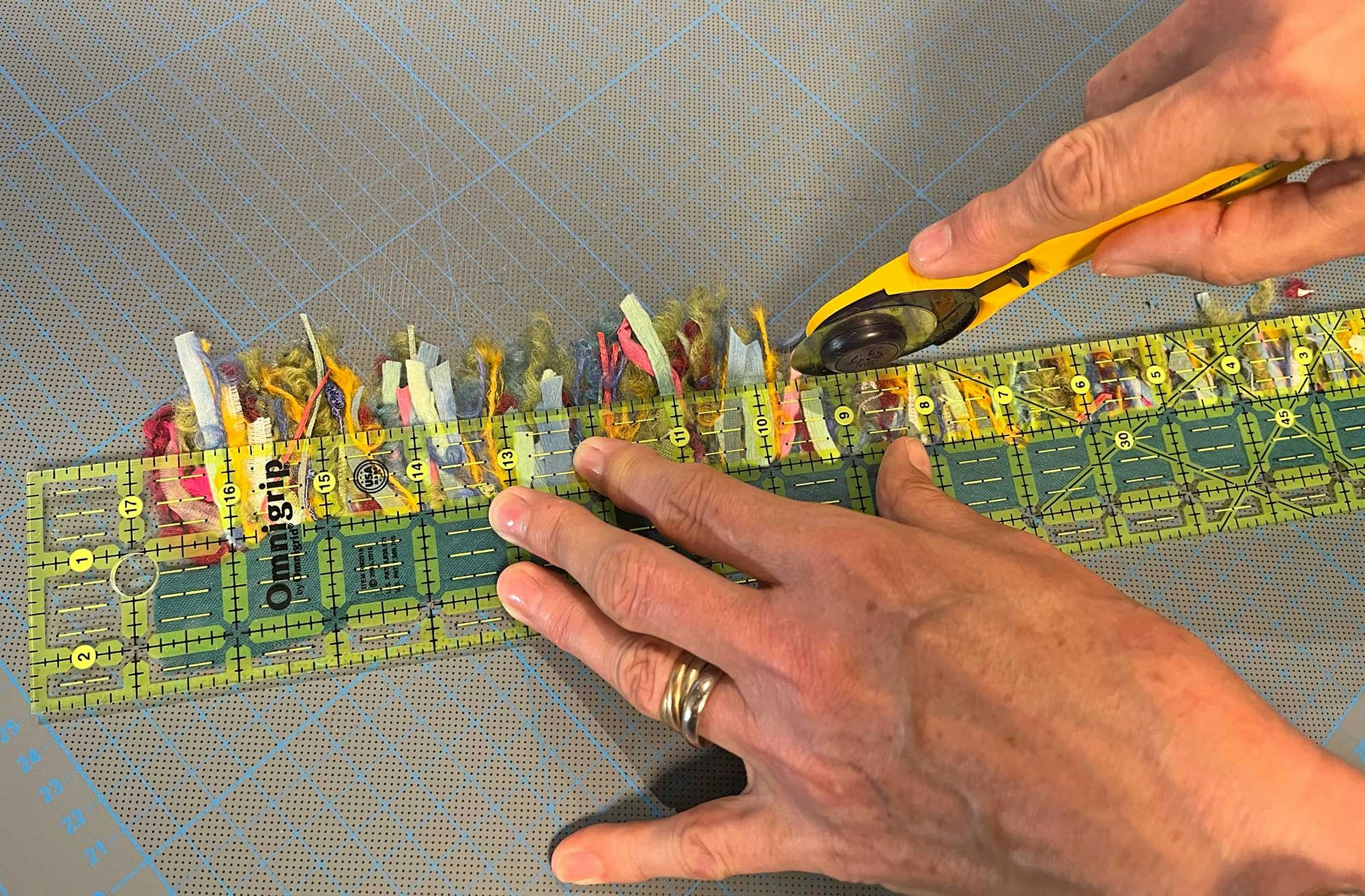
With the help of a quilting ruler and a rotary cutter, I trimmed the thrums to about 1" (2.5 cm), and then I applied the finished trim around a patch pocket.
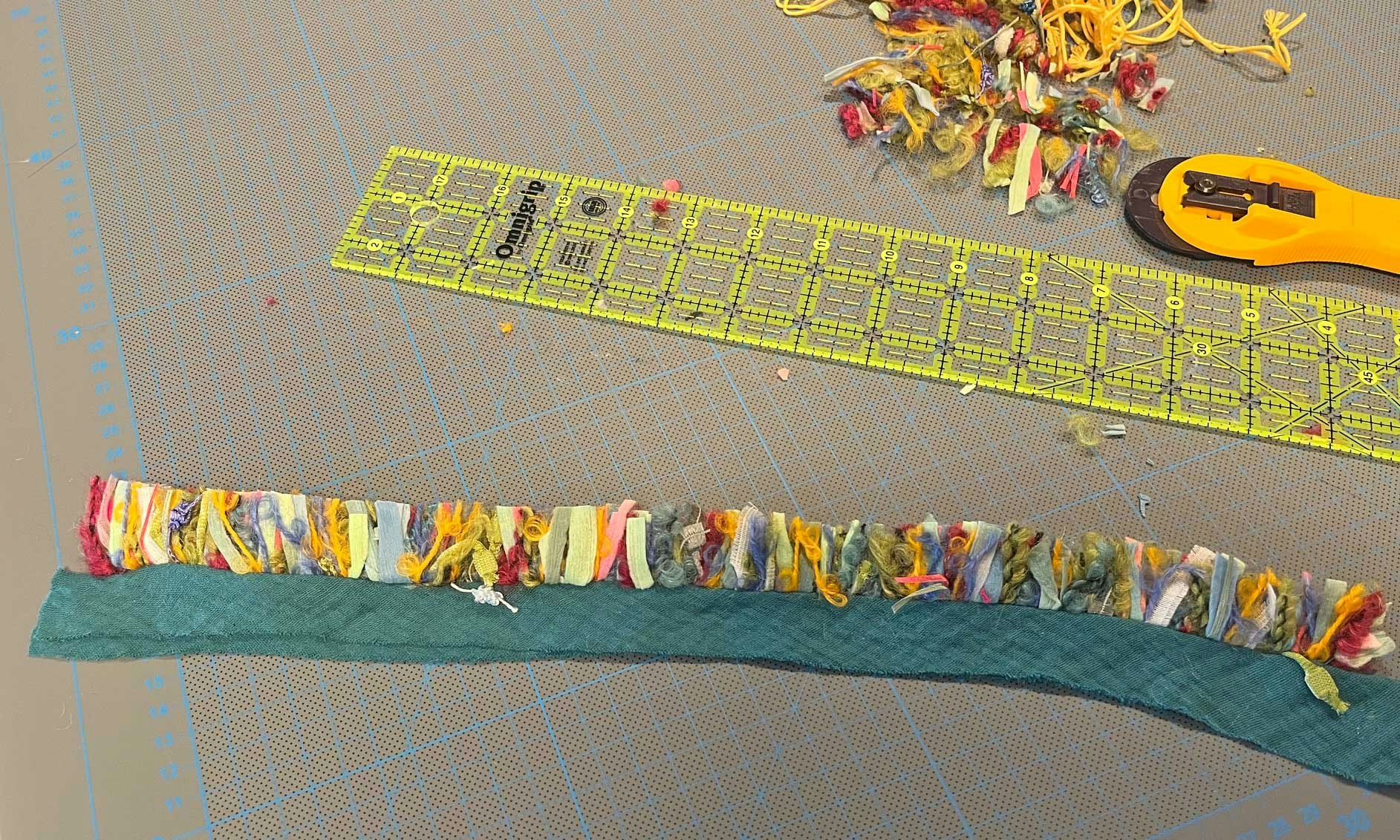
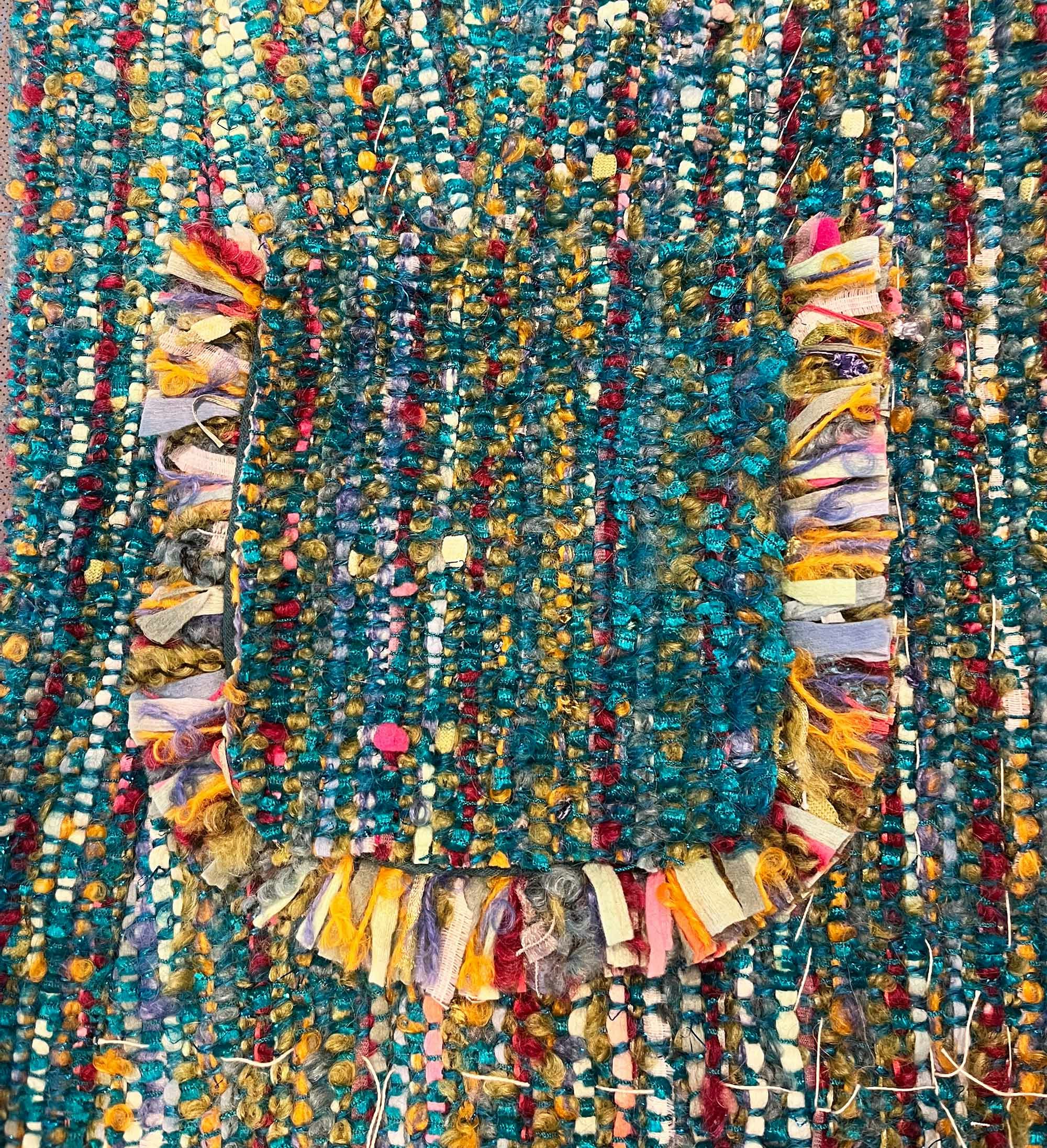
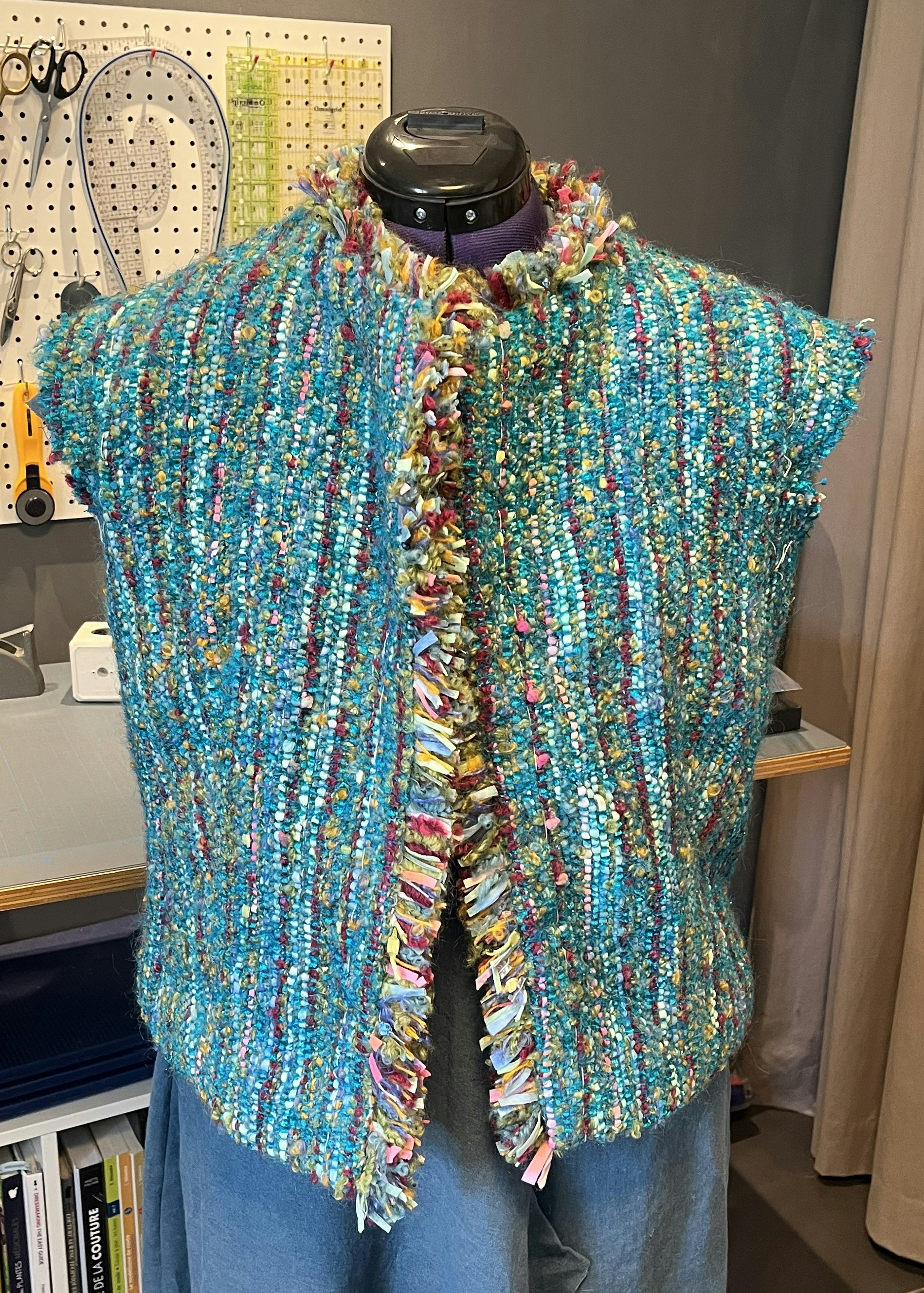
Click any image to enlarge.
Coming Next
I was happy with the results, so I made more trim and added it around the front and neck edges of the jacket. I'm still debating whether I should add one pocket or two (or—surprise!—leave the jacket without pockets).
Because I also love to sew (and I have more than enough shawls and scarves), I'm looking forward to making other garments from my handwoven fabrics. Now that I know how to make trim from thrums, I’ll explore other ways to use it in my sewing projects.
Have you used your thrums in other projects? Please tell us about what you’ve done!