
In Part 1 of her Spice Up Your Selvedges series, popular weaving teacher Sara Bixler shares ideas for handling selvedges that curve in and out.—Handwoven editors
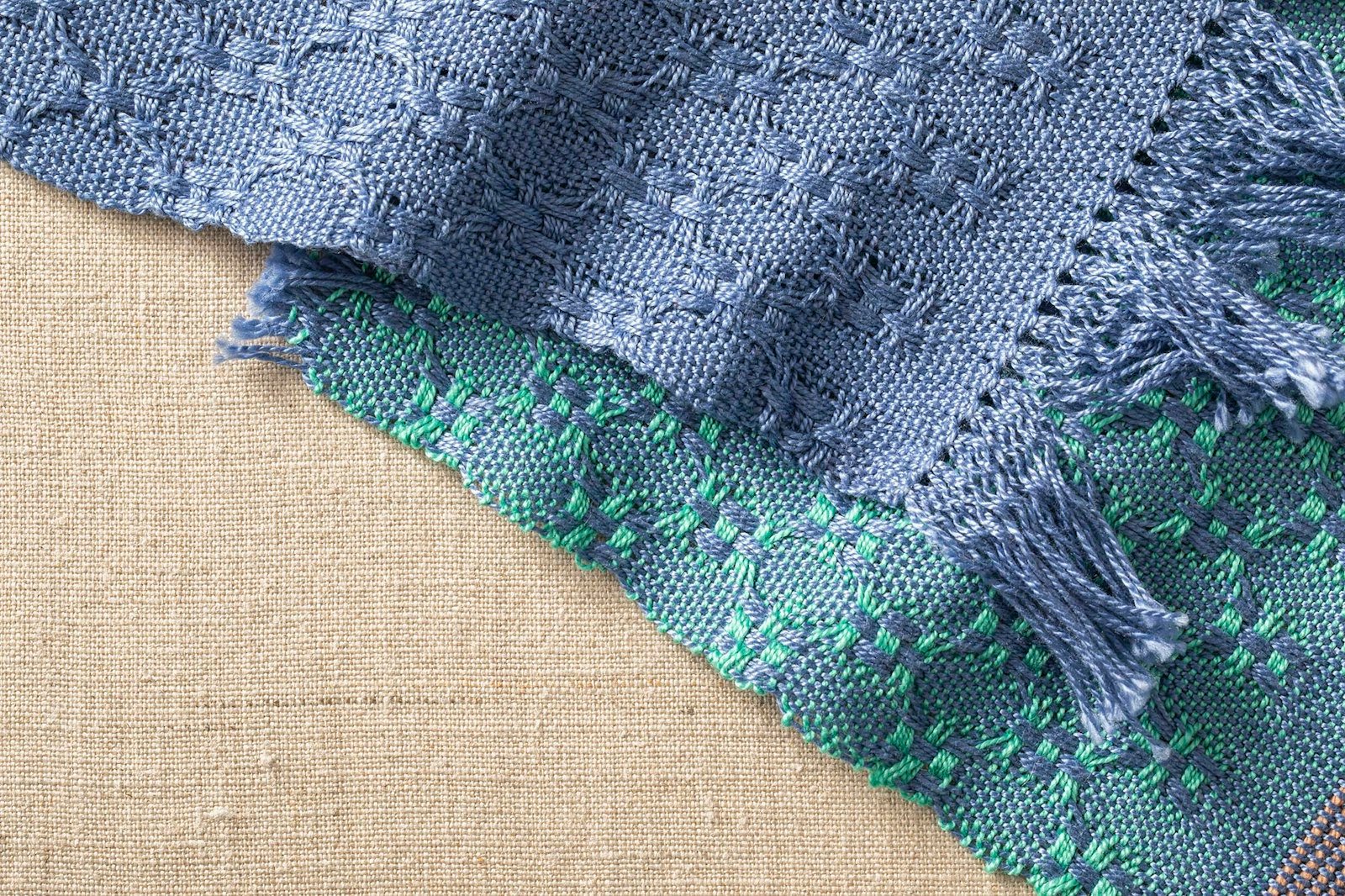
Structures that result in periodic weft floats—such as lace weaves—can result in wobbly edges. The problem pops up because those floats draw in the warp ends at the selvedges further than the picks just before or after them. You can see how this looks in the picture above, where plain weave alternating with huck results in scallops.
This is not an issue you can solve by improving your weaving technique or even by using a temple. I’d like to show you several things you can do about it!
Three Ideas to Try
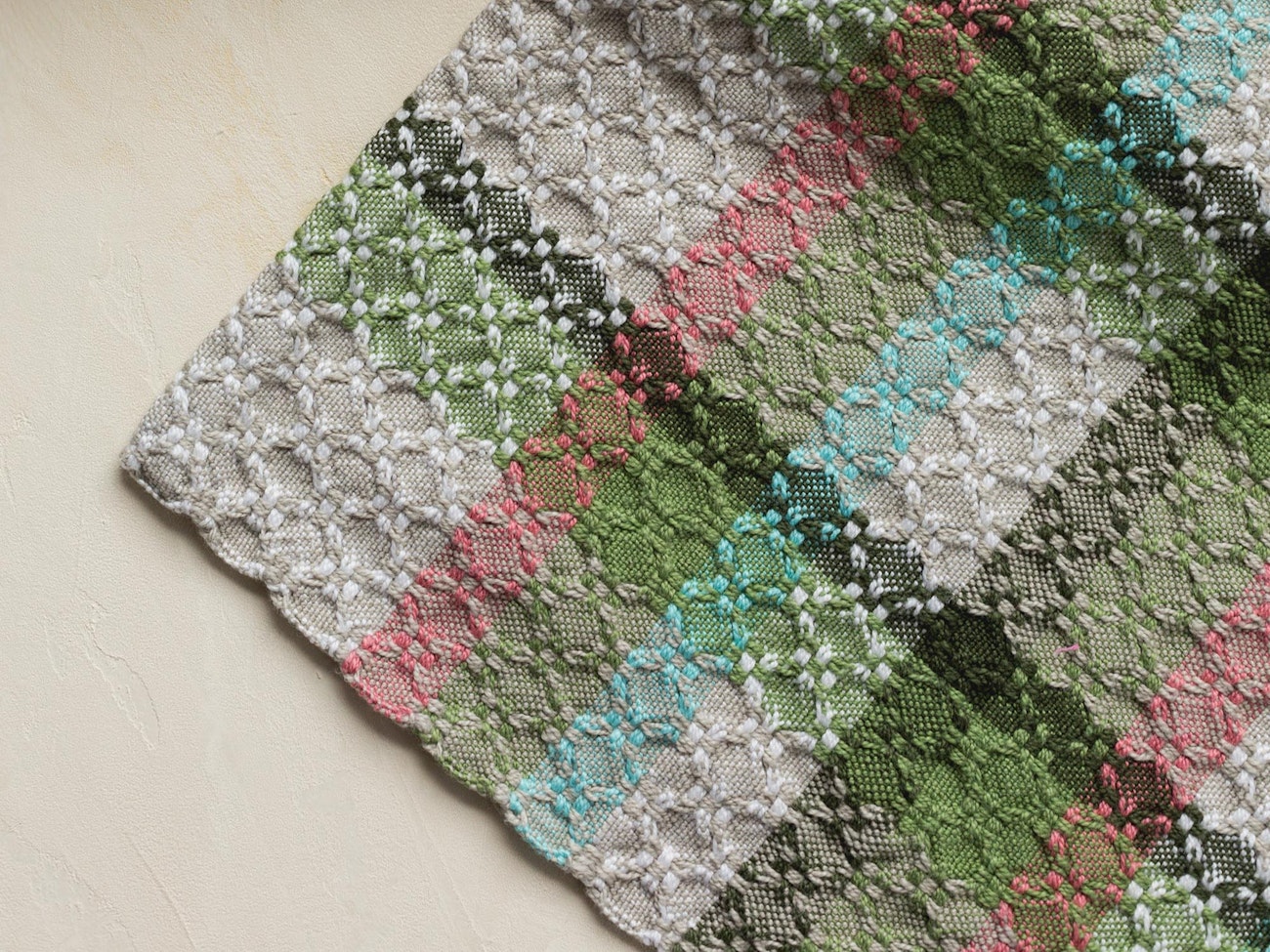
Embrace the scallops: They’re a charming touch in Rebecca Fox’s Bouncing Baby Circles blanket, on page 22 of the November/December 2019 issue.
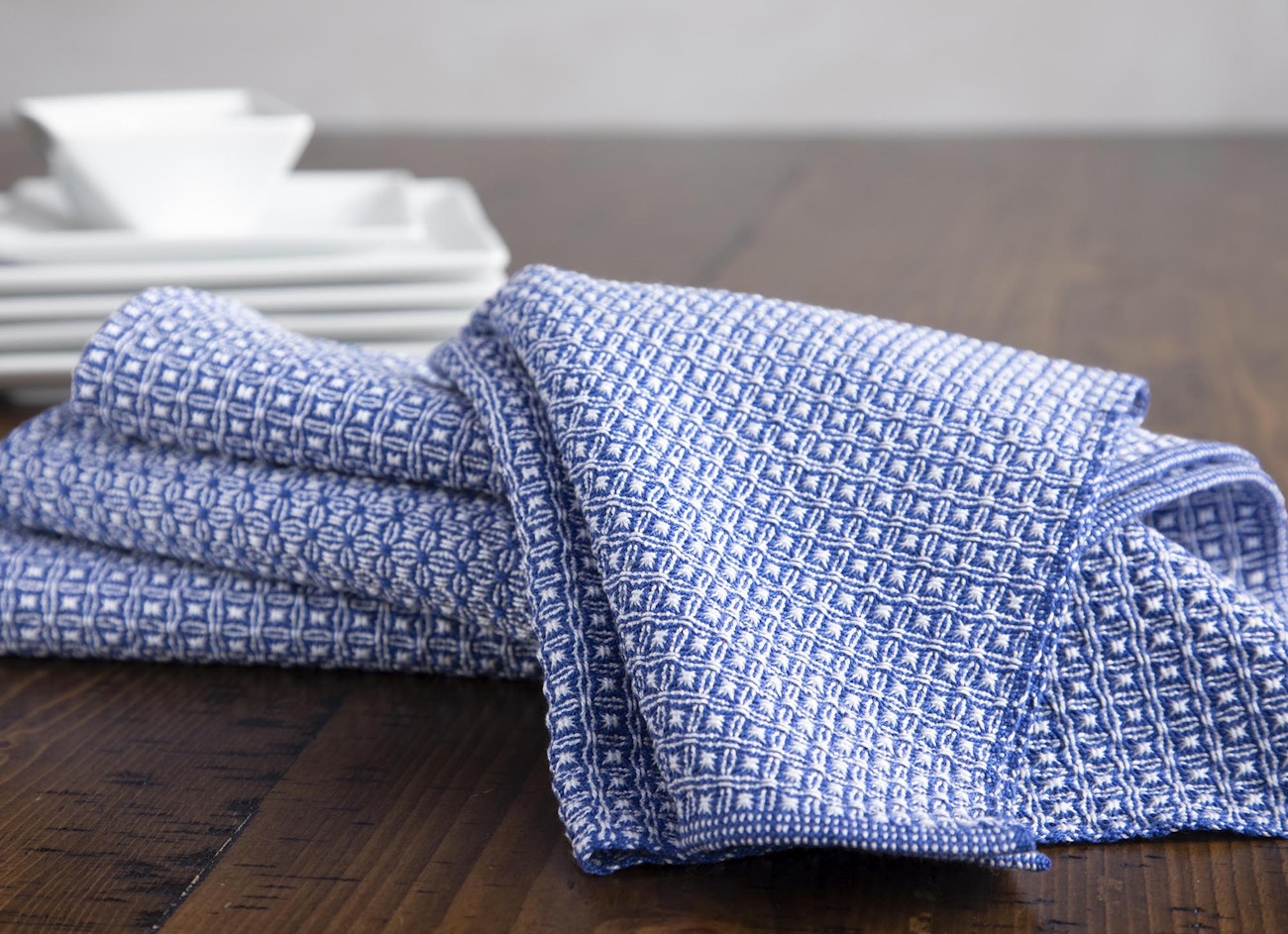
Use narrow single-color selvedges: You can see them on the right edge (pointing up) in this picture of Tom Knisely’s color-and-weave Huck Lace Napkins, from page 41 of the May/June 2020 issue.
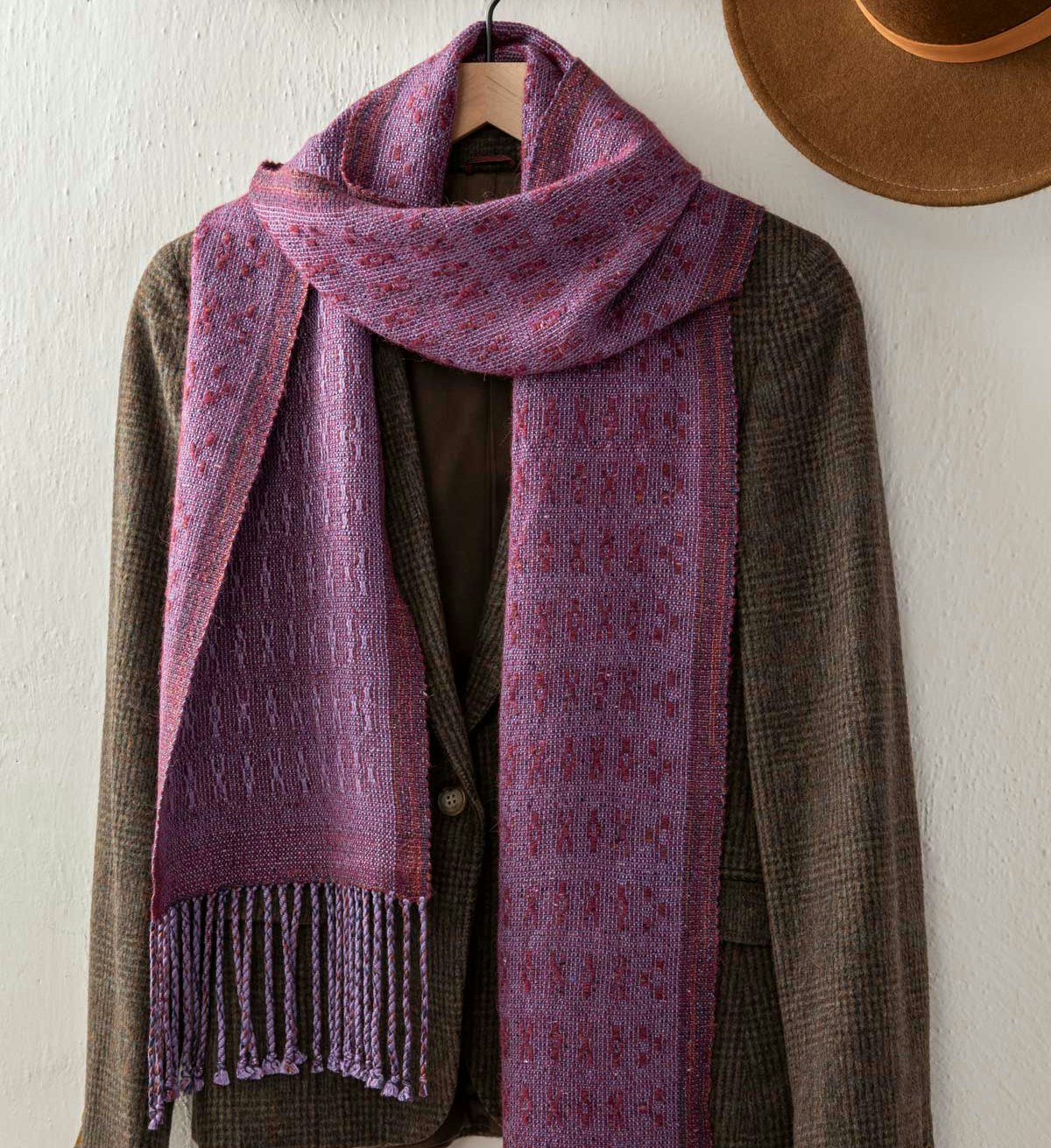
Add plain weave selvedges: Robin Monogue used plain weave edges as a frame in her A Taste of Sonoma Scarf, from page 51 of the Fall 2024 issue.
Have you embraced the scallops or added plain weave borders around a lace design? Please tag your posts #handwovenmagazine so we can all see how you handled weft floats on your edges.