
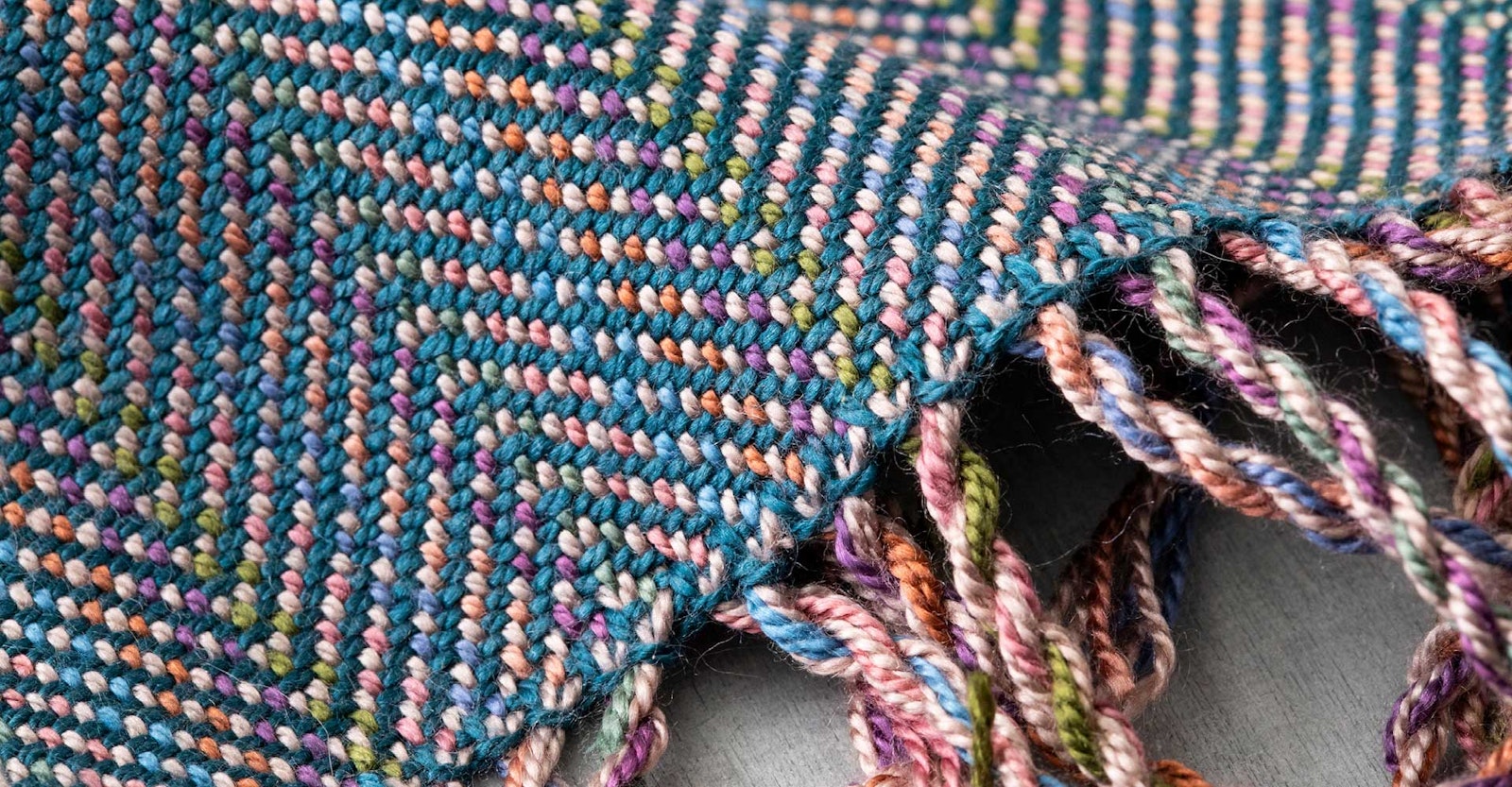
If you’ve never woven with silk before, you may have worries about it—it’s too skinny, it’s scary, and it’s expensive. You’ll feel terrible if you mess it up!
Here’s a question: When was the last time you cut off a troublesome warp and tossed the project? If your answer is “a long time ago,” or even “never,” then you’re good enough to weave with silk.
Let’s look at these concerns.
It’s Too Skinny
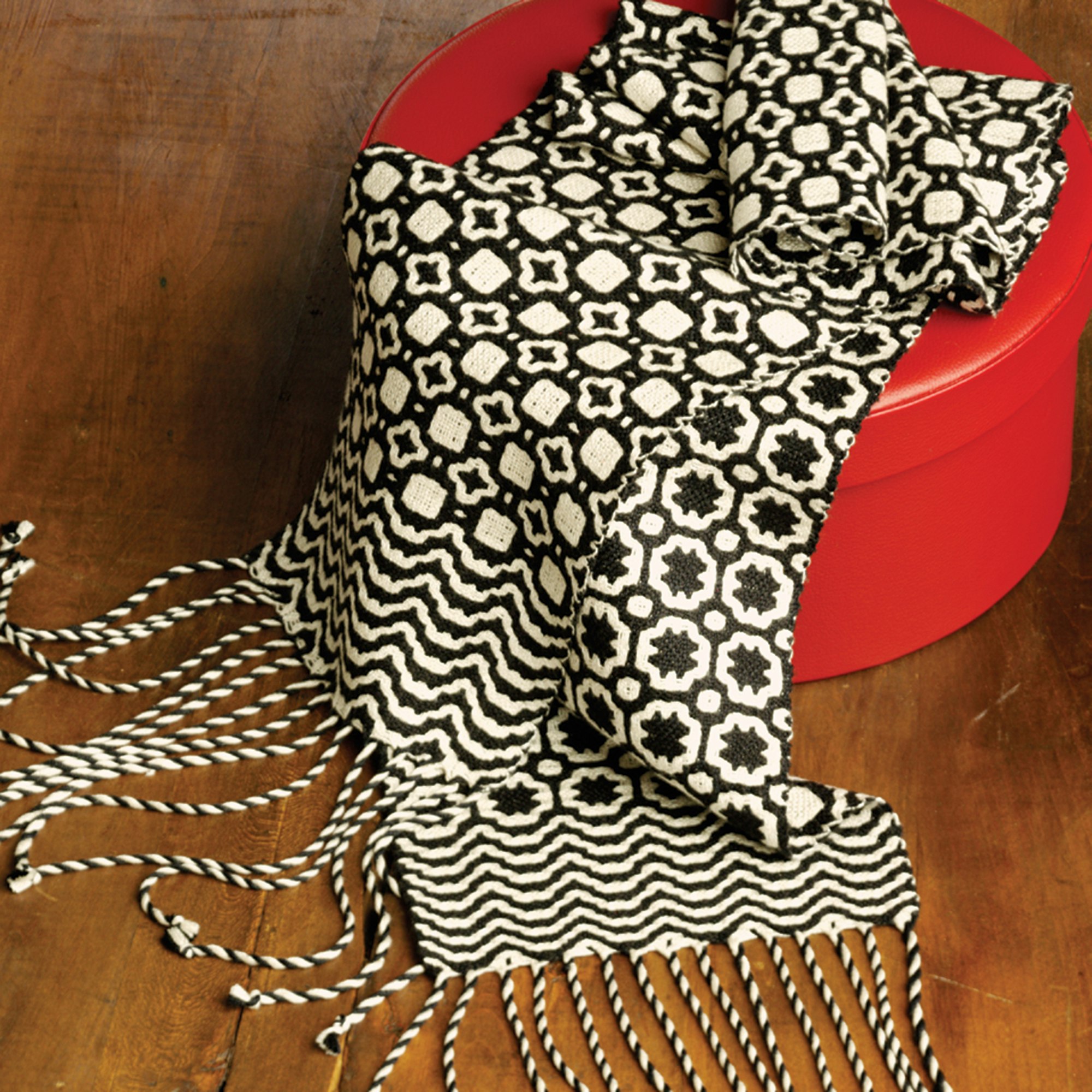
Because every fiber has its unique size-numbering system, you really can’t compare different fibers that seem to have the same size. The 20/2 silk (5,000 ypp) used in Robin Wilton’s Silken Treasures Scarves design shown above is not the same size as 20/2 cotton (8,400 ypp)—as you can see, it’s not even close! In fact, 20/2 silk is about the same size as 10/2 cotton (4,200 ypp). If you’ve woven with 10/2 cotton, you can weave with 20/2 silk.
Rather than size, I prefer to think in terms of sett and ends per inch when I’m considering yarns, especially when they’re new to me. The Master Yarn Chart is a great help because it provides information about yards per pound and sett for many yarns and fiber types.
It’s Scary
Anything you try for the first time can be daunting. You don’t need to think of silk as delicate, but do treat it kindly—as you would any yarn that you value and love.
Because spun silk is very strong, you can keep weaving tension tight. This, along with tightly wound bobbins, will make for tidy selvedges.
Silk can be a bit slippery, so you should use surgeon’s knots rather than square knots when you dress your loom (see illustration below).
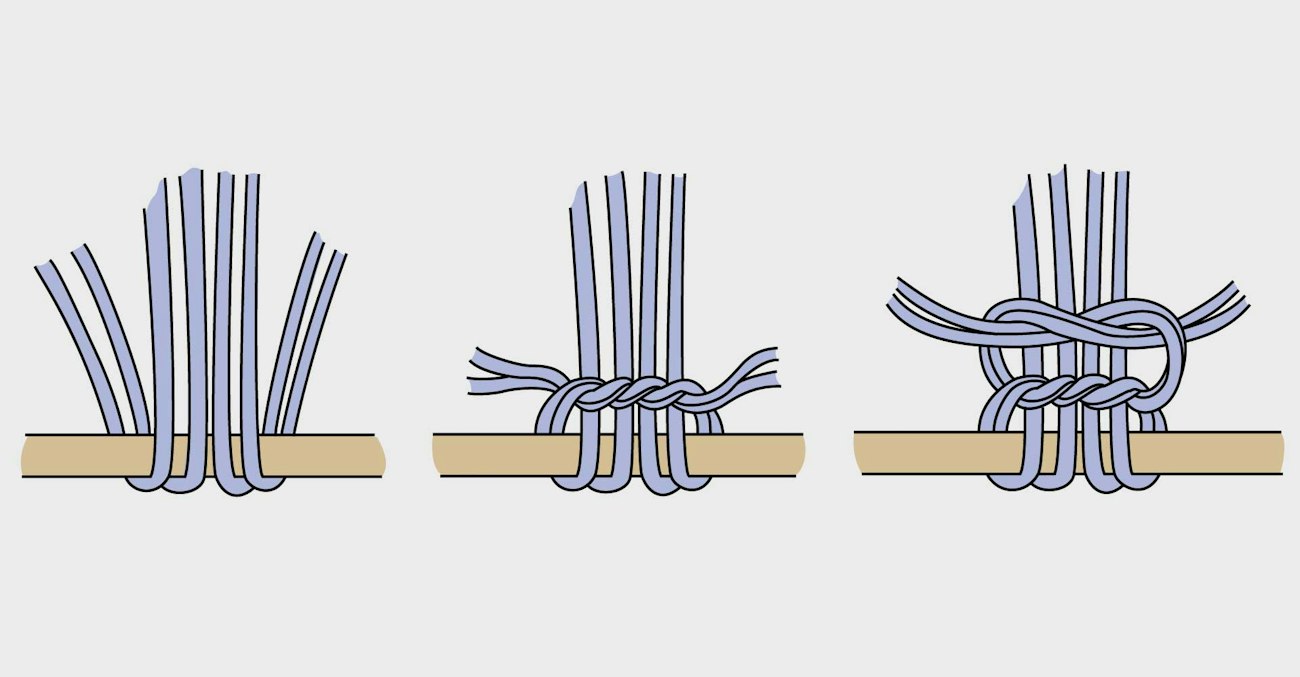
In the first step of a surgeon’s knot, take one strand around the other strand twice. When you pull this double wrap tight, it will hold without the help of a finger. Finish up with a second step as you would a square knot. Long Thread Media illustration
It’s Expensive
When I’m weaving (or spinning or sewing), I’ve learned that using the best quality materials I can afford sets me up for more pleasurable creative experiences. We spend many hours on a weaving project, and the delicious feeling of silk always makes that time quite enjoyable.
To reduce loom waste when I’m warping with silk, I lash on to the front apron rod rather than tying on. This tactic is also helpful for other precious yarns (such as handspun).
At the back of the loom, you can further reduce loom waste by running individual cords (called doups) from the back apron rod and knotting each one around a small group of warp ends. I make loops from carpet warp that I’ve tied around two pegs on my warping board so all the doups are the same length. Tie-up cords work for this, too. Tom Knisely shows how to use doups at the back of the loom at about 28 minutes into his video course The Loom Owner’s Companion.
Who doesn’t want a handwoven silk scarf?!
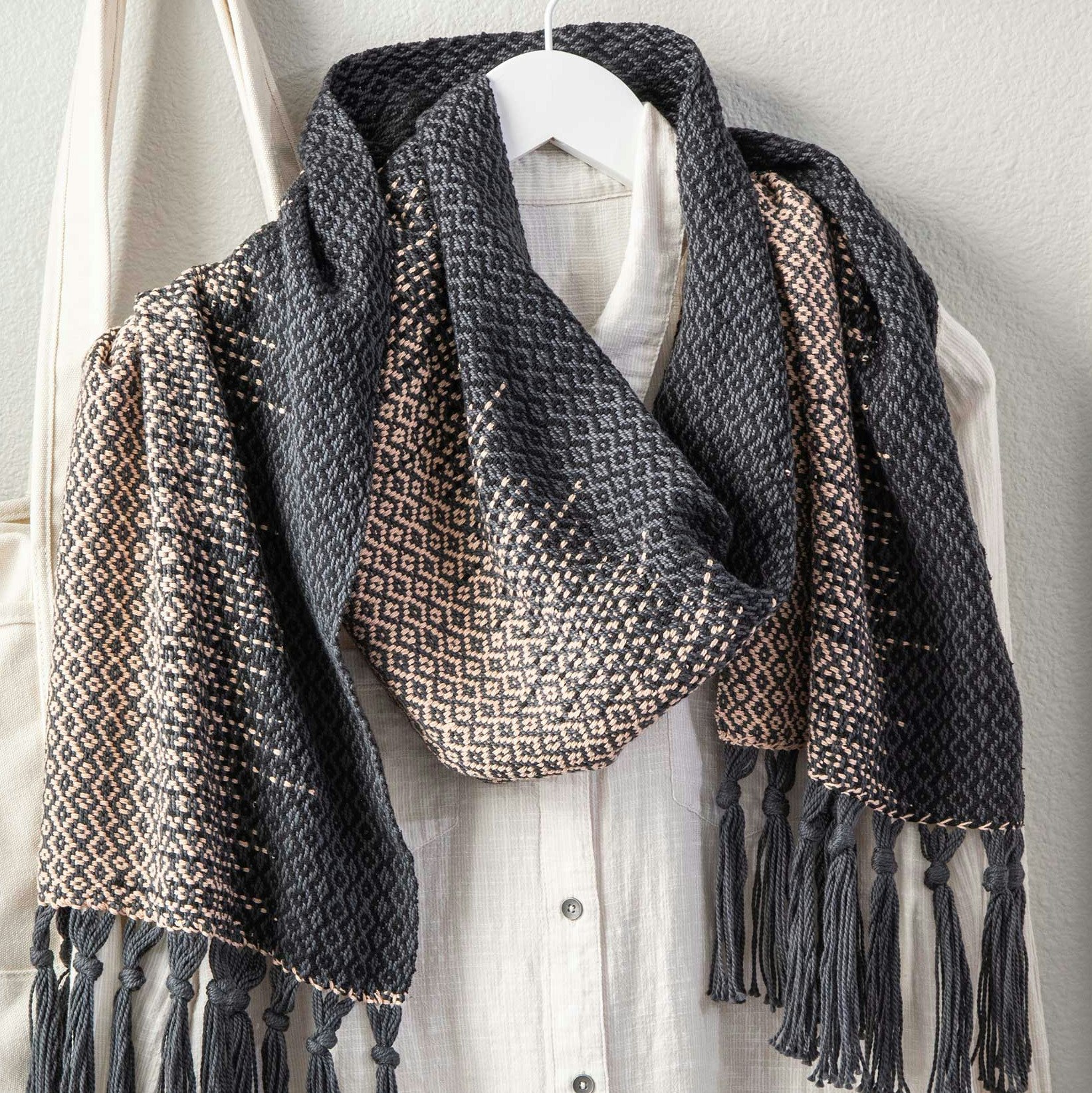
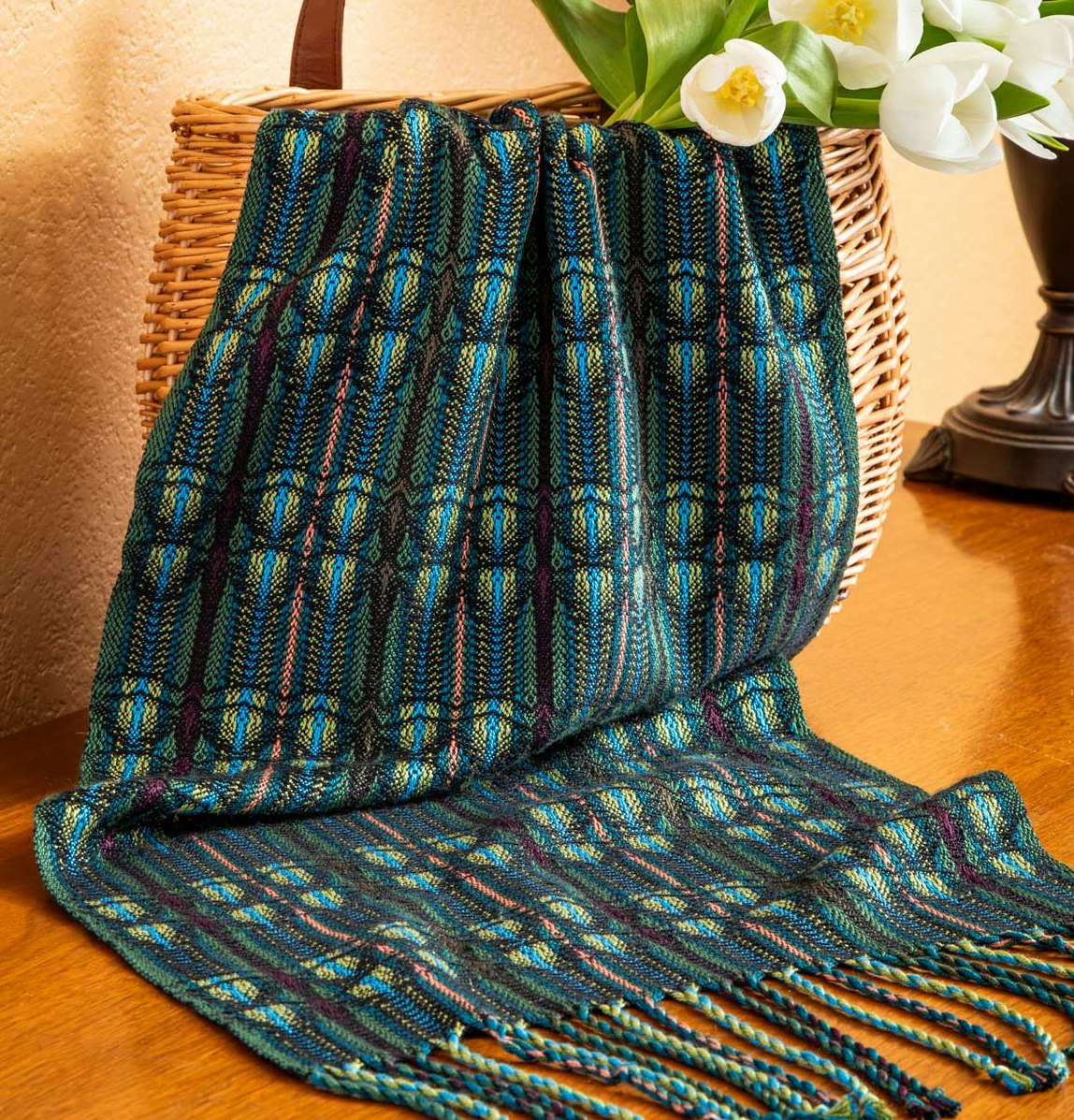
Click any photo to view.
SILK SCARVES TO WEAVE:
Silken Treasure Scarves by Robin Wilton (shown at top)
Midnight Reflection Scarf by Sedona Rigsby
Flight of Dragonflies Scarf by Shelby Moravec
Silk Scarves in Deflected Doubleweave by Madelyn van der Hoogt (on page 68). The project is also in the eBook Best of Handwoven Deflected Doubleweave