
All Access
| Project Type | Scarves/Shawls |
|---|---|
| Loom Type | Multi-Shaft Floor or Table |
| Number of Shafts | 8 |
| Number of Treadles | 6 |
| Weave Structures | Twill, Basketweave |
| Magazine Issue | Handwoven Winter 2025 |
| Author | Jennifer Sargent |
| Format | Project/Pattern |
This requires an 'All Access Subscription' to view. Log in to access or subscribe today to unlock all of the premium content available.
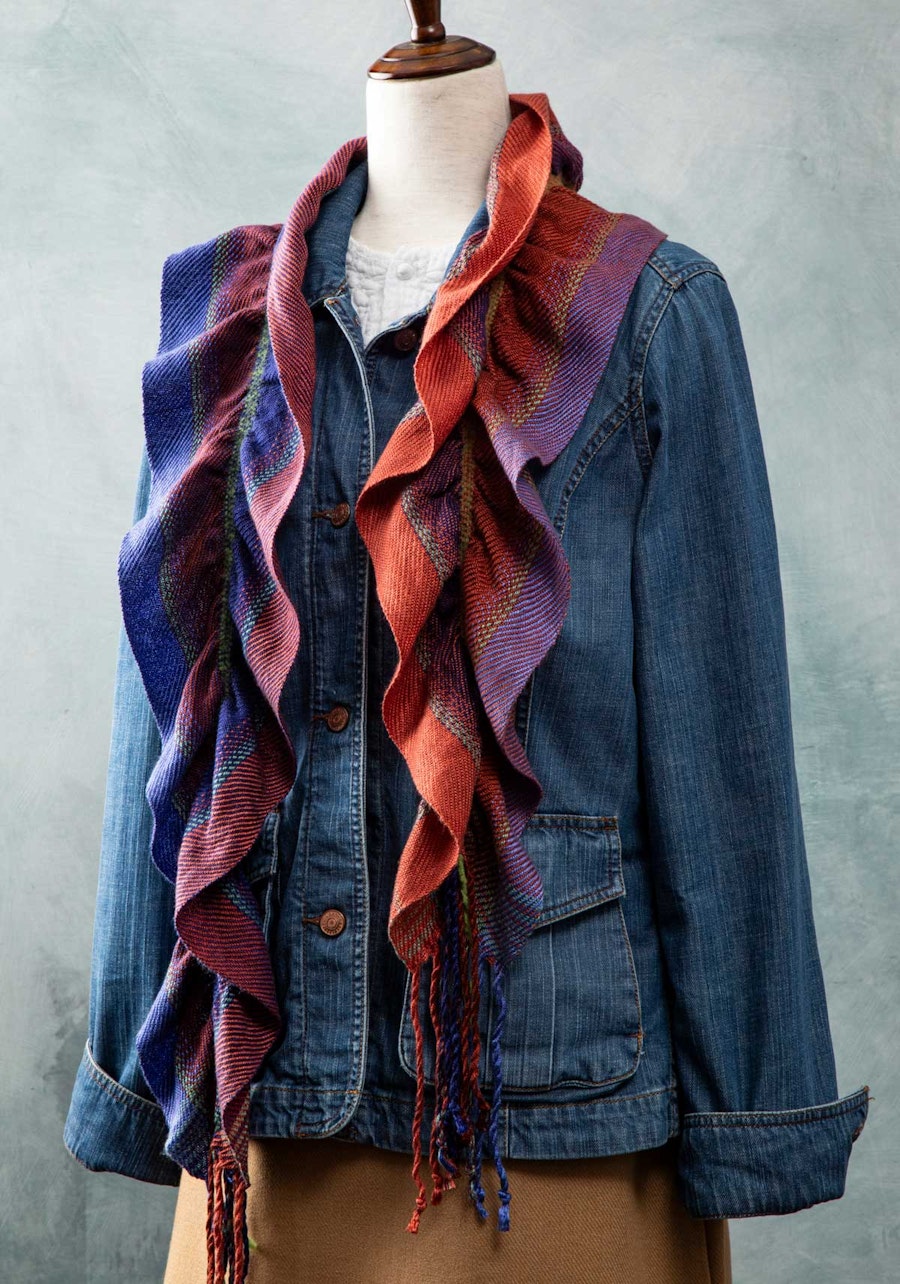
LoginWhile this scarf looks like it might be complicated to weave, the cheerful ruffles become evident only after wet-finishing, thanks to the magic of differential shrinkage.
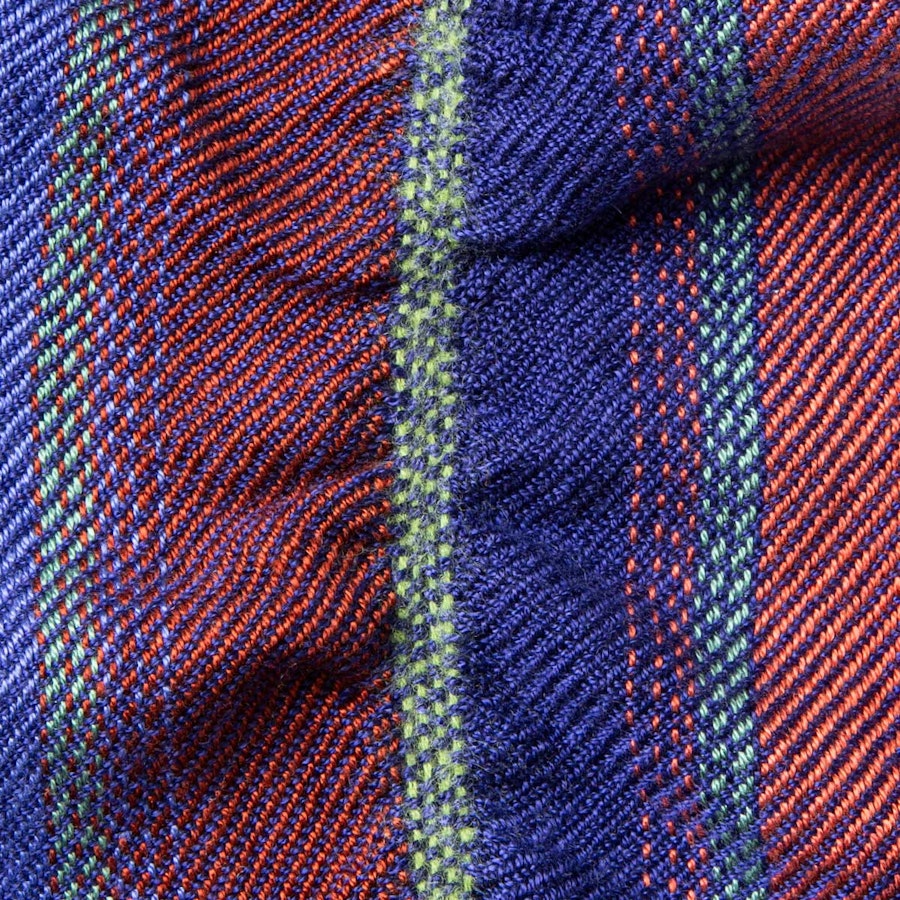
Designer Jennifer Sargent is not generally a frilly sort of person, but she loves the chance to play with the textural possibilities of yarn. The ruffles in this scarf come not only from the combination of two simple structures, but also from the differential shrinkage that can happen when two different fibers combine, in this case Tencel and merino wool. The placement and spacing of the yarns allow the ruffles to develop down the length of the scarf after wet-finishing. It can be a bit of a nail-biter as you wait for the washing machine to finish its work, but there is a touch of magic in seeing your weaving transform into something new and different.
Structure
Twill and basketweave.Equipment
8-shaft loom, 9" weaving width; 12-dent reed; 3 shuttles.Yarns
Warp: 8/2 Tencel (100% lyocell; 3,360 yd/lb; Valley Yarns; WEBS), Blue Purple, 137 yd; Red Clay, 154 yd; Salmon, 165 yd; Navy, 126 yd; Mineral Green, 42 yd. Nature’s Way 2/30 merino wool (7,500 yd/lb; Silk City Fibers), #797 Lime, 56 yd.
Weft: 8/2 Tencel, Salmon and Navy, 220 yd each; Mineral Green, 11 yd.
Dimensions
Width in the reed: 810⁄12".
Woven length: (measured under tension on the loom) 90".
Finished size: (after wetfinishing) 7" × 57" plus 6½" fringe.
Visit our help article for more information on WIFs, including what they are and how to use them.
All items in the library are intended for personal use. Please do not distribute without written approval.